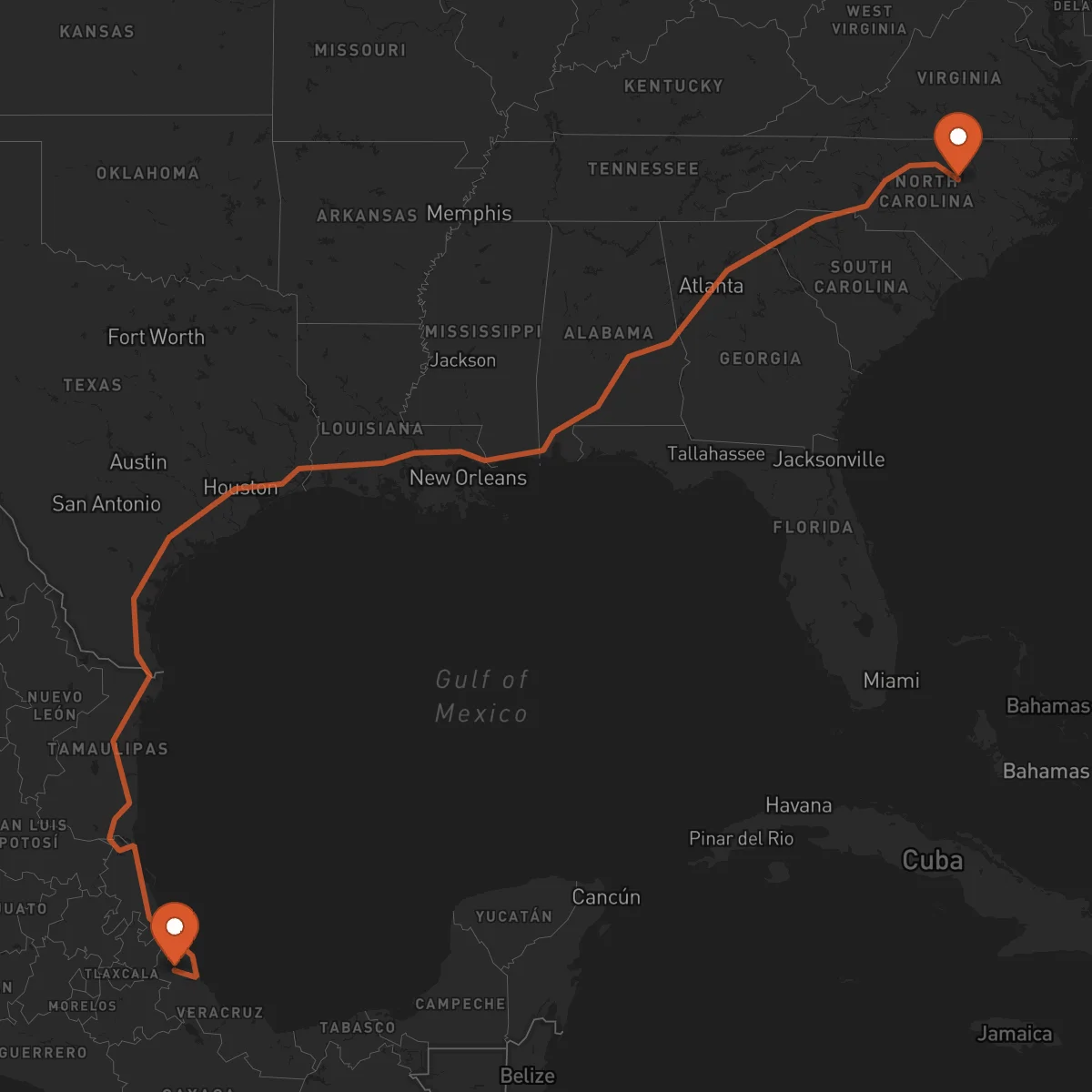
Raleigh to Xalapa
Xalapa → RaleighFTL freight transportation service between Raleigh and Xalapa. Reliable logistics solutions for your business.
Route Description
Everything you need to know about the corridor Raleigh - Xalapa
The Raleigh to Xalapa logistics corridor represents a vital cross-border connection between North Carolina and Veracruz, spanning approximately 2540 kilometers. This strategic route links the southeastern United States with Mexico's Gulf Coast, facilitating trade between two dynamic economic regions. The corridor passes through key transportation hubs including major cities in the southeastern U.S., crosses the U.S.-Mexico border at strategic points, and continues through central Mexico to reach Veracruz.
The economic significance of this corridor is substantial, connecting Raleigh's technology and research-driven economy with Xalapa's educational and agricultural sectors. This route serves as a critical link for companies engaged in cross-border trade, supporting industries ranging from automotive and aerospace to electronics and agricultural products. The Raleigh metropolitan area, known for its Research Triangle Park, has strong ties with Mexican manufacturing and technology sectors, making this corridor essential for supply chain operations.
Transportation infrastructure along this route includes major interstate highways such as I-40 and I-85 in the U.S., connecting to Mexican Federal Highway 180 and other key routes. The corridor offers multiple border crossing options, with Laredo and McAllen being primary entry points into Mexico. Control Terrestre's expertise in cross-border logistics ensures seamless operations through customs clearance, regulatory compliance, and efficient coordination between U.S. and Mexican transportation networks, providing reliable full truckload (FTL) services for companies operating along this important trade corridor.
Services for this Route
Available services for the corridor Raleigh - Xalapa
 Origin
Raleigh
Raleigh, North Carolina serves as a strategic logistics hub in the southeastern United States, offering excellent connectivity through multiple transportation modes. The city's location within the Research Triangle provides access to a highly educated workforce and proximity to major research institutions. Raleigh benefits from extensive highway infrastructure including I-40, I-85, and I-95, connecting it to major ports, airports, and distribution centers throughout the eastern U.S. The city's economic landscape is dominated by technology, research, and education sectors, with strong presence in pharmaceuticals, biotechnology, and advanced manufacturing.
 Destination
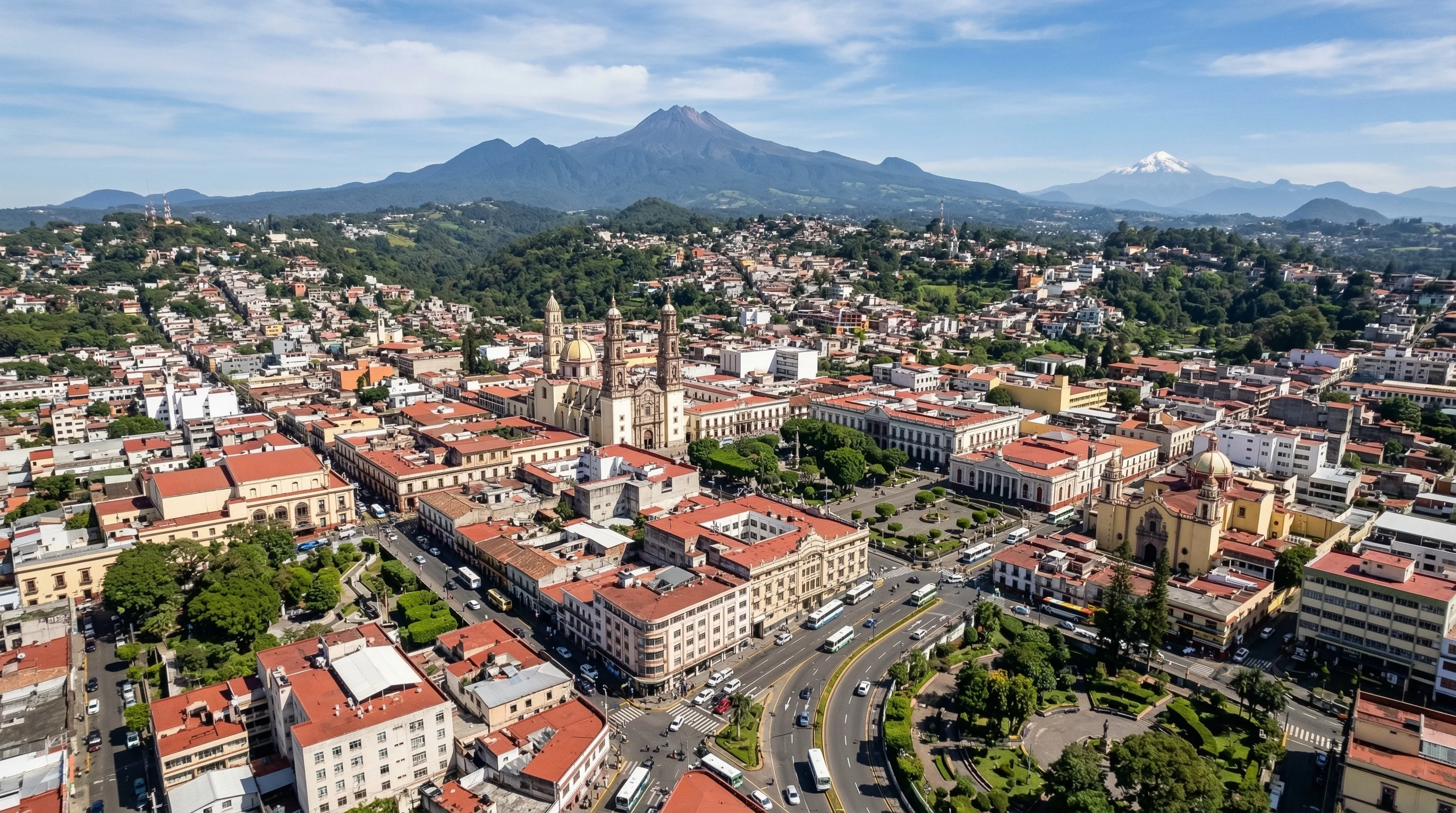
Xalapa, Veracruz is strategically positioned in eastern Mexico, serving as a key logistics node for the Gulf Coast region. The city's location provides access to major ports including Veracruz and Coatzacoalcos, facilitating international trade through the Gulf of Mexico. Xalapa's transportation infrastructure includes Federal Highway 180 and connections to Mexico's national highway network, enabling efficient distribution throughout central and southern Mexico. The region's economy is characterized by education, agriculture, and emerging technology sectors, with the city hosting Veracruz's largest public university and serving as a center for coffee production and flower cultivation.










