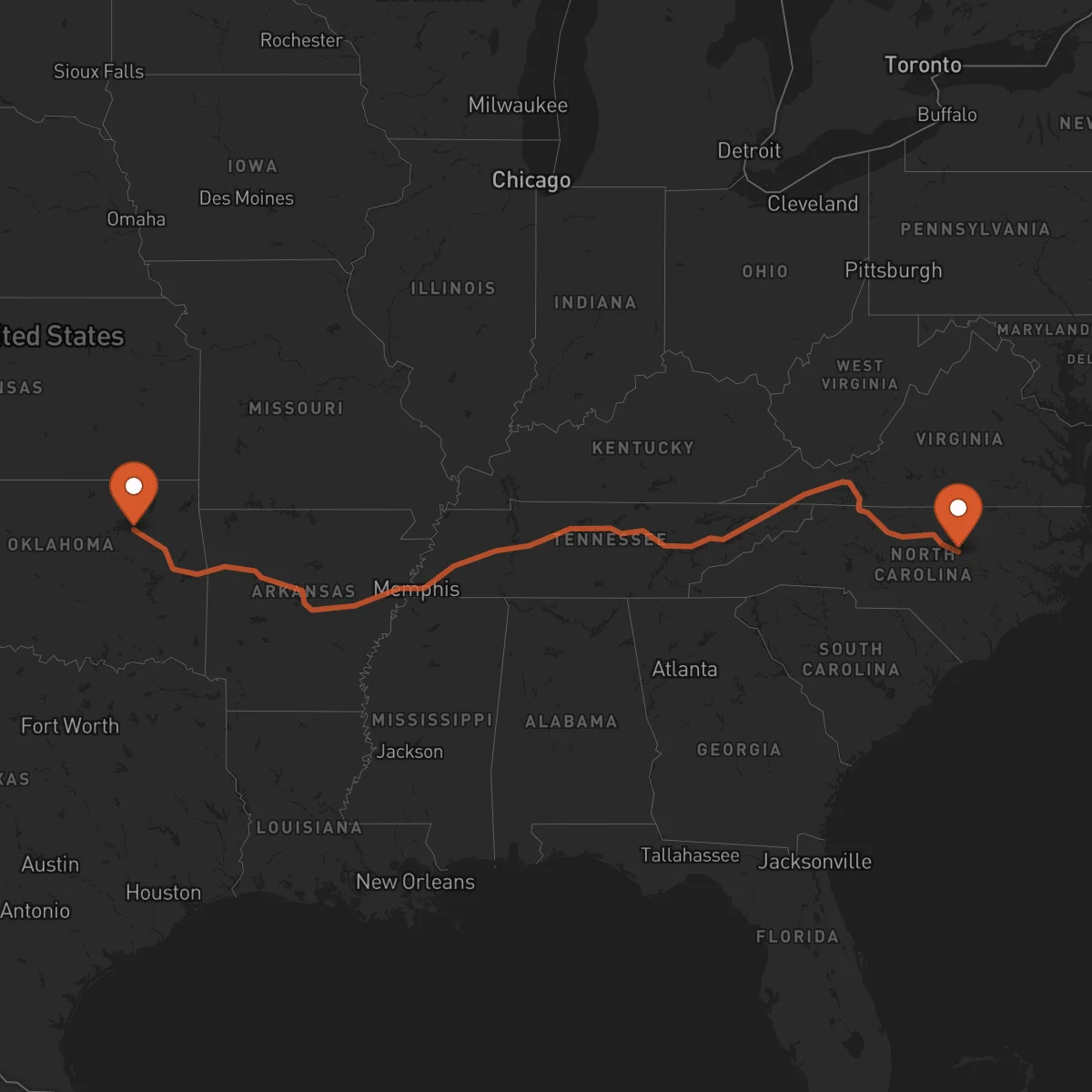
Raleigh to Tulsa
Tulsa → RaleighFTL freight transportation service between Raleigh and Tulsa. Reliable logistics solutions for your business.
Route Description
Everything you need to know about the corridor Raleigh - Tulsa
The Raleigh to Tulsa corridor represents a vital logistics connection between North Carolina's Research Triangle and Oklahoma's energy and manufacturing hub. This 1,560 km domestic route traverses eight states, linking the eastern United States with the central plains region. The corridor serves as a critical artery for freight movement between the Atlantic coast's technology and research centers and the Midwest's industrial and energy sectors.
The transportation infrastructure along this route includes major interstate highways such as I-40, I-44, and I-540, providing reliable and efficient transit options. The route passes through key economic regions including the Appalachian Mountains, the Mississippi River valley, and the Ozark Plateau, offering access to numerous industrial and commercial centers along the way. This strategic positioning makes it an essential pathway for cross-country freight distribution.
Control Terrestre specializes in full truckload (FTL) transportation services along this corridor, offering dedicated solutions for businesses requiring reliable freight movement between these two important markets. Our network of certified carriers ensures consistent service quality, while our expertise in handling specialized cargo, including hazardous materials and oversized loads, provides comprehensive transportation options for diverse industry needs.
Services for this Route
Available services for the corridor Raleigh - Tulsa
 Origin
Raleigh
Raleigh, North Carolina, serves as a strategic logistics hub in the southeastern United States, anchored by the Research Triangle's concentration of technology, research, and educational institutions. The city's proximity to major ports in Wilmington and Norfolk, combined with excellent highway connections via I-40 and I-85, makes it an ideal origin point for freight distribution. Raleigh's robust infrastructure includes Raleigh-Durham International Airport and extensive rail connections through CSX and Norfolk Southern, supporting multimodal transportation solutions.
The region's economy is driven by technology, pharmaceuticals, biotechnology, and research sectors, with major employers including IBM, Cisco Systems, and numerous research institutions. The area also has significant manufacturing capabilities, particularly in electronics and medical devices. These industries generate substantial freight volume requiring reliable transportation to markets across the United States, making Raleigh an important origin point for cross-country freight movements.
 Destination
Tulsa
Tulsa, Oklahoma, stands as a strategic logistics center in the central United States, with its location providing excellent access to the Midwest, Southwest, and Mountain states. The city's transportation infrastructure includes multiple interstate highways (I-44, I-244, US-75), Tulsa International Airport, and extensive rail networks through BNSF and Union Pacific. Tulsa's port on the McClellan-Kerr Arkansas River Navigation System provides unique inland waterway access, enhancing its logistics capabilities.
The Tulsa metropolitan area is a major energy and manufacturing hub, with significant presence in oil and gas, aerospace, and industrial equipment sectors. The region hosts headquarters for major energy companies and supports a diverse manufacturing base including aviation, machinery, and fabricated metal products. These industries create substantial demand for reliable freight transportation services, both inbound for raw materials and outbound for finished products, establishing Tulsa as a critical destination for cross-country freight movements.










