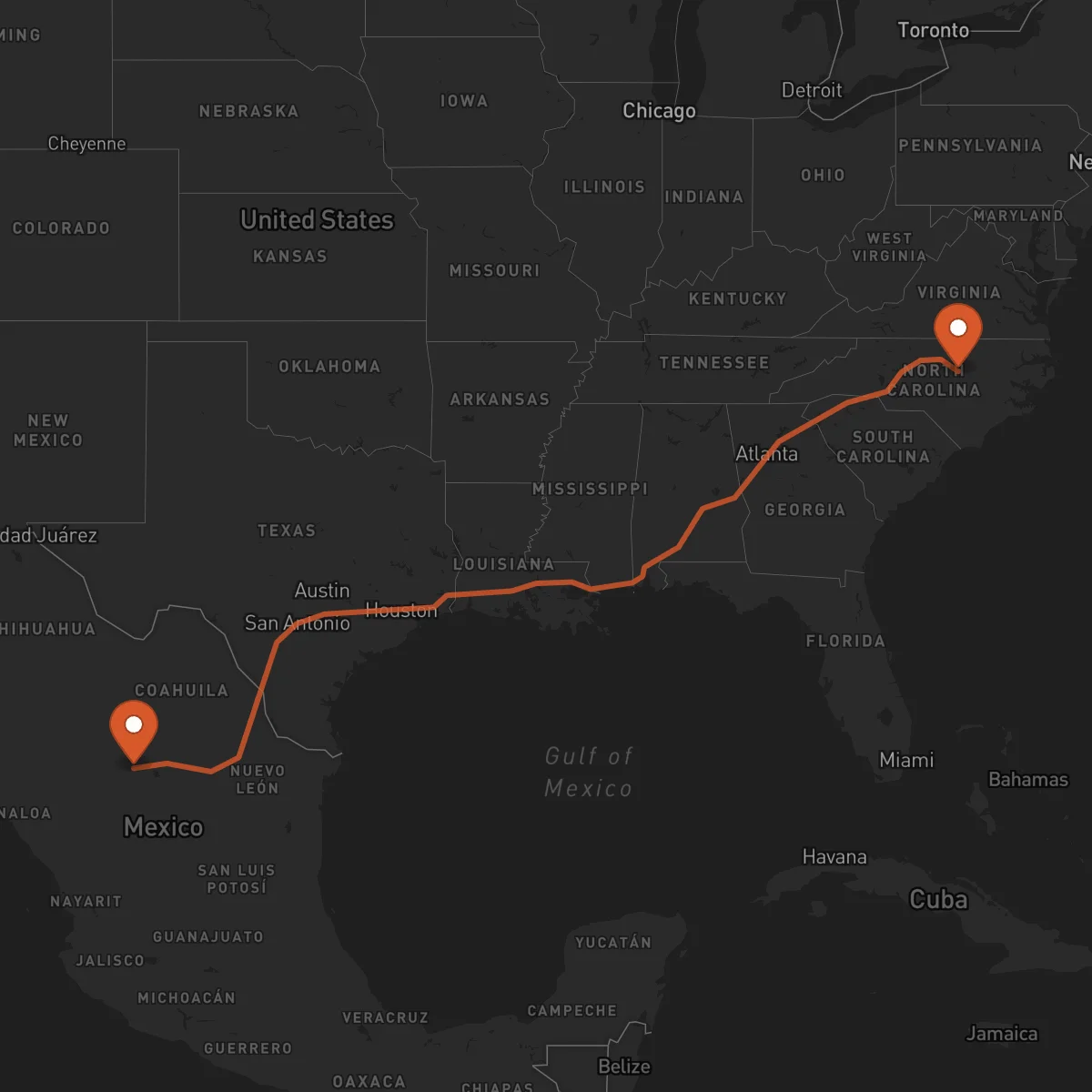
Raleigh to Torreón
Torreón → RaleighFTL freight transportation service between Raleigh and Torreón. Reliable logistics solutions for your business.
Route Description
Everything you need to know about the corridor Raleigh - Torreón
The Raleigh to Torreón corridor represents a vital cross-border logistics connection between North Carolina's Research Triangle and the Lagunera Region in northern Mexico. This 2,618-kilometer route links two dynamic industrial hubs, facilitating the movement of goods between the southeastern United States and Mexico's central-northern manufacturing corridor. The route traverses major transportation networks, connecting through strategic border crossings that enable efficient freight movement between these complementary economic regions.
The economic synergy between Raleigh's technology and research-driven economy and Torreón's manufacturing and industrial base creates substantial freight demand. Raleigh serves as a gateway for aerospace components, automotive parts, pharmaceuticals, and advanced manufacturing materials, while Torreón's industrial sector requires specialized equipment, raw materials, and finished goods to support its automotive, aerospace, and metal-mechanics industries. This complementary trade relationship drives consistent full truckload (FTL) shipping volumes along this corridor.
Key transportation infrastructure includes major interstate highways through the southeastern United States, connecting to Mexico's federal highways and toll roads. The corridor typically utilizes border crossings optimized for commercial freight, with access to customs facilities and inspection stations. Control Terrestre provides comprehensive cross-border FTL services on this route, managing all aspects of the shipment from origin to destination, including customs documentation, carrier coordination, and real-time tracking to ensure seamless freight movement across international boundaries.
Services for this Route
Available services for the corridor Raleigh - Torreón
 Origin
Raleigh
Raleigh, North Carolina serves as a strategic logistics hub in the southeastern United States, benefiting from its location within the Research Triangle metropolitan area. The city provides excellent access to major transportation infrastructure, including Interstate 40, Interstate 440, and proximity to major ports and airports. Raleigh's logistics ecosystem supports the region's diverse industrial base, with specialized facilities for technology, research, and manufacturing sectors. The area's infrastructure includes modern warehousing facilities, intermodal yards, and distribution centers strategically positioned to serve both local and national markets.
 Destination
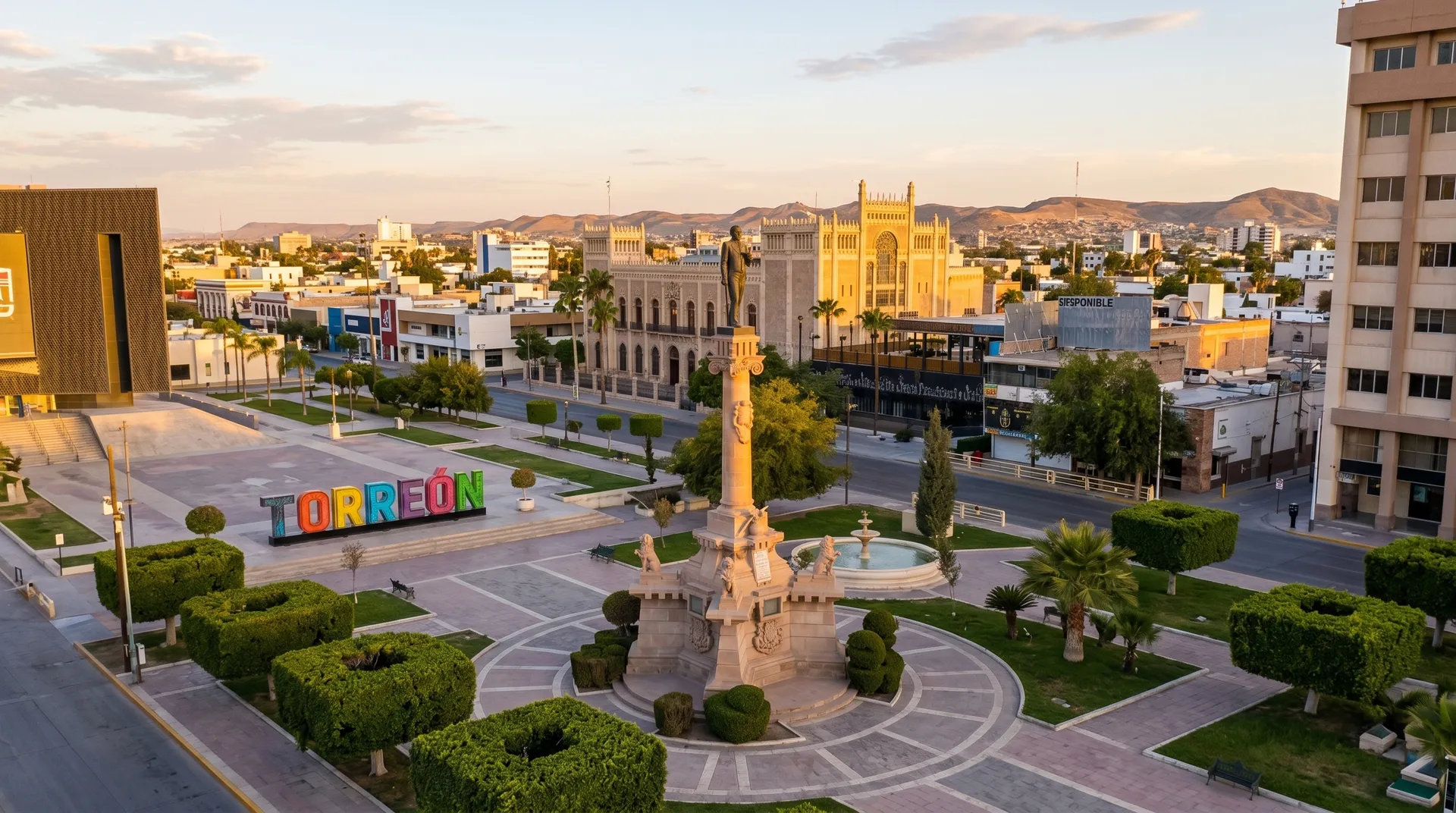
Torreón, located in the Lagunera Region of Coahuila, Mexico, represents a strategic industrial and logistics center in northern Mexico. The city benefits from its position within the Comarca Lagunera, a major industrial corridor that includes connections to other key manufacturing cities. Torreón's transportation infrastructure includes access to Mexico's federal highway system, railroad connections, and proximity to major border crossings. The city's industrial parks and manufacturing facilities are well-connected to regional and national logistics networks, supporting the area's automotive, aerospace, and metal-mechanics industries.










