Raleigh to Tijuana
Tijuana → RaleighFTL freight transportation service between Raleigh and Tijuana. Reliable logistics solutions for your business.
Route Description
Everything you need to know about the corridor Raleigh - Tijuana
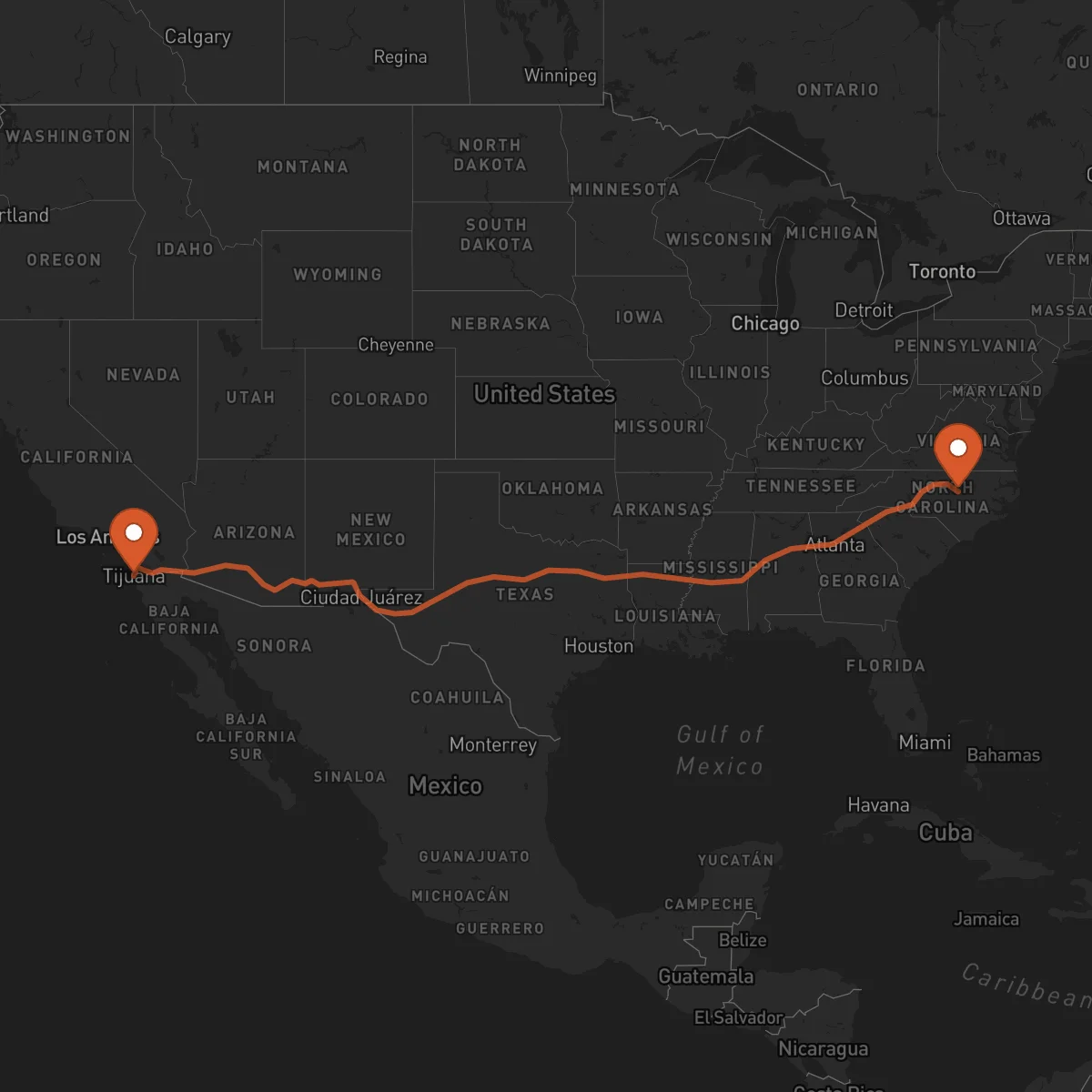
The Raleigh to Tijuana logistics corridor represents a vital cross-border connection between the southeastern United States and Mexico's Pacific coast. This 3,528-kilometer route serves as a strategic link for companies engaged in North American trade, connecting North Carolina's Research Triangle to Mexico's manufacturing powerhouse in Baja California. The corridor facilitates the movement of high-value goods between two dynamic economic regions, with Raleigh's technology and research-driven economy complementing Tijuana's manufacturing and export-oriented industries.
The transportation infrastructure along this route includes major interstate highways such as I-40 and I-10, providing reliable cross-country connectivity. The journey crosses through key economic centers including Nashville, Memphis, Dallas, and Monterrey before reaching the San Diego-Tijuana border region. This well-established route benefits from multiple transportation options and strategic rest points, ensuring efficient cargo movement across diverse terrain and jurisdictions.
Key industries utilizing this corridor include automotive parts manufacturing, electronics, medical devices, aerospace components, and consumer goods. Both Raleigh and Tijuana host significant manufacturing clusters that require just-in-time delivery of components and finished products. The route particularly serves companies engaged in maquiladora operations, where North American supply chains require seamless cross-border coordination.
Control Terrestre specializes in managing the complexities of this cross-border corridor, offering dedicated FTL services with experienced drivers familiar with customs procedures and border regulations. Our C-TPAT-certified carriers ensure expedited processing at border crossings, while our real-time tracking systems provide visibility throughout the journey. We handle all documentation requirements and coordinate with customs brokers to minimize delays, making us the ideal partner for companies requiring reliable freight transportation between Raleigh and Tijuana.
Services for this Route
Available services for the corridor Raleigh - Tijuana
 Origin
Raleigh
Raleigh, North Carolina serves as a strategic logistics hub in the southeastern United States, positioned within the Research Triangle region that includes Durham and Chapel Hill. This area combines academic excellence with technological innovation, hosting major research institutions and technology companies that drive demand for specialized freight services. Raleigh's central location on the East Coast provides excellent connectivity to major ports, airports, and interstate highways, making it an ideal origin point for cross-country and international shipments.
The region's economy is anchored by technology, research and development, biotechnology, and advanced manufacturing sectors. Major employers include technology giants, pharmaceutical companies, and research institutions that require reliable transportation of sensitive and high-value cargo. The area's robust infrastructure includes Raleigh-Durham International Airport, multiple rail connections, and direct access to I-40, which serves as a primary east-west corridor across the United States.
 Destination
Tijuana
Tijuana, Baja California stands as one of Mexico's most important industrial and commercial centers, strategically located on the U.S.-Mexico border adjacent to San Diego, California. This positioning makes Tijuana a critical gateway for North American trade, with access to both Pacific ports and cross-border transportation networks. The city's industrial parks and manufacturing zones have attracted significant foreign investment, particularly in aerospace, medical devices, and electronics assembly.
The region's economy is characterized by a strong manufacturing base, with maquiladora operations playing a central role in cross-border supply chains. Tijuana hosts numerous foreign companies that require efficient transportation connections to their U.S. suppliers and customers. The area's transportation infrastructure includes the Tijuana International Airport, the Port of Ensenada for maritime cargo, and direct highway connections to the U.S. border at San Ysidro, the world's busiest land border crossing. This infrastructure supports the high-volume freight movement that characterizes the Raleigh-Tijuana corridor.










