Quebec City to Tucson
Tucson → Quebec CityFTL freight transportation service between Quebec City and Tucson. Reliable logistics solutions for your business.
Route Description
Everything you need to know about the corridor Quebec City - Tucson
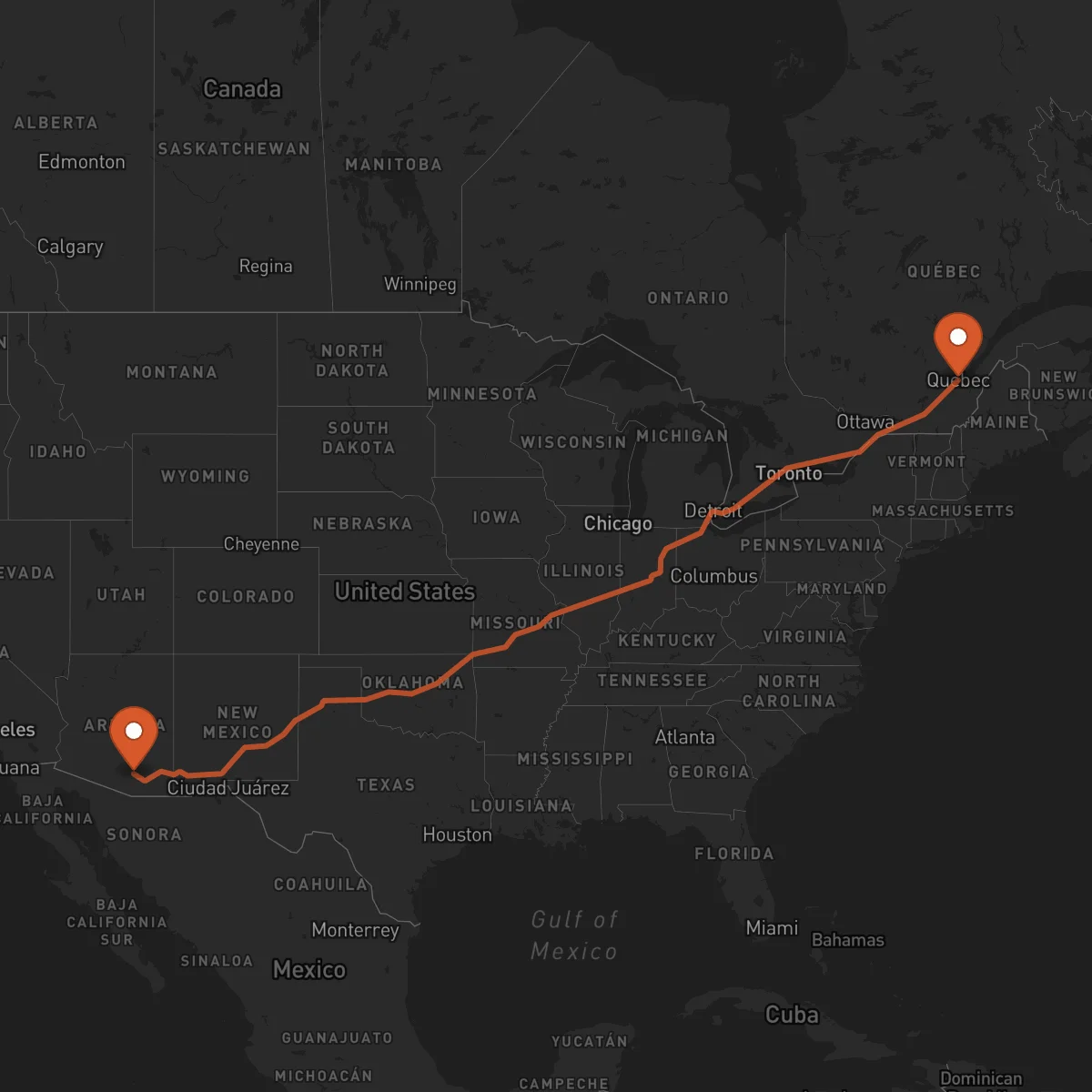
The Quebec City to Tucson corridor represents a vital cross-border freight transportation route connecting Canada's industrial heartland with the southwestern United States. This 3,724 km corridor traverses diverse economic regions, facilitating the movement of goods between Quebec's manufacturing centers and Arizona's growing industrial and logistics hubs. The route serves as a critical link in North American supply chains, enabling seamless trade between Canadian and American markets.
The corridor's economic significance is underscored by the complementary industrial strengths of both regions. Quebec City is a major center for aerospace manufacturing, information technology, and biopharmaceuticals, while Tucson has emerged as a key player in aerospace and defense, optics and photonics, and advanced manufacturing. This complementary economic structure creates substantial freight demand, particularly for specialized equipment and high-value goods that require dedicated transportation solutions.
Transportation infrastructure along this corridor includes major highways such as Autoroute 20/40 in Quebec, Interstate 29 and Interstate 35 through the central United States, and Interstate 10 connecting to Tucson. Key border crossings at Detroit-Windsor and potentially Sarnia-Port Huron facilitate the cross-border movement. Control Terrestre's expertise in managing cross-border documentation, customs compliance, and dedicated truckload services ensures efficient transit across this extensive route, supporting the continuous flow of goods between these strategic economic centers.
Services for this Route
Available services for the corridor Quebec City - Tucson
 Origin
Quebec City serves as a strategic logistics hub in eastern Canada, positioned at the confluence of major transportation networks. The city's Port of Quebec provides ocean freight connections, while its proximity to Autoroute 20 and Autoroute 40 offers excellent ground transportation links to other Canadian and U.S. markets. Quebec City's logistics infrastructure includes modern warehousing facilities and distribution centers that support its role as a major distribution point for goods throughout eastern Canada and beyond.
The region's economy is anchored by advanced manufacturing, particularly in aerospace with major facilities from companies like Bombardier and Pratt & Whitney. The biopharmaceutical sector is also significant, with numerous research institutions and pharmaceutical companies based in the area. Information technology and software development represent growing sectors, creating demand for specialized freight services for high-value, sensitive equipment. Quebec City's diverse industrial base generates substantial freight volume, particularly for dedicated truckload services that can accommodate the specialized needs of these advanced industries.
 Destination
Tucson
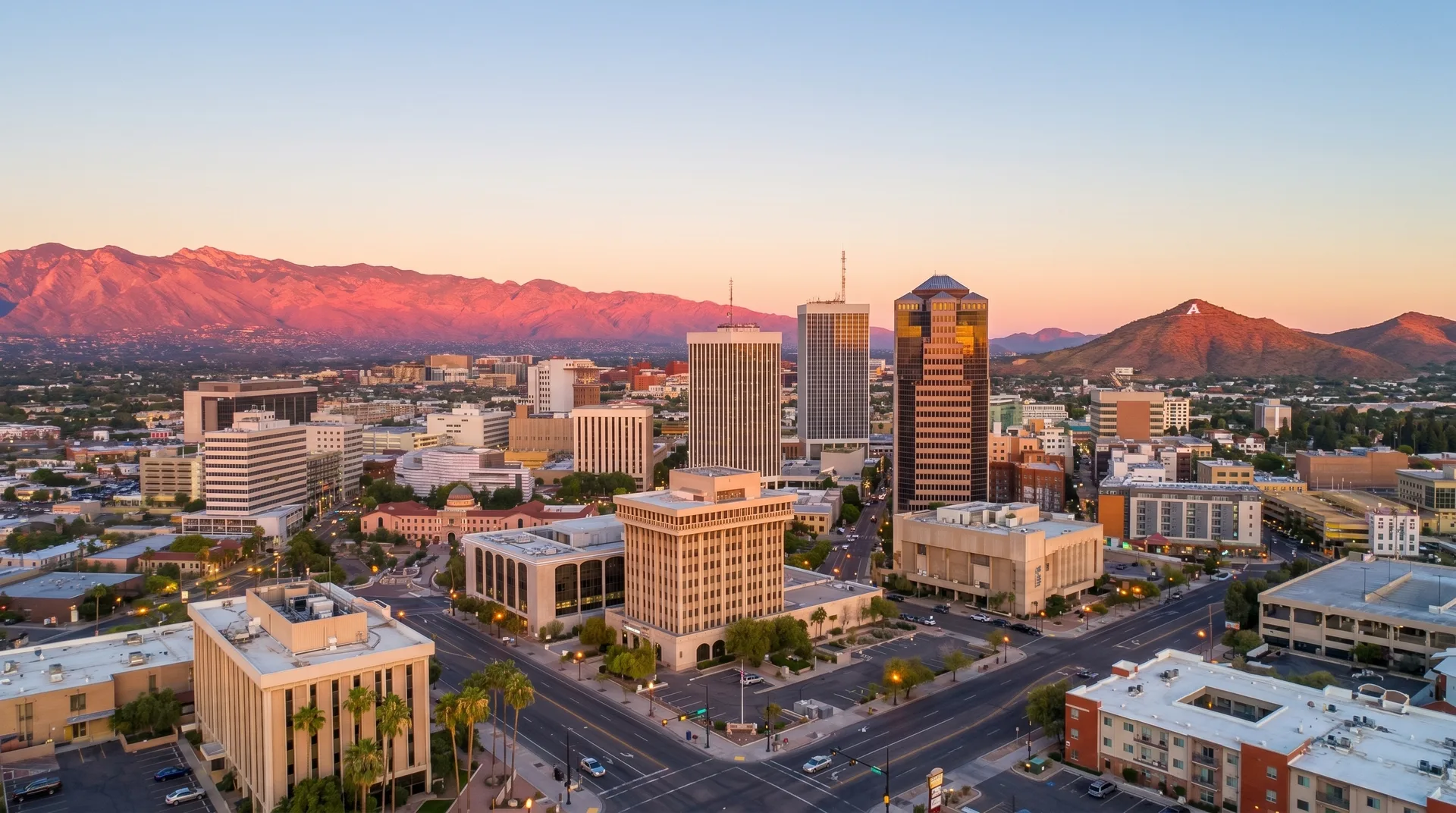
Tucson's strategic location in southern Arizona makes it an important logistics center for the southwestern United States. The city's position near major transportation corridors, including Interstate 10, provides direct connections to major markets across the southern United States. Tucson International Airport supports air freight operations, while the region's developing intermodal facilities enhance its logistics capabilities. The city's proximity to the Mexican border also positions it as a key node in cross-border supply chains.
The Tucson metropolitan area has developed strong industrial clusters in aerospace and defense, with major employers including Raytheon Missiles & Defense and Bombardier Aerospace. The optics and photonics industry, centered around the University of Arizona's research programs, has created a specialized manufacturing sector requiring precise logistics solutions. Tucson's growing technology sector and its role as a distribution center for southwestern retail markets generate consistent freight demand. The region's industrial diversity and strategic location make it an ideal destination for dedicated truckload services that can support the specialized transportation needs of these advanced industries.










