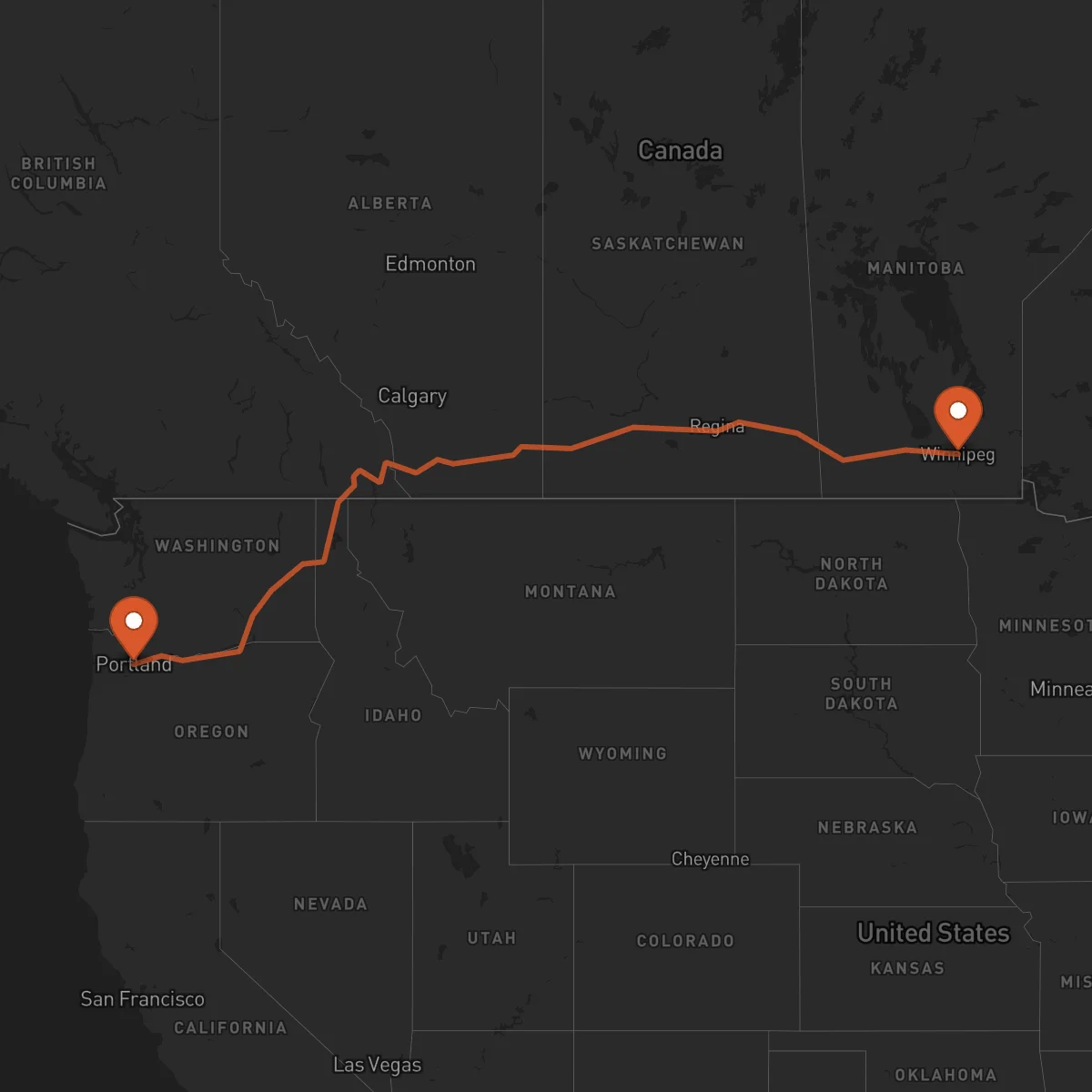
Portland to Winnipeg
Winnipeg → PortlandFTL freight transportation service between Portland and Winnipeg. Reliable logistics solutions for your business.
Route Description
Everything you need to know about the corridor Portland - Winnipeg
The Portland-Winnipeg corridor represents a vital cross-border connection between the Pacific Northwest and the Canadian Prairies. This 1,962 km route links Oregon's largest port city with Manitoba's capital, creating a strategic supply chain pathway that serves both U.S. and Canadian markets. The corridor traverses diverse terrain, crossing the international border at multiple points, with the most common being the Pembina-Emerson crossing, one of North America's busiest commercial vehicle crossings.
The economic significance of this corridor is substantial, connecting Portland's robust export infrastructure with Winnipeg's central Canadian distribution networks. Portland serves as a major gateway for international trade, with extensive port facilities and rail connections, while Winnipeg functions as a crucial logistics hub for the Prairie provinces. This route facilitates the movement of agricultural products, manufactured goods, and industrial equipment between these two important economic regions.
Key industries utilizing this corridor include agricultural and food processing, manufacturing, and technology sectors. The route primarily follows major highways including I-5, I-94, and Trans-Canada Highway 1, providing reliable transportation infrastructure. Control Terrestre leverages our network of certified carriers to ensure seamless cross-border operations, handling all customs documentation and compliance requirements. Our expertise in managing temperature-sensitive cargo, hazardous materials, and oversized shipments makes us particularly well-suited for the diverse freight needs along this corridor.
Services for this Route
Available services for the corridor Portland - Winnipeg
 Origin
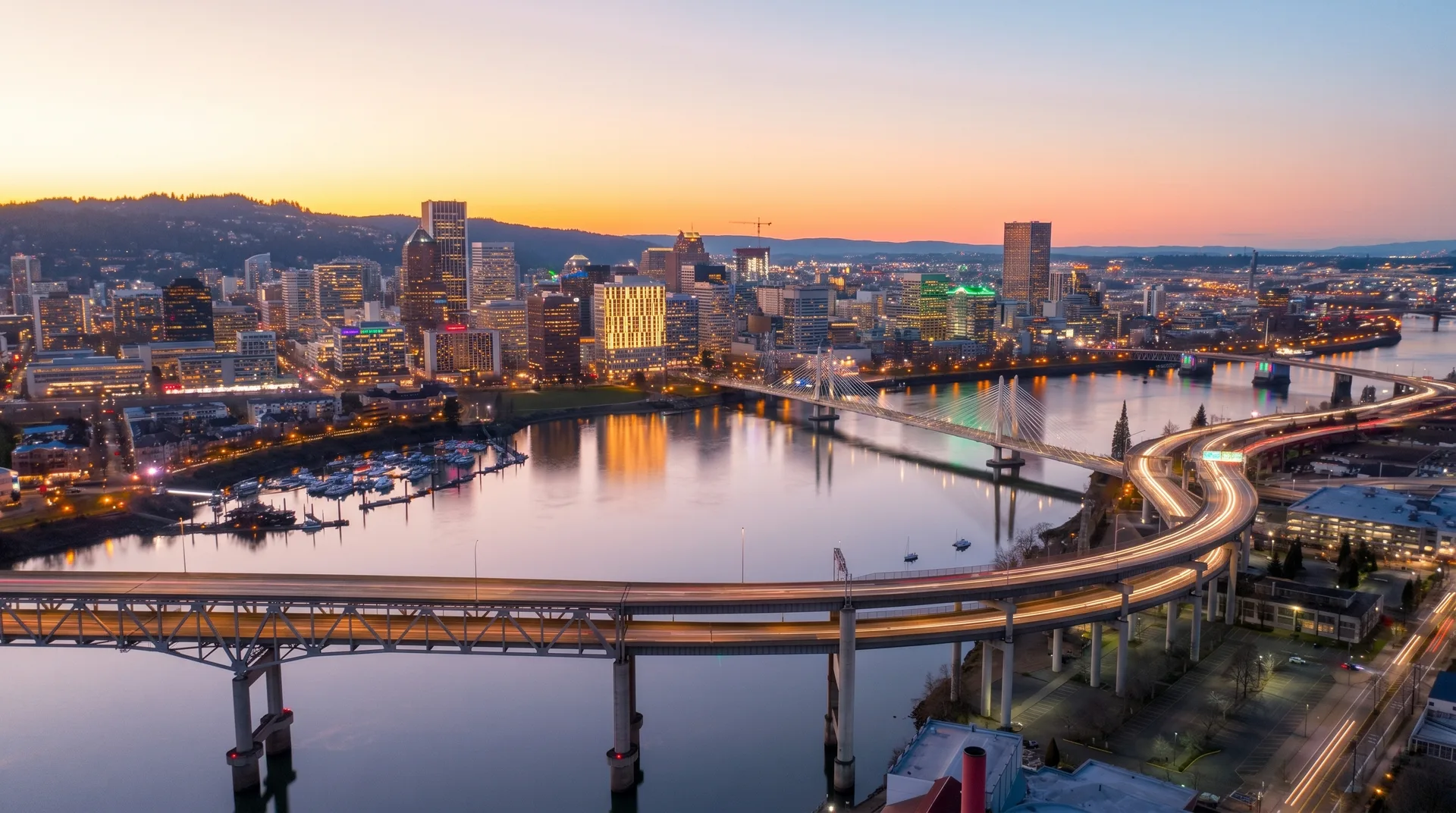
Portland
Portland, Oregon serves as a strategic logistics hub on the U.S. West Coast, offering exceptional connectivity through its international airport, extensive highway network, and the Port of Portland. The city's location provides direct access to Asian markets and serves as a gateway for goods entering the U.S. from the Pacific Rim. Portland's economy is driven by technology, manufacturing, and the footwear and apparel industry, with major companies like Nike and Intel maintaining significant operations in the region.
The city's transportation infrastructure includes multiple interstate highways (I-5, I-84, I-205) and the Portland International Airport, which handles substantial cargo traffic. The Port of Portland, though having reduced some operations in recent years, still maintains facilities for international shipping and rail connections. The region's strong focus on sustainability and green logistics aligns with modern supply chain requirements, making Portland an attractive origin point for environmentally conscious freight operations.
 Destination
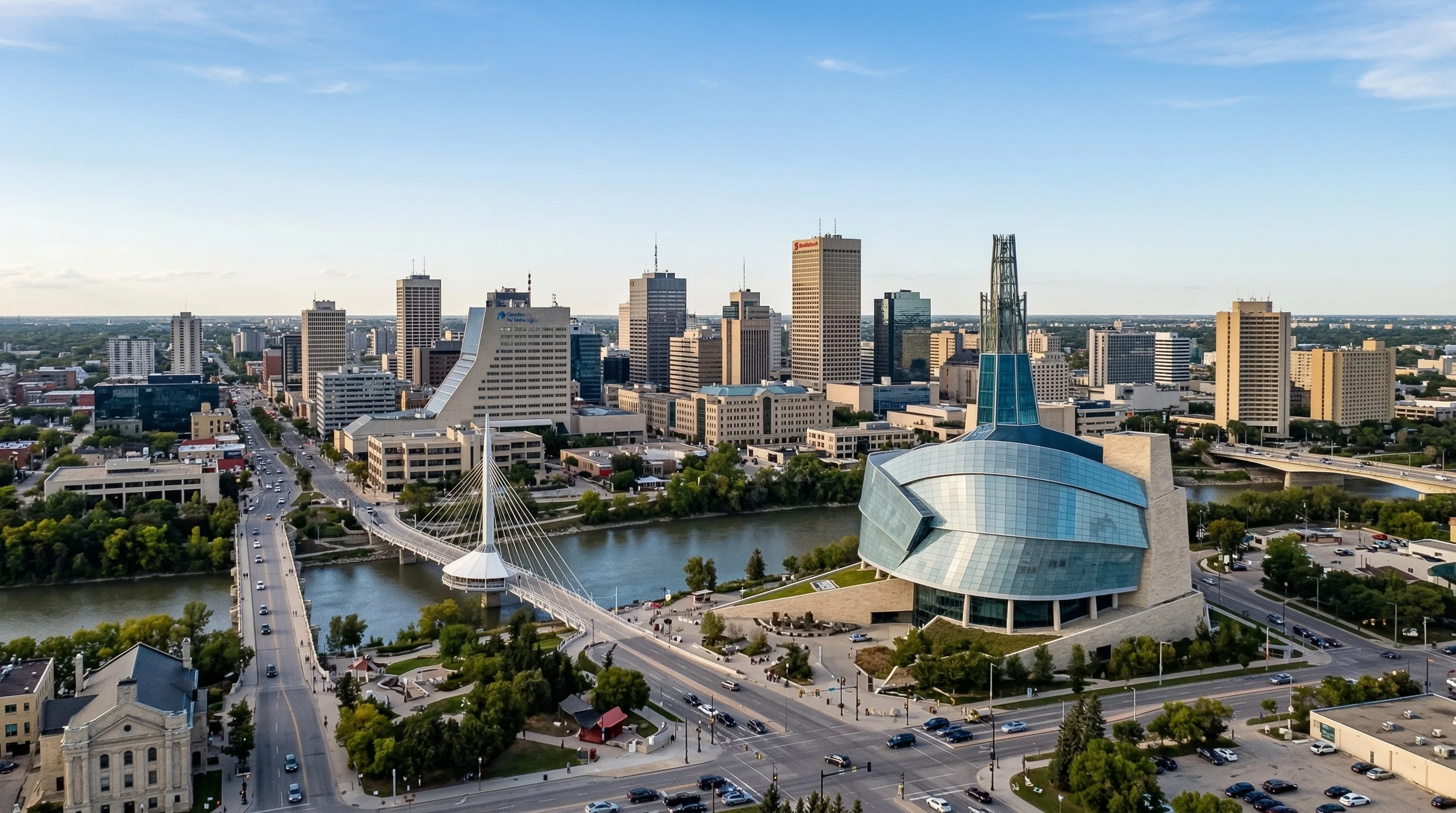
Winnipeg, Manitoba occupies a unique strategic position as the geographic center of North America, making it a crucial logistics hub for Canadian and cross-border freight. The city serves as the capital of Manitoba and is a key distribution center for the Prairie provinces, with excellent connectivity via major highways (Trans-Canada Highway, Yellowhead Route) and the Winnipeg James Armstrong Richardson International Airport. Winnipeg's central location provides efficient access to both eastern and western Canadian markets.
The city's economy is diverse, with strong sectors in agriculture, manufacturing, and transportation. Winnipeg is home to significant food processing facilities, aerospace manufacturing, and serves as a major distribution point for agricultural products from the Prairies. The city's extensive rail network, operated by Canadian National Railway and Canadian Pacific Railway, provides additional intermodal transportation options. Winnipeg's cold climate requires specialized handling for temperature-sensitive goods, particularly during winter months, making it a challenging but well-served destination for freight operations.










