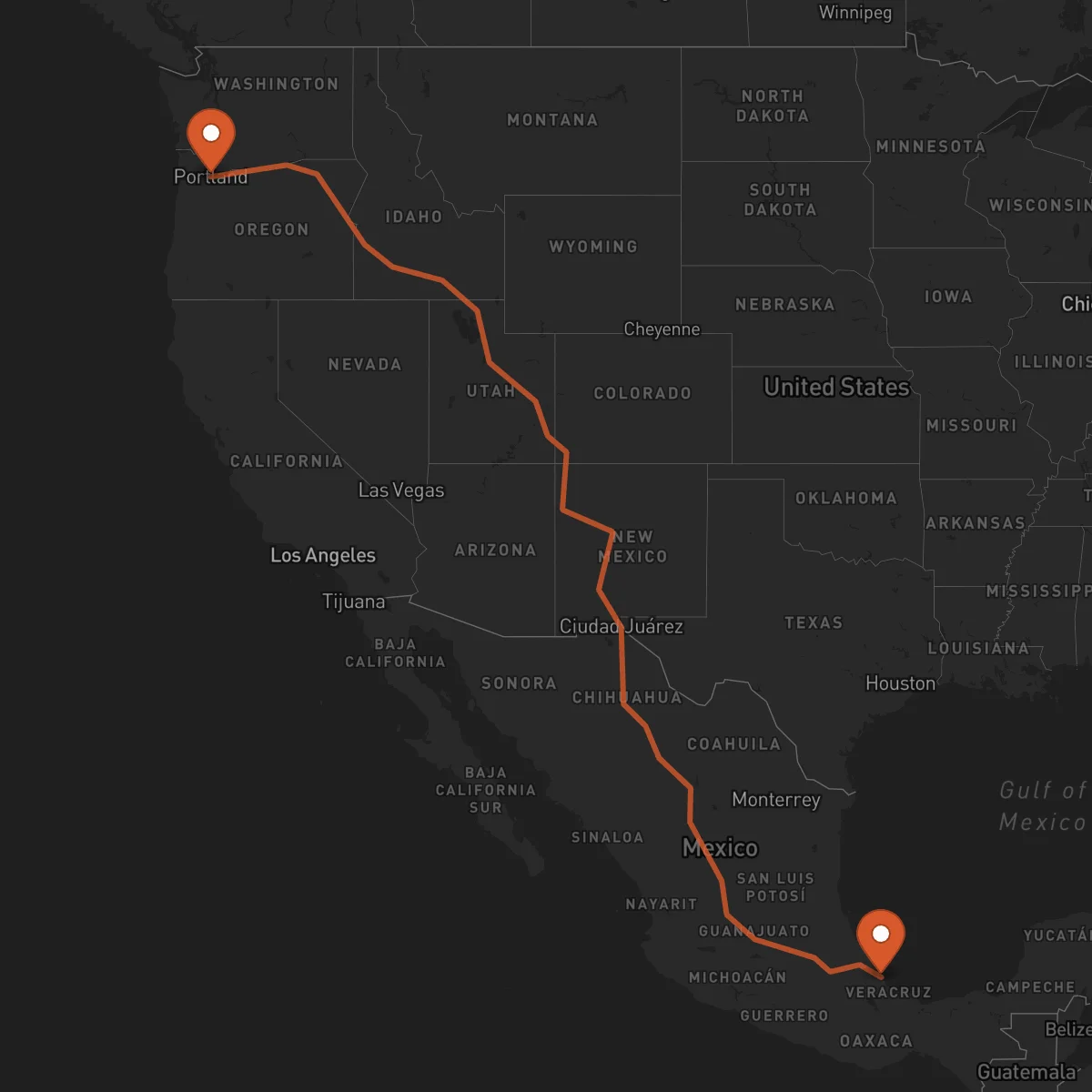
Portland to Veracruz
Veracruz → PortlandFTL freight transportation service between Portland and Veracruz. Reliable logistics solutions for your business.
Route Description
Everything you need to know about the corridor Portland - Veracruz
The logistics corridor between Portland, Oregon and Veracruz, Veracruz represents a vital trade route connecting the Pacific Northwest of the United States with one of Mexico's most important Atlantic ports. This cross-border corridor spans approximately 3,811 kilometers and serves as a crucial link for companies moving goods between these two strategic regions. The route traverses diverse terrain and crosses multiple states, requiring expert knowledge of cross-border regulations and efficient coordination to ensure timely delivery.
This corridor facilitates significant commercial exchange between the industrial and technology sectors of the Pacific Northwest and the manufacturing, automotive, and agricultural industries of Veracruz. Companies operating along this route benefit from Portland's position as a major West Coast port and Veracruz's status as Mexico's primary Gulf port, creating a seamless supply chain connection. The movement of goods includes electronics, machinery, automotive parts, and various industrial products that support both economies.
Key transportation infrastructure includes major highways such as I-5, I-15, and Mexican Federal Highways 85 and 180. The primary border crossing at Laredo/Nuevo Laredo serves as the main point of entry and exit, where our certified providers ensure smooth customs clearance. Control Terrestre facilitates operations on this corridor through our network of C-TPAT and FAST-certified carriers, providing dedicated FTL services that maintain cargo integrity and optimize transit times across this extensive international route.
Services for this Route
Available services for the corridor Portland - Veracruz
 Origin
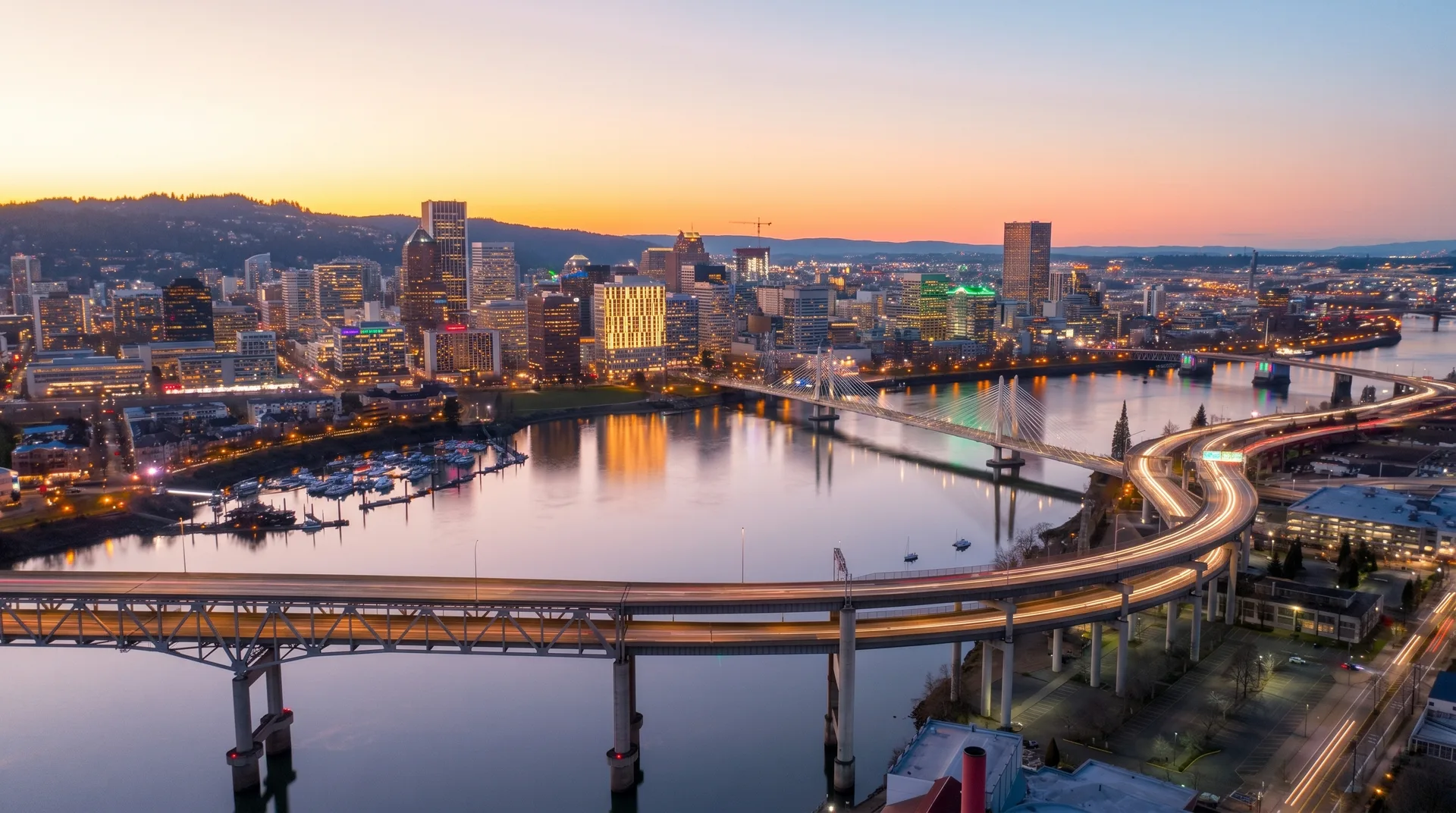
Portland
Portland, Oregon serves as a strategic logistics hub on the West Coast of the United States, offering exceptional connectivity for freight transportation. The city's location provides direct access to major interstate highways, including I-5 which runs north-south along the West Coast, and I-84 which connects to the Midwest. Portland's international airport and the Port of Portland, with its marine terminals, create multimodal transportation options that enhance supply chain flexibility. The region's robust infrastructure supports efficient distribution to both coastal and inland destinations.
The Portland metropolitan area is home to diverse industries including technology, manufacturing, and agriculture. Major employers in the tech sector, combined with the region's strong presence in outdoor equipment manufacturing and food processing, generate substantial freight volumes. The area's proximity to major West Coast ports and its role as a distribution center for the Pacific Northwest make it an ideal origin point for cross-border freight movements. Portland's business-friendly environment and skilled workforce continue to attract companies that require reliable logistics solutions.
 Destination
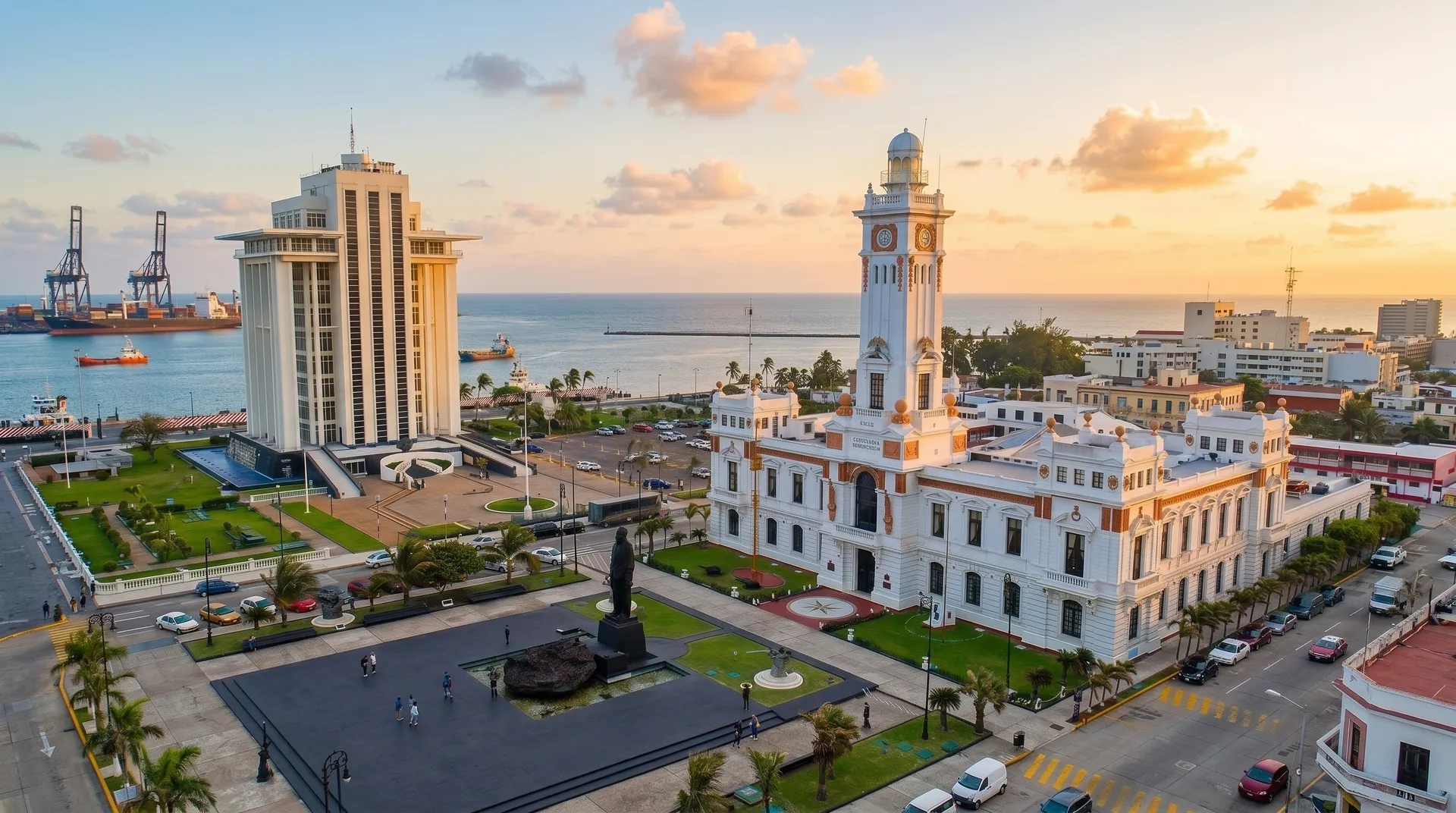
Veracruz, located on Mexico's Gulf coast, stands as one of the country's most important port cities and a strategic gateway for international trade. The Port of Veracruz, along with the nearby Port of Coatzacoalcos, forms a critical logistics hub that handles a significant portion of Mexico's maritime cargo. The city's location provides direct access to major Mexican highways, including Federal Highway 180, which connects to the central and northern regions of the country. Veracruz's infrastructure includes modern port facilities, rail connections, and an international airport, creating a comprehensive transportation network.
The region's economy is driven by a diverse mix of industries including petroleum refining, manufacturing, agriculture, and fishing. Veracruz is particularly important for automotive manufacturing, with several assembly plants in the surrounding area, and serves as a key entry point for imported goods destined for central and southern Mexico. The city's strategic position on the Gulf of Mexico makes it an essential link in trade routes connecting Mexico with the United States, Europe, and other international markets, supporting both import and export activities.










