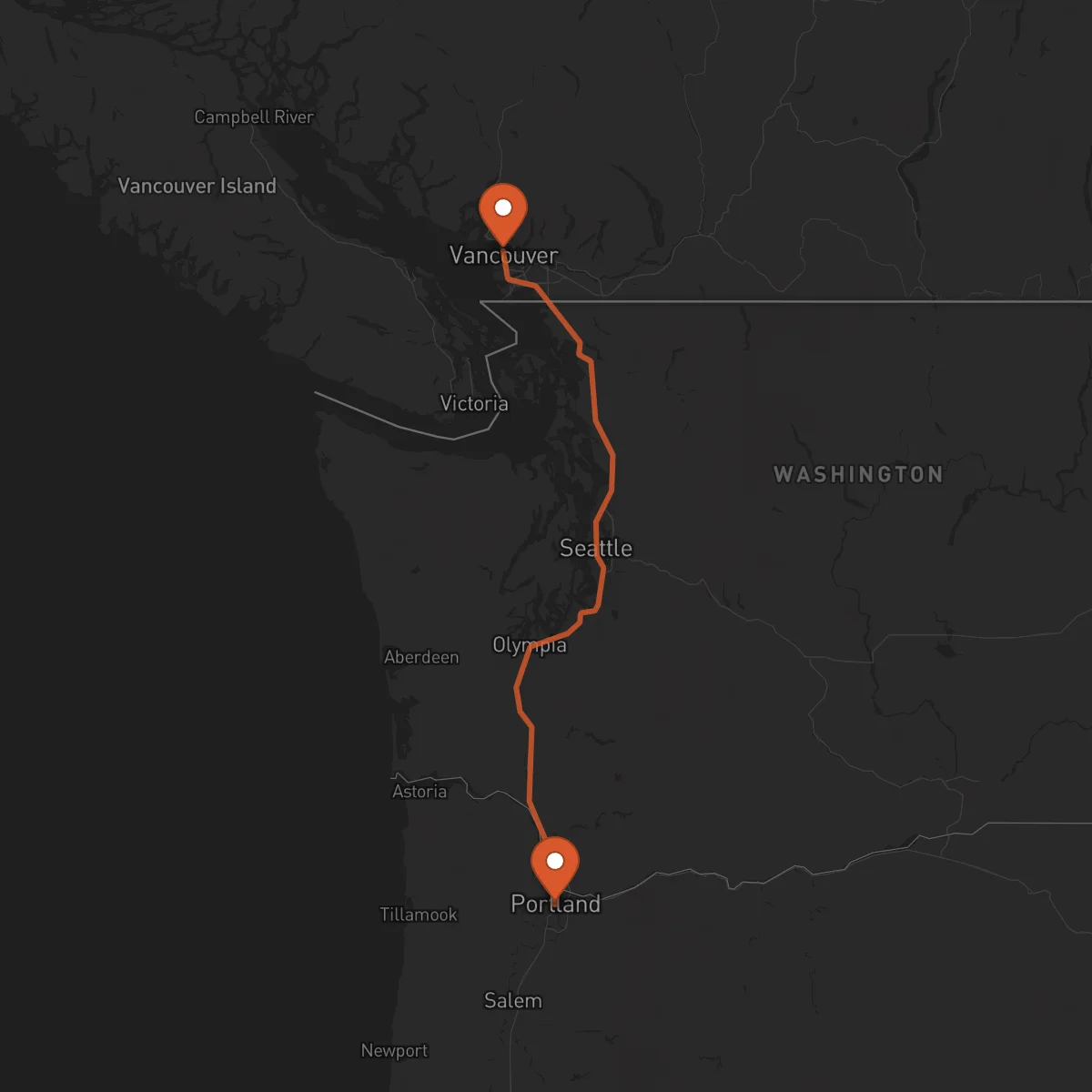
Portland to Vancouver
Vancouver → PortlandFTL freight transportation service between Portland and Vancouver. Reliable logistics solutions for your business.
Route Description
Everything you need to know about the corridor Portland - Vancouver
The Portland to Vancouver corridor represents one of the most important cross-border freight routes in the Pacific Northwest, connecting the vibrant economic hub of Oregon with Canada's gateway to the Pacific. This 420-kilometer route traverses diverse landscapes, from the urban centers of the Willamette Valley to the majestic forests of the Cascade Range and the coastal plains of British Columbia. The corridor serves as a critical artery for North American trade, facilitating the movement of goods between the United States and Canada while supporting the economic integration of the Cascadia Innovation Corridor.
The economic significance of this route is underscored by the complementary industrial strengths of both regions. Portland's strategic position as a major West Coast port and distribution center pairs perfectly with Vancouver's role as Canada's largest port and a gateway for Asian trade. Together, they form a powerful logistics ecosystem that handles everything from high-tech electronics and agricultural products to automotive parts and consumer goods. The corridor benefits from the strong trade relationship between the two nations, with billions of dollars in goods moving across the border annually.
Transportation infrastructure along this route is robust and well-developed. The primary highway is Interstate 5 (I-5) running north-south through Portland, which connects to British Columbia Highway 99 in Vancouver. This major interstate highway provides a direct, efficient route for freight transportation. The corridor also benefits from excellent intermodal connections, with the Port of Portland offering rail and barge services that complement trucking operations. For cross-border movements, the Pacific Highway Border Crossing (also known as Truck Crossing) between Blaine, Washington, and Surrey, British Columbia, serves as the main point of entry, offering dedicated commercial lanes and streamlined customs processing for pre-cleared shipments.
Control Terrestre facilitates seamless operations on this corridor through our extensive network of certified transportation providers and our deep expertise in cross-border logistics. We understand the complexities of customs documentation, NAFTA/USMCA compliance, and the specific requirements for moving goods between the United States and Canada. Our team ensures that shipments move efficiently through the border crossing process, minimizing delays and providing real-time tracking and communication throughout the journey. Whether you're shipping full truckloads of industrial equipment, perishable goods requiring refrigerated transport, or specialized cargo with unique handling requirements, we have the capabilities and local knowledge to deliver your freight safely and on time from Portland to Vancouver.
Services for this Route
Available services for the corridor Portland - Vancouver
 Origin
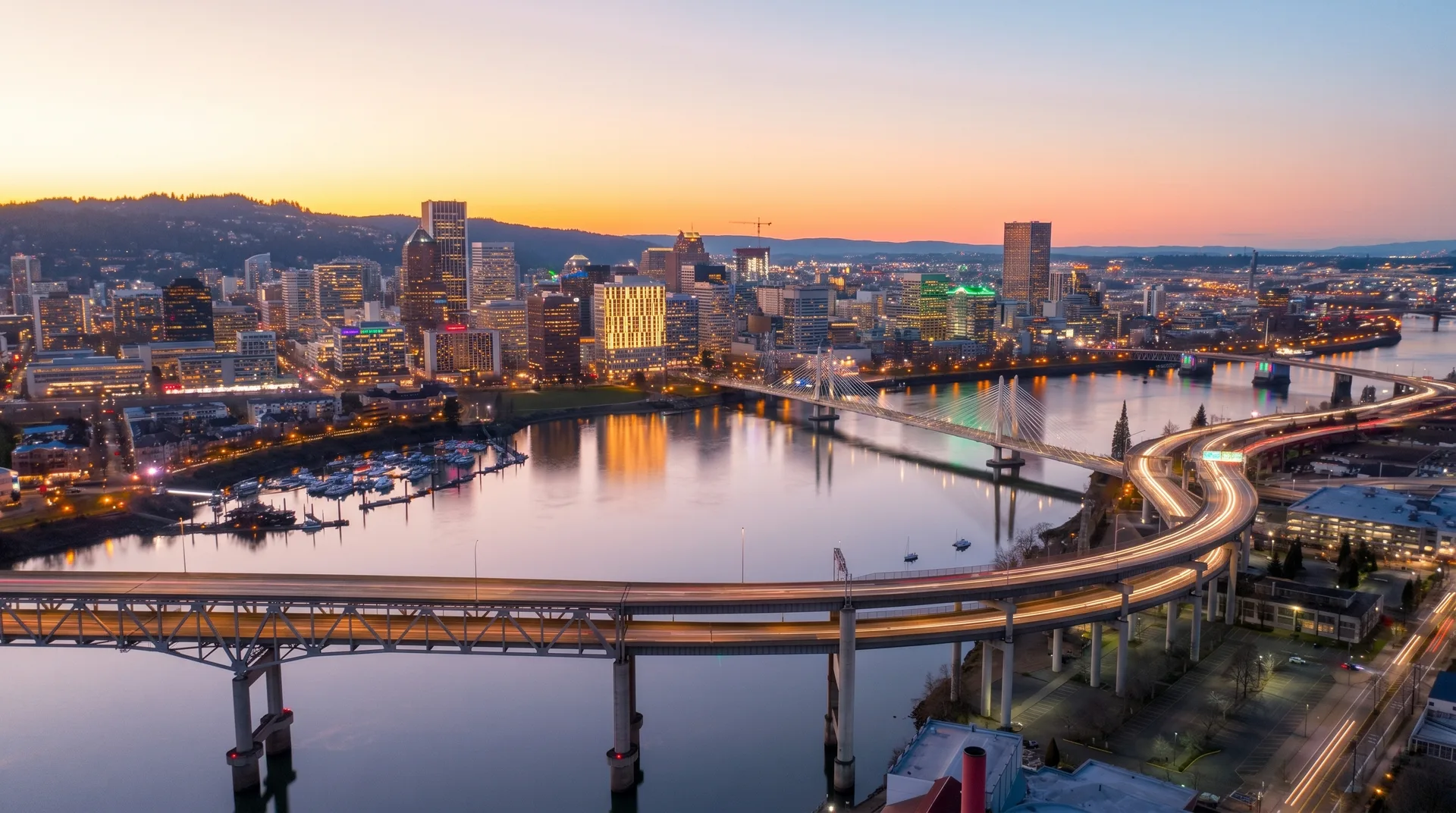
Portland
Portland, Oregon stands as a strategic logistics hub on the West Coast, leveraging its advantageous location at the confluence of the Willamette and Columbia Rivers. The city's position provides direct access to both maritime shipping through the Port of Portland and extensive inland transportation networks. Portland's economy is diverse and robust, with key industries including technology, manufacturing, agriculture, and distribution. The region is home to major employers in the tech sector, a thriving craft brewing industry, and significant agricultural production from the fertile Willamette Valley. The city's commitment to sustainable development and green logistics has made it a leader in environmentally conscious freight transportation solutions.
The transportation infrastructure in Portland is comprehensive and well-integrated. The Port of Portland operates multiple marine terminals capable of handling various cargo types, while the city is served by three major interstate highways: I-5, I-84, and I-405. The region also benefits from an extensive rail network operated by Union Pacific and BNSF, providing intermodal connectivity to national and international markets. Portland International Airport (PDX) adds another dimension to the city's logistics capabilities, offering air cargo services for time-sensitive shipments. The combination of these transportation modes, along with the city's strategic location just 80 miles from the Pacific Ocean, makes Portland an ideal origin point for freight moving throughout the Pacific Northwest and beyond.
 Destination
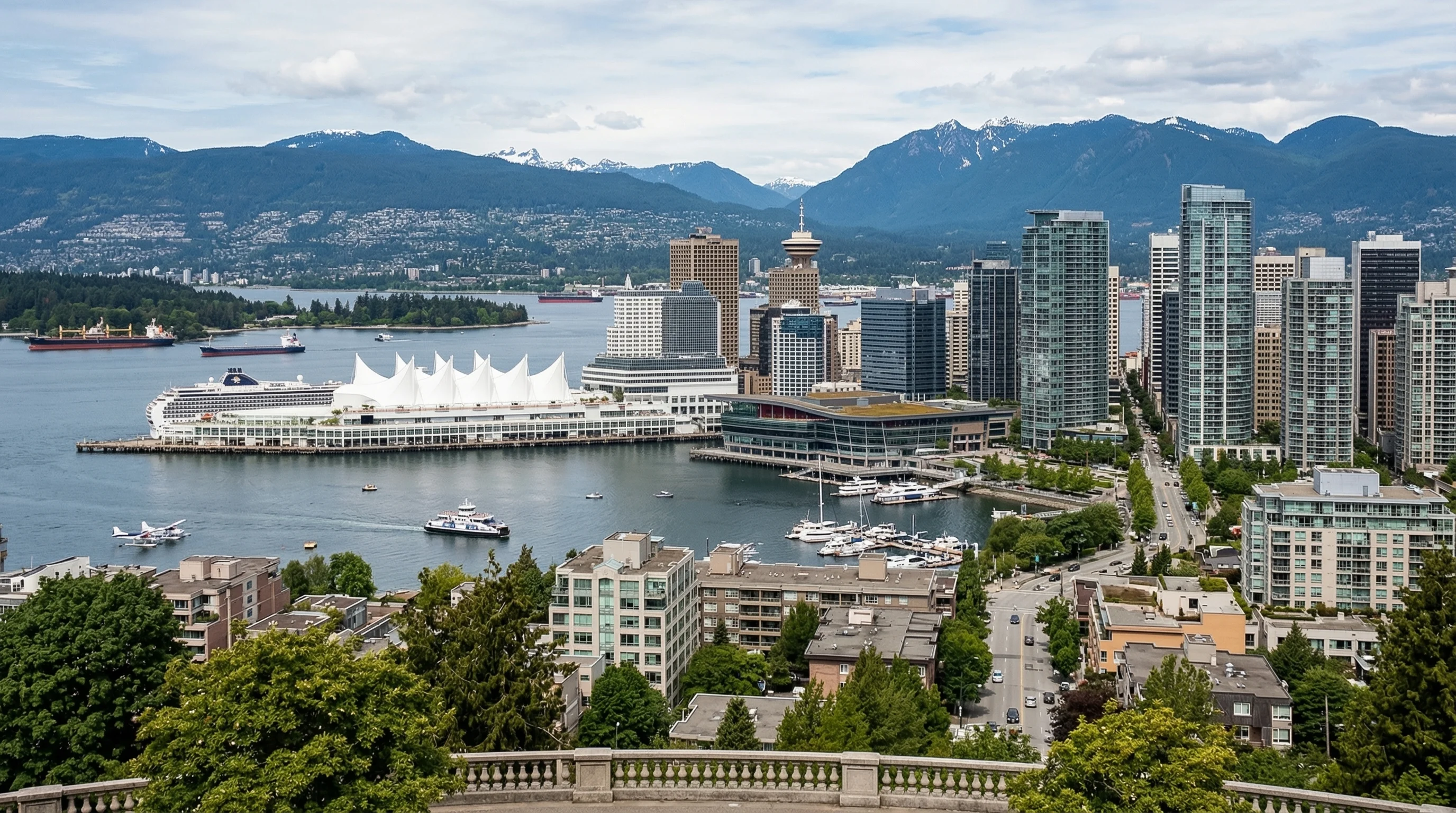
Vancouver
Vancouver, British Columbia serves as Canada's primary gateway to the Pacific and a critical logistics hub for the entire country. Located on the mainland of southwestern British Columbia, the city sits at the intersection of major trade routes between Asia, Europe, and North America. Vancouver's economy is characterized by its strong international trade focus, with the Port of Vancouver being the largest in Canada and handling over $200 billion in goods annually. The city is a major center for the forestry industry, mining, technology, and film production, creating a diverse economic base that drives significant freight movement through the region.
The transportation infrastructure in Vancouver is world-class and designed to handle high volumes of international trade. The Port of Vancouver operates multiple terminals, including container facilities, bulk cargo terminals, and specialized facilities for vehicles and breakbulk cargo. The city is connected to the North American highway network via Highway 99 (the Sea-to-Sky Highway) and the Trans-Canada Highway, providing efficient road access to the United States border and the rest of Canada. Vancouver's rail infrastructure is equally impressive, with Canadian National (CN) and Canadian Pacific (CP) railways operating extensive networks that connect to major North American markets. The city's international airport, YVR, is a major cargo hub that complements the sea and land transportation options, creating a truly multimodal logistics environment that can accommodate any type of freight movement.










