
Portland to Jinotepe
Jinotepe → PortlandFTL freight transportation service between Portland and Jinotepe. Reliable logistics solutions for your business.
Route Description
Everything you need to know about the corridor Portland - Jinotepe
The Portland to Jinotepe corridor represents a vital logistics connection between the United States and Nicaragua, spanning approximately 5,086 kilometers through diverse terrain and multiple countries. This cross-border route traverses the Pacific Northwest, crosses through the United States, Mexico, and Central America, ultimately reaching Nicaragua's agricultural heartland. The corridor's strategic importance lies in connecting the industrial and technological hub of Portland with Nicaragua's growing manufacturing and agricultural sectors, facilitating the movement of goods between North America and Central America.
Along this route, major transportation infrastructure includes the I-5 corridor through the western United States, connecting to Mexican Federal Highways 85 and 45, then continuing through Central America via CA-1 (Pan-American Highway). Key border crossings include the Laredo-Nuevo Laredo crossing and various points along the Mexico-Guatemala border. The route requires careful coordination of customs procedures across multiple jurisdictions, with particular attention to documentation requirements for cross-border freight movement.
Control Terrestre specializes in managing this complex corridor through our network of certified carriers and strategic partnerships. Our expertise in cross-border logistics ensures seamless coordination of documentation, customs clearance, and compliance with regulations across all countries involved. We provide dedicated FTL services that maintain cargo integrity throughout the journey, with real-time tracking and communication to keep our clients informed at every stage of the transportation process.
Services for this Route
Available services for the corridor Portland - Jinotepe
 Origin
Portland
Portland, Oregon serves as a strategic logistics hub on the West Coast of the United States, offering exceptional connectivity through multiple transportation modes. The city's location provides direct access to major highways including I-5, which runs north-south along the West Coast, and I-84, connecting to the broader interstate network. Portland's Port of Portland, including the marine terminals on the Columbia River, facilitates international shipping connections, while Portland International Airport supports air cargo operations. The region's robust infrastructure makes it an ideal origin point for cross-border freight movements to Central America.
The Portland metropolitan area is home to diverse industries including technology, manufacturing, agriculture, and forestry. The region's strong presence in electronics, athletic footwear, and high-tech manufacturing creates significant freight volumes moving to international markets. Additionally, Portland's proximity to agricultural regions in the Pacific Northwest generates substantial cargo flows of food products, beverages, and agricultural equipment, all of which contribute to the corridor's freight activity.
 Destination
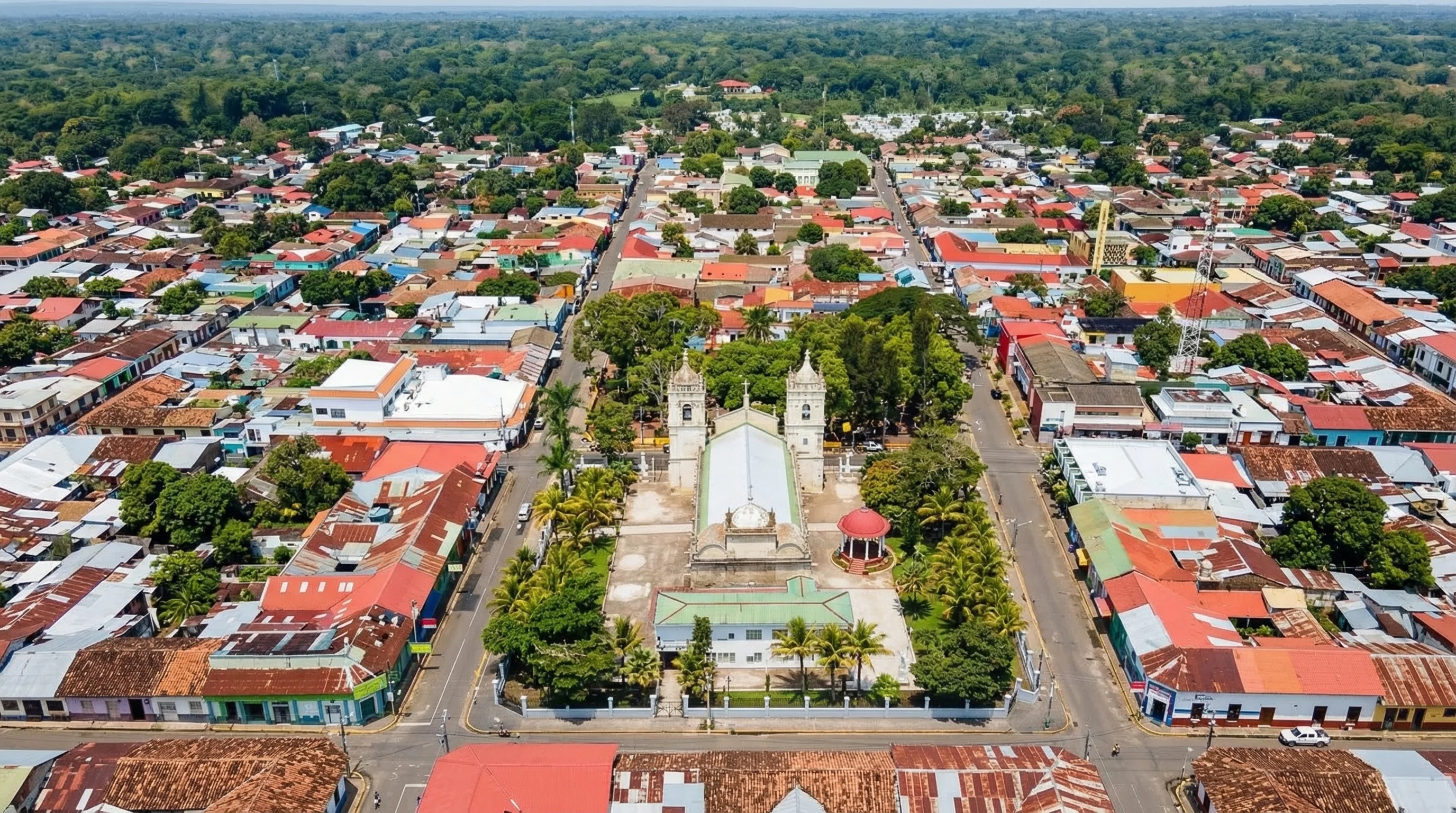
Jinotepe, located in the Carazo department of Nicaragua, occupies a strategic position in the country's logistics network, situated approximately 45 kilometers from Managua and near the Pacific coast. The city benefits from its proximity to Nicaragua's primary transportation corridors, including the Pan-American Highway (CA-1), which provides crucial connections to the country's ports and borders. The nearby Port of Corinto on the Pacific coast serves as Nicaragua's main maritime gateway, while the capital city of Managua offers additional infrastructure support including international airport facilities.
Jinotepe and the surrounding Carazo region are known for their agricultural production, including coffee, sugar cane, and various tropical fruits. The area also hosts growing manufacturing and assembly operations, particularly in the maquiladora sector. These industries create demand for both inbound raw materials and outbound finished products, making efficient logistics connections to North American markets essential for regional economic development. The city's infrastructure continues to develop, with improvements to roadways and logistics facilities supporting increased freight volumes.










