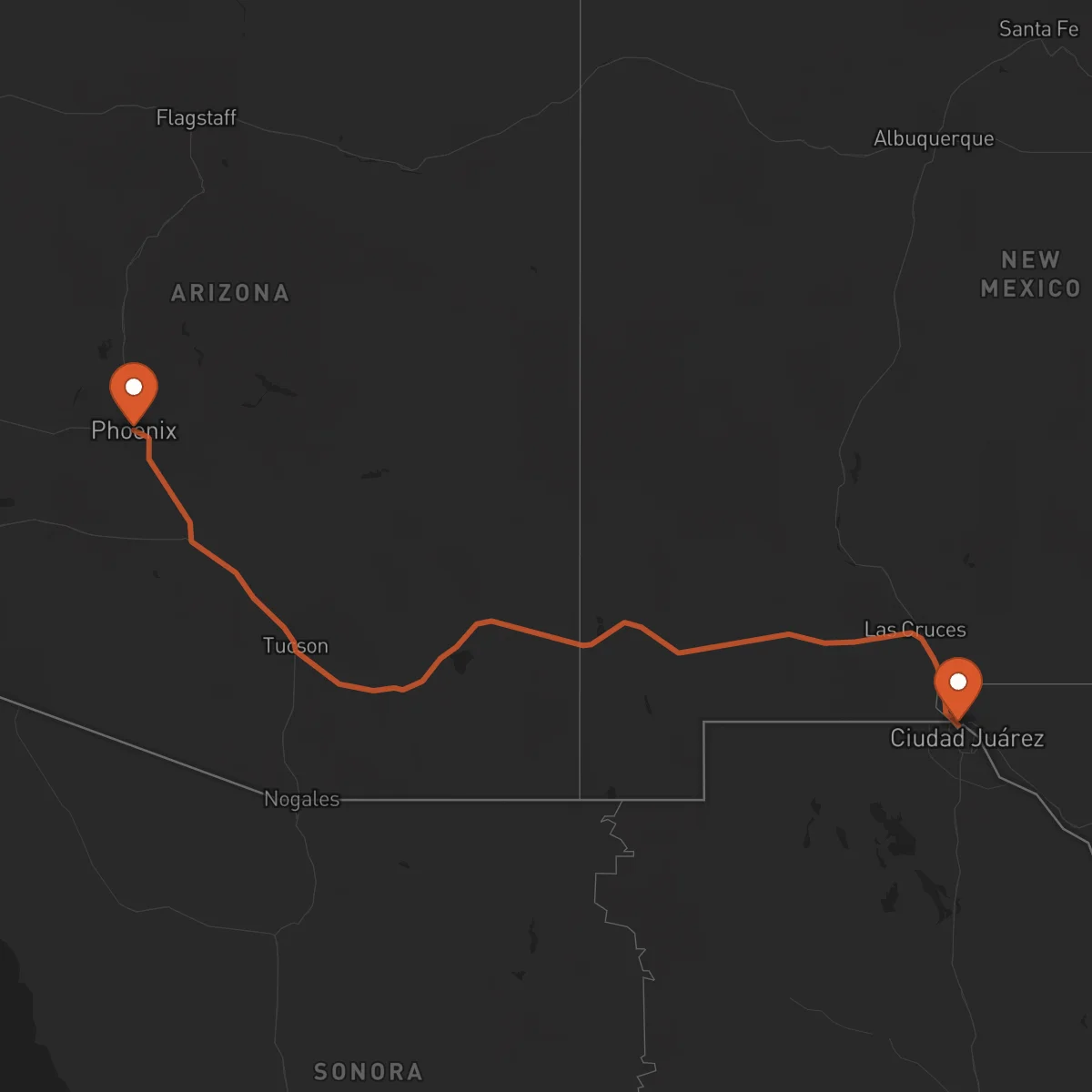
Phoenix to El Paso
El Paso → PhoenixFTL freight transportation service between Phoenix and El Paso. Reliable logistics solutions for your business.
Route Description
Everything you need to know about the corridor Phoenix - El Paso
The Phoenix to El Paso corridor represents a vital freight transportation route in the southwestern United States, connecting two major economic hubs across approximately 556 kilometers. This domestic corridor serves as a crucial link between Arizona's capital and one of Texas's most important border cities, facilitating the movement of goods through a region characterized by diverse industrial activities and growing economic opportunities. The route traverses through varied terrain and crosses state lines, making it an essential artery for businesses operating in both states.
The economic significance of this corridor is underscored by the industrial composition of both Phoenix and El Paso. Phoenix serves as a major center for technology, manufacturing, and distribution, while El Paso's strategic location as a border city makes it a key player in international trade and logistics. The corridor supports industries ranging from automotive and electronics to agricultural products and consumer goods, with manufacturing facilities, warehouses, and distribution centers relying on efficient transportation services to maintain their supply chains.
Transportation infrastructure along this route includes major highways such as Interstate 10, which provides a direct and well-maintained path between the two cities. This infrastructure supports the movement of various freight types, from standard palletized goods to specialized cargo requiring specific handling. Control Terrestre leverages this robust infrastructure to provide reliable full truckload (FTL) transportation services, ensuring that businesses can move their products efficiently and securely between these important economic centers.
Services for this Route
Available services for the corridor Phoenix - El Paso
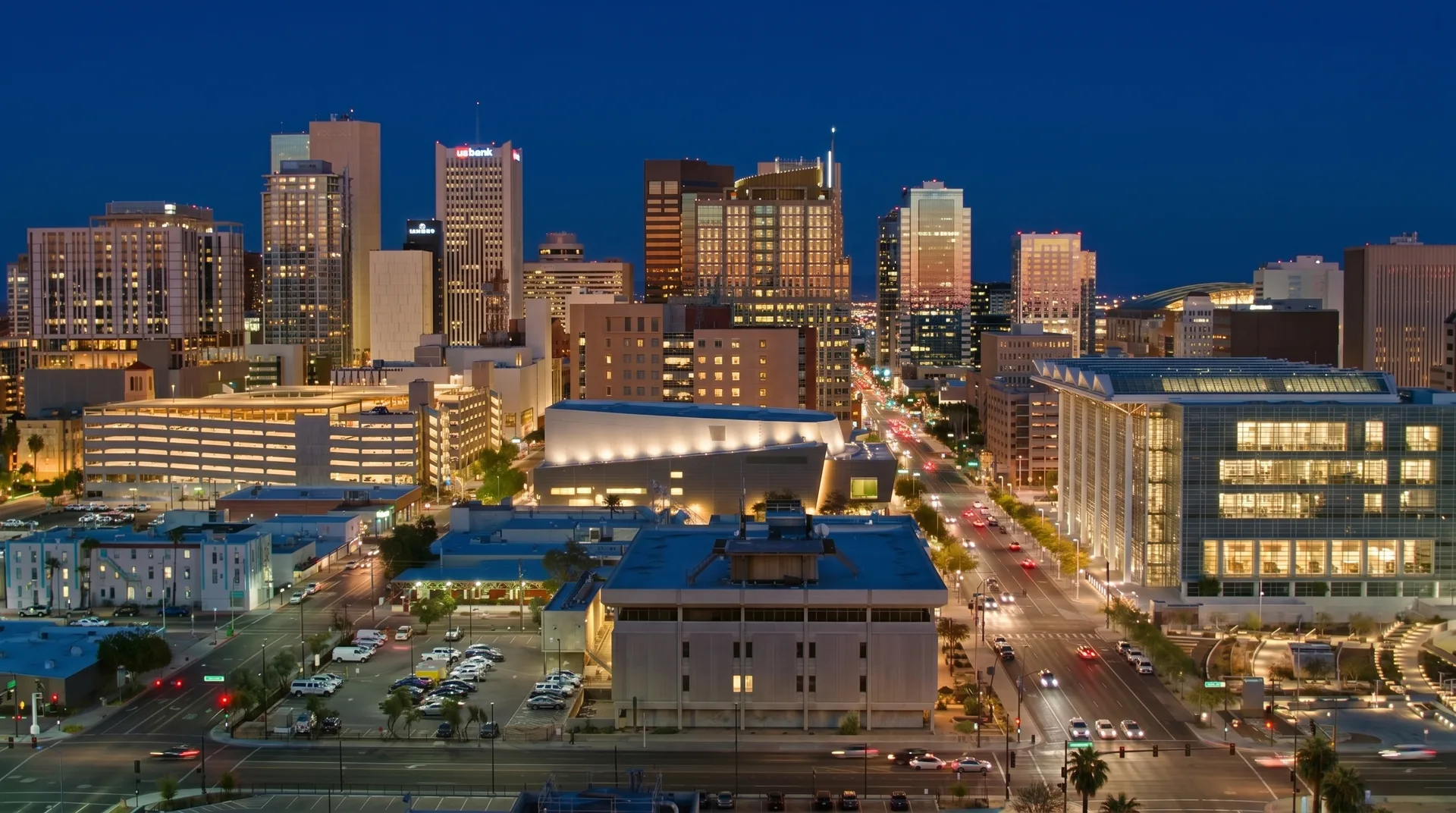 Origin
Phoenix
Phoenix, Arizona, stands as a strategic logistics hub in the southwestern United States, offering unique advantages for freight transportation. Located in the Valley of the Sun, Phoenix benefits from its central position in Arizona and its proximity to major transportation routes. The city's infrastructure includes Phoenix Sky Harbor International Airport, extensive rail connections through Union Pacific and BNSF railways, and a well-developed highway network. Phoenix's strategic location makes it an ideal origin point for freight moving to various destinations across the western United States and beyond.
The economic landscape of Phoenix is diverse and dynamic, with key industries including technology, aerospace, manufacturing, and healthcare. The city has experienced significant growth in its technology sector, earning it the nickname 'Silicon Desert,' while traditional industries like agriculture and mining continue to play important roles. Phoenix's manufacturing sector produces a wide range of goods, from electronics and semiconductors to automotive parts and food products. This industrial diversity creates a constant flow of freight moving in and out of the city, supported by a robust logistics infrastructure that includes numerous warehousing and distribution facilities strategically located throughout the metropolitan area.
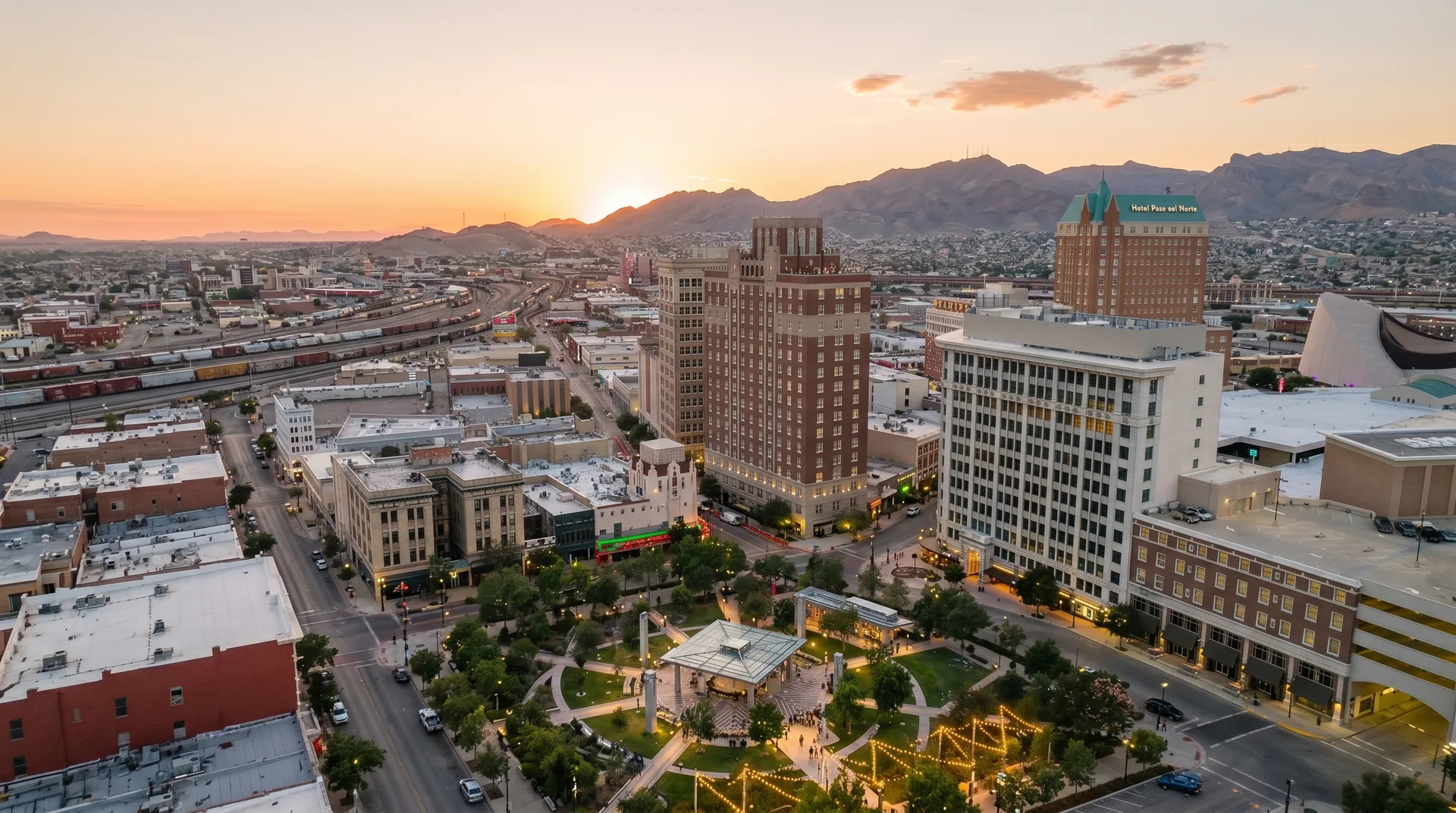 Destination
El Paso
El Paso, Texas, occupies a uniquely strategic position as a major logistics gateway on the U.S.-Mexico border. Situated at the westernmost point of Texas and directly across from Ciudad Juárez, Mexico, El Paso serves as a critical junction for both domestic and international freight movement. The city's transportation infrastructure is exceptionally well-developed, featuring multiple interstate highways, including I-10, I-25, and I-110, as well as the Union Pacific and BNSF rail networks. El Paso International Airport and the nearby Santa Teresa Airport further enhance the city's connectivity, making it an ideal destination for freight transportation.
El Paso's economy is heavily influenced by its border location, with international trade playing a dominant role. The city is home to numerous maquiladoras (manufacturing plants) and serves as a major distribution center for goods moving between the United States and Mexico. Key industries in El Paso include manufacturing, logistics, healthcare, and education. The presence of Fort Bliss, one of the largest military installations in the United States, also contributes significantly to the local economy and creates additional freight transportation needs. El Paso's strategic position and diverse economic base make it a crucial node in the regional and international supply chain network.










