Phoenix to Baltimore
Baltimore → PhoenixFTL freight transportation service between Phoenix and Baltimore. Reliable logistics solutions for your business.
Route Description
Everything you need to know about the corridor Phoenix - Baltimore
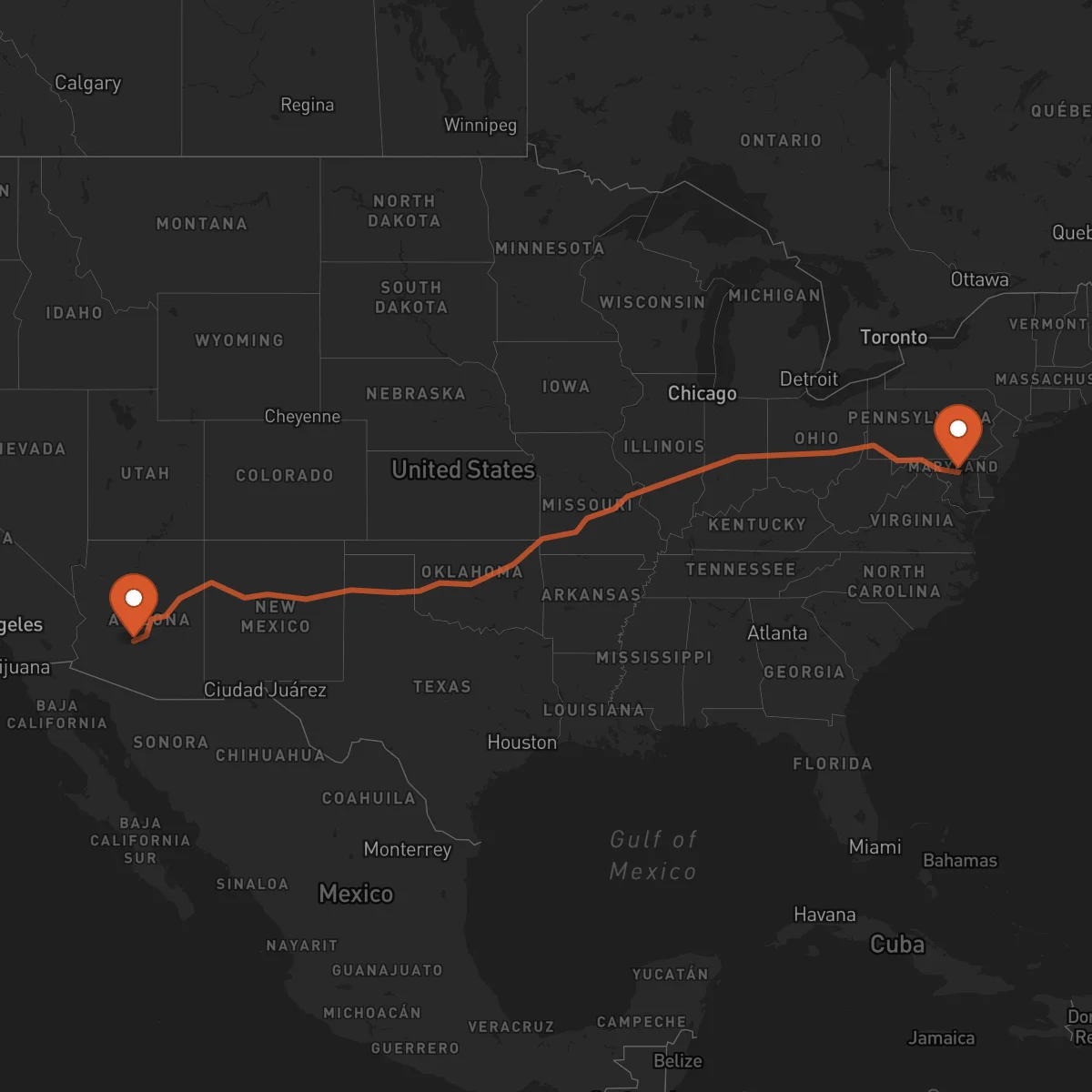
The Phoenix to Baltimore corridor represents one of the most critical freight transportation routes in the United States, connecting the Southwest with the East Coast over a distance of approximately 3219 km. This transcontinental route serves as a vital link between two major economic regions, facilitating the movement of goods from Arizona's growing industrial base to Maryland's bustling ports and distribution centers.
The corridor traverses diverse landscapes and crosses multiple states, including Arizona, New Mexico, Texas, Oklahoma, Missouri, Illinois, Indiana, Ohio, West Virginia, Pennsylvania, and Maryland. This extensive journey passes through major transportation hubs such as Albuquerque, Oklahoma City, St. Louis, Indianapolis, and Pittsburgh, each contributing to the corridor's significance in national logistics networks.
Key industries utilizing this corridor include automotive manufacturing, aerospace components, electronics, pharmaceuticals, and agricultural products. The route is particularly important for time-sensitive shipments requiring expedited delivery between the West and East Coasts. Companies in Phoenix's technology sector frequently rely on this corridor to distribute products to East Coast markets, while Baltimore's port facilities handle significant volumes of imports that need inland distribution to the Southwest.
Control Terrestre specializes in providing reliable full truckload (FTL) transportation services along this corridor, offering dedicated equipment and experienced drivers who understand the complexities of cross-country freight movement. Our strategic partnerships with certified carriers ensure consistent service quality and adherence to delivery schedules, making us the preferred choice for companies requiring dependable transportation between Phoenix and Baltimore.
Services for this Route
Available services for the corridor Phoenix - Baltimore
 Origin
Phoenix
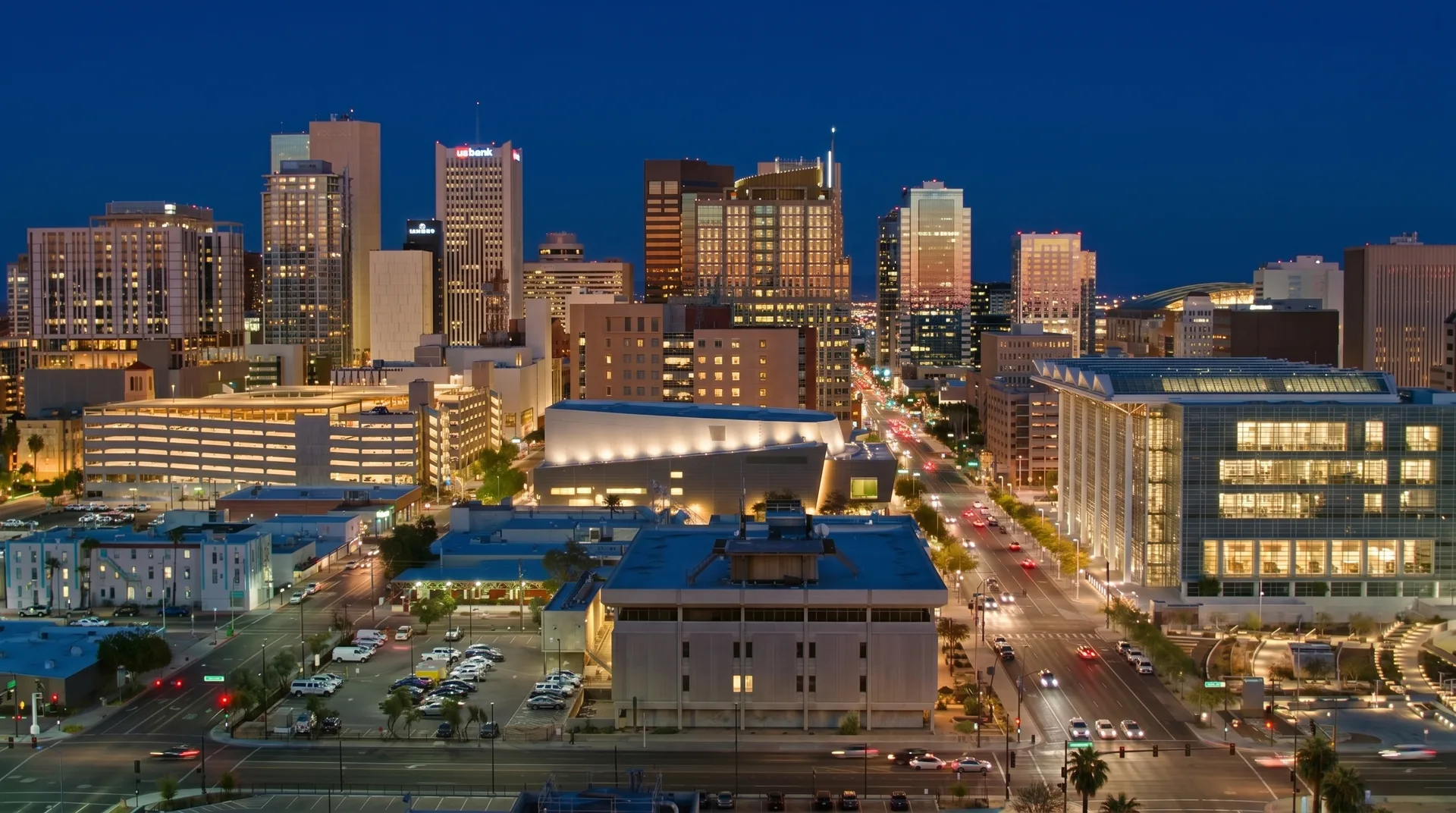
Phoenix, Arizona serves as a strategic logistics hub in the southwestern United States, offering unique advantages for freight transportation. Located in the Sonoran Desert, Phoenix benefits from its proximity to major West Coast ports while avoiding the congestion and higher costs associated with California's transportation infrastructure. The city's location provides excellent connectivity to Mexico and the broader Southwest region, making it an ideal origin point for national distribution.
The Phoenix metropolitan area is home to diverse industries including aerospace and defense, semiconductor manufacturing, data centers, and agricultural processing. Major employers such as Intel, Boeing, and Honeywell contribute to the region's robust manufacturing and technology sectors. Phoenix's economy has experienced significant growth, particularly in advanced manufacturing and logistics, creating substantial demand for reliable freight transportation services.
Phoenix boasts extensive transportation infrastructure, including Phoenix Sky Harbor International Airport, Union Pacific and BNSF rail facilities, and major highway connections via I-10, I-17, and Loop 202. The city's relatively flat terrain and year-round favorable weather conditions minimize transportation disruptions. Additionally, Phoenix's strategic location allows for efficient distribution to major markets in California, Texas, and the Mountain West region.
 Destination
Baltimore
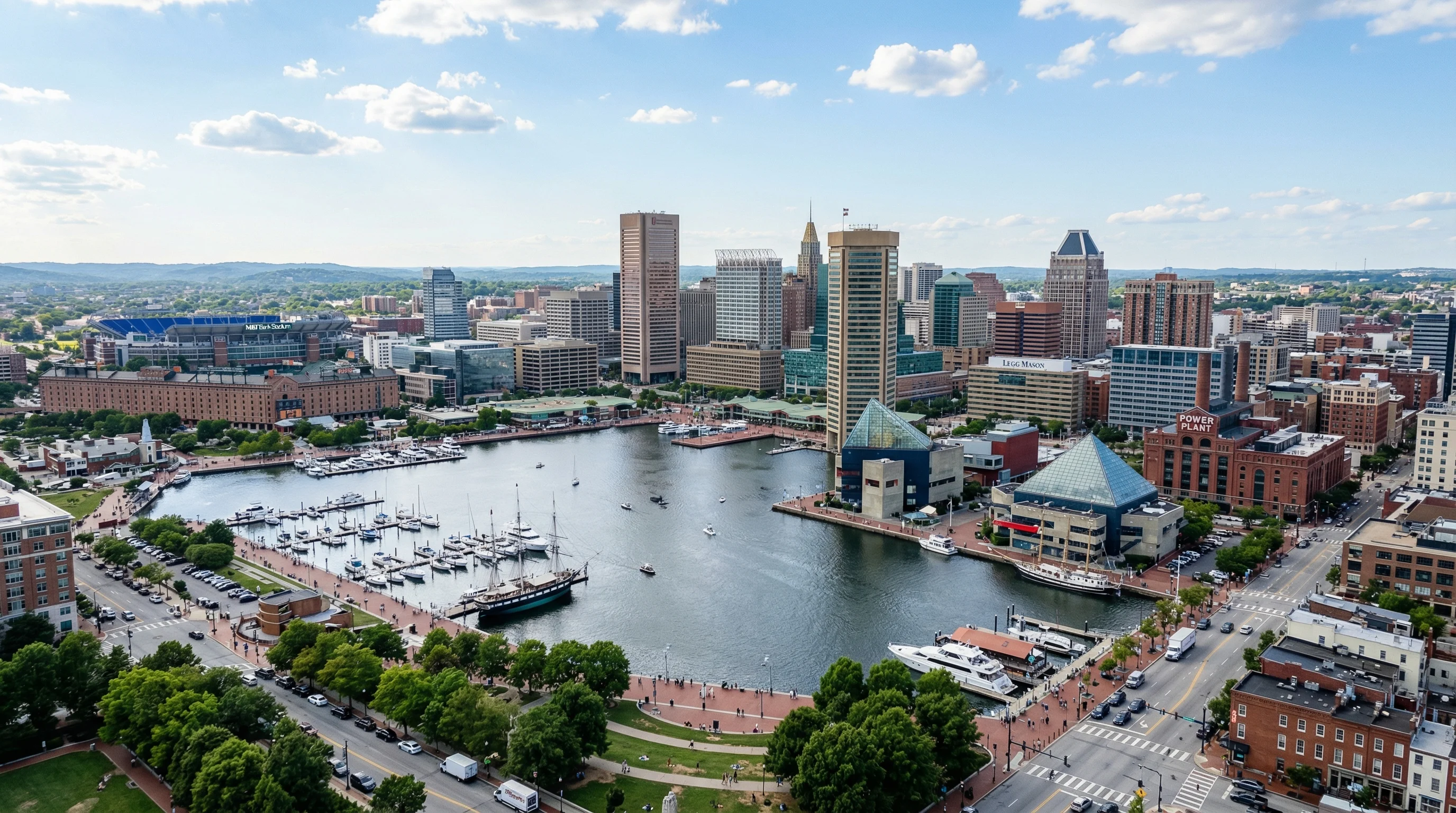
Baltimore, Maryland stands as a crucial logistics gateway on the East Coast, offering unparalleled access to major markets in the Northeast and Mid-Atlantic regions. The city's strategic location provides direct access to Interstate 95, the primary north-south highway corridor along the East Coast, and its proximity to Washington D.C. enhances its importance in national distribution networks. Baltimore's port facilities rank among the busiest in the United States, handling millions of containers annually and serving as a critical entry point for international trade.
The Baltimore metropolitan area hosts diverse industries including healthcare, biotechnology, financial services, and advanced manufacturing. Johns Hopkins University and its affiliated institutions drive significant research and development activities, while the port area supports extensive warehousing and distribution operations. The region's strong presence in life sciences and medical devices creates specialized transportation needs for temperature-sensitive and high-value cargo.
Baltimore's transportation infrastructure includes the Port of Baltimore, Baltimore/Washington International Thurgood Marshall Airport, and extensive rail connections through CSX Transportation. The city's location within 500 miles of nearly one-third of the U.S. population makes it an ideal distribution center for companies serving the Eastern Seaboard. Baltimore's relatively lower warehousing costs compared to other East Coast cities, combined with its superior port facilities, create significant advantages for companies establishing distribution operations in the region.










