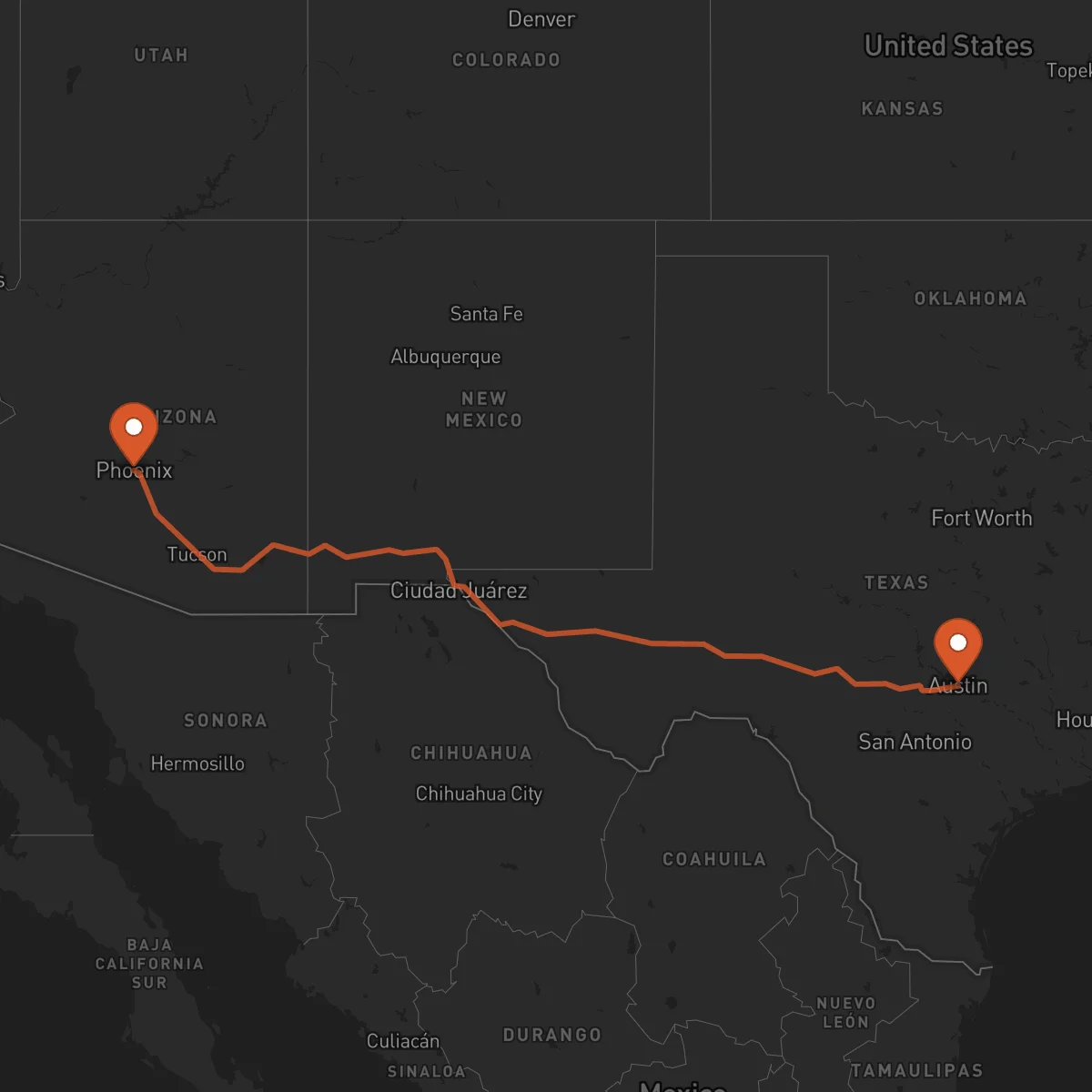
Phoenix to Austin
Austin → PhoenixFTL freight transportation service between Phoenix and Austin. Reliable logistics solutions for your business.
Route Description
Everything you need to know about the corridor Phoenix - Austin
The Phoenix-Austin corridor represents a vital logistics connection between Arizona and Texas, spanning approximately 1,397 kilometers across the southwestern United States. This strategic route links two major economic centers, facilitating the movement of goods through diverse terrain including desert landscapes and rolling plains. The corridor serves as a crucial link in the supply chain for numerous industries operating across the Sun Belt region.
The economic significance of this route cannot be overstated. Phoenix serves as a major distribution hub for the southwestern United States, while Austin has emerged as a technology and innovation center. Together, they create a dynamic logistics corridor that supports manufacturing, technology, retail, and agricultural sectors. The route passes through key metropolitan areas including Tucson, Las Cruces, and San Antonio, providing multiple opportunities for distribution and last-mile delivery.
Control Terrestre leverages this corridor to provide reliable full truckload (FTL) transportation services, utilizing major highways such as I-10 and I-35. Our network of certified carriers ensures consistent, professional service for time-sensitive and high-value shipments. We understand the unique challenges of this route, including weather variations and regional regulations, allowing us to optimize transit times and maintain the highest standards of cargo safety and security.
Services for this Route
Available services for the corridor Phoenix - Austin
 Origin
Phoenix
Phoenix, Arizona serves as a strategic logistics hub in the southwestern United States, offering exceptional connectivity to major markets across the region. The city's location provides direct access to California, Nevada, New Mexico, and Texas through an extensive network of interstate highways. Phoenix's Sky Harbor International Airport and its proximity to major ports of entry enhance its role as a critical distribution center. The city's infrastructure includes multiple intermodal facilities and warehousing complexes that support efficient freight movement and inventory management.
The Phoenix metropolitan area is home to diverse industries including aerospace and defense, semiconductor manufacturing, healthcare technology, and agriculture. The region's growing technology sector, often referred to as the "Silicon Desert," has created increased demand for reliable logistics services. Additionally, Phoenix's position as a gateway to Mexico makes it an ideal origin point for cross-border freight movements, supporting the maquiladora industry and international trade.
 Destination
Austin
Austin, Texas has established itself as a premier logistics destination, combining strategic location with a thriving business environment. The city's central Texas location provides excellent connectivity to major markets throughout the southern and southwestern United States. Austin-Bergstrom International Airport and the Port of Houston, located approximately three hours away, enhance the city's multimodal transportation capabilities. The region's well-developed highway system, including I-35, provides efficient access to both coastal and inland destinations.
Austin's economy is characterized by rapid growth in technology, clean energy, and advanced manufacturing sectors. The city has become a magnet for innovative companies and startups, creating substantial demand for specialized logistics services. The presence of major technology firms, research institutions, and manufacturing facilities has established Austin as a key node in the national supply chain. The region's commitment to sustainability and green initiatives also influences logistics operations, with many companies seeking environmentally responsible transportation solutions.










