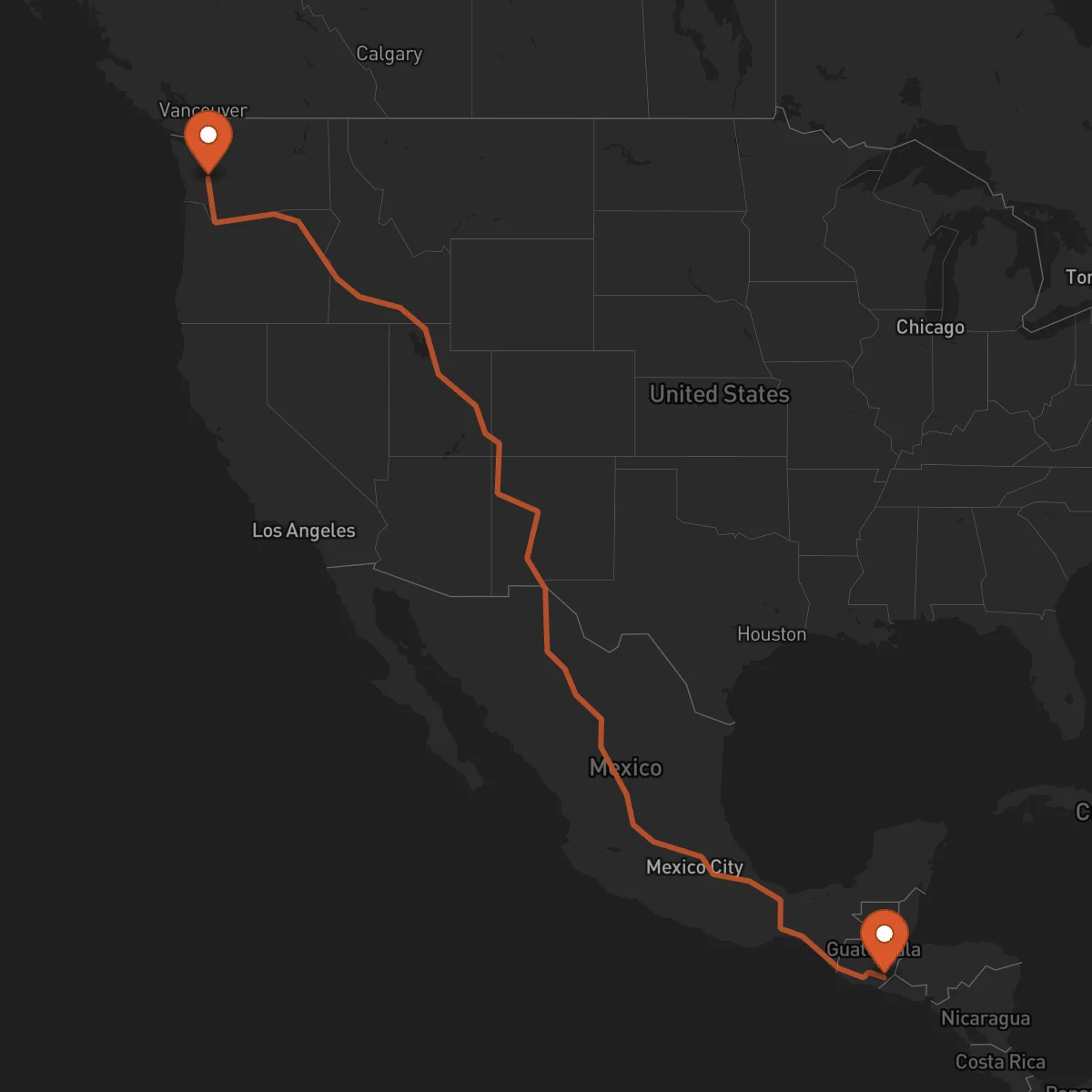
Olympia to Jutiapa
Jutiapa → OlympiaFTL freight transportation service between Olympia and Jutiapa. Reliable logistics solutions for your business.
Route Description
Everything you need to know about the corridor Olympia - Jutiapa
The Olympia to Jutiapa corridor is a critical cross-border route spanning approximately 4,755 km, linking the Pacific Northwest USA with southeastern Guatemala. This corridor enables vital trade flows between North and Central America, supporting supply chains that require reliable long-haul transportation across multiple jurisdictions. Its strategic importance stems from connecting complementary economic regions, facilitating the movement of goods from industrial and agricultural hubs to emerging markets.
Economically, the corridor serves diverse sectors. Olympia, Washington's capital, hosts government, education, and manufacturing industries, including aerospace and food processing. Jutiapa, Guatemala, is an agricultural powerhouse producing coffee, sugar cane, and tropical fruits, with growing commercial and light manufacturing activities. Key users of this route include agricultural exporters shipping perishables, manufacturers transporting raw materials and finished products, and retailers optimizing inventory through full truckload (FTL) solutions.
Transportation infrastructure involves a multi-country network. From Olympia, Interstate 5 provides the main north-south link through California into Mexico. In Mexico, Federal Highways 15 and 160 guide freight toward the southern border. The primary crossing is at Ciudad Hidalgo/Metapa and Tecún Umán, handling substantial cross-border traffic. Into Guatemala, the CA-1 highway accesses Jutiapa and extends to other regions. Customs considerations require navigating US, Mexican, and Guatemalan regulations, emphasizing documentation, tariffs, and security compliance to avoid delays.
Control Terrestre streamlines operations on this corridor through our alliance of certified providers. We offer dedicated FTL services, including specialized cargo for oversized or hazardous materials, tailored for cross-border efficiency. Our providers hold certifications like C-TPAT, FAST, and BASC, enhancing security and customs clearance. We manage end-to-end logistics—from Olympia pickup to Jutiapa delivery—with a focus on human-centric and green transportation practices. This ensures reliable, sustainable freight movement without compromising on service quality, making us a trusted partner for your corridor needs.
Services for this Route
Available services for the corridor Olympia - Jutiapa
 Origin
Olympia
Olympia, Washington, is strategically positioned on the I-5 corridor, the West Coast's primary north-south highway, offering direct access to Canada and Mexico. As the state capital, it benefits from robust infrastructure, including the Port of Olympia, which supports intermodal connections via rail and maritime routes. Key economic sectors include government and education institutions, manufacturing in aerospace and food processing, and agriculture such as dairy and timber. These industries generate consistent freight demand for outbound shipments. The city's transportation network is well-developed, with I-5 enabling seamless integration into national logistics systems, US Route 101 providing coastal alternatives, and rail lines facilitating bulk transport. This makes Olympia an optimal origin for FTL services, particularly for cross-border corridors heading south.
 Destination
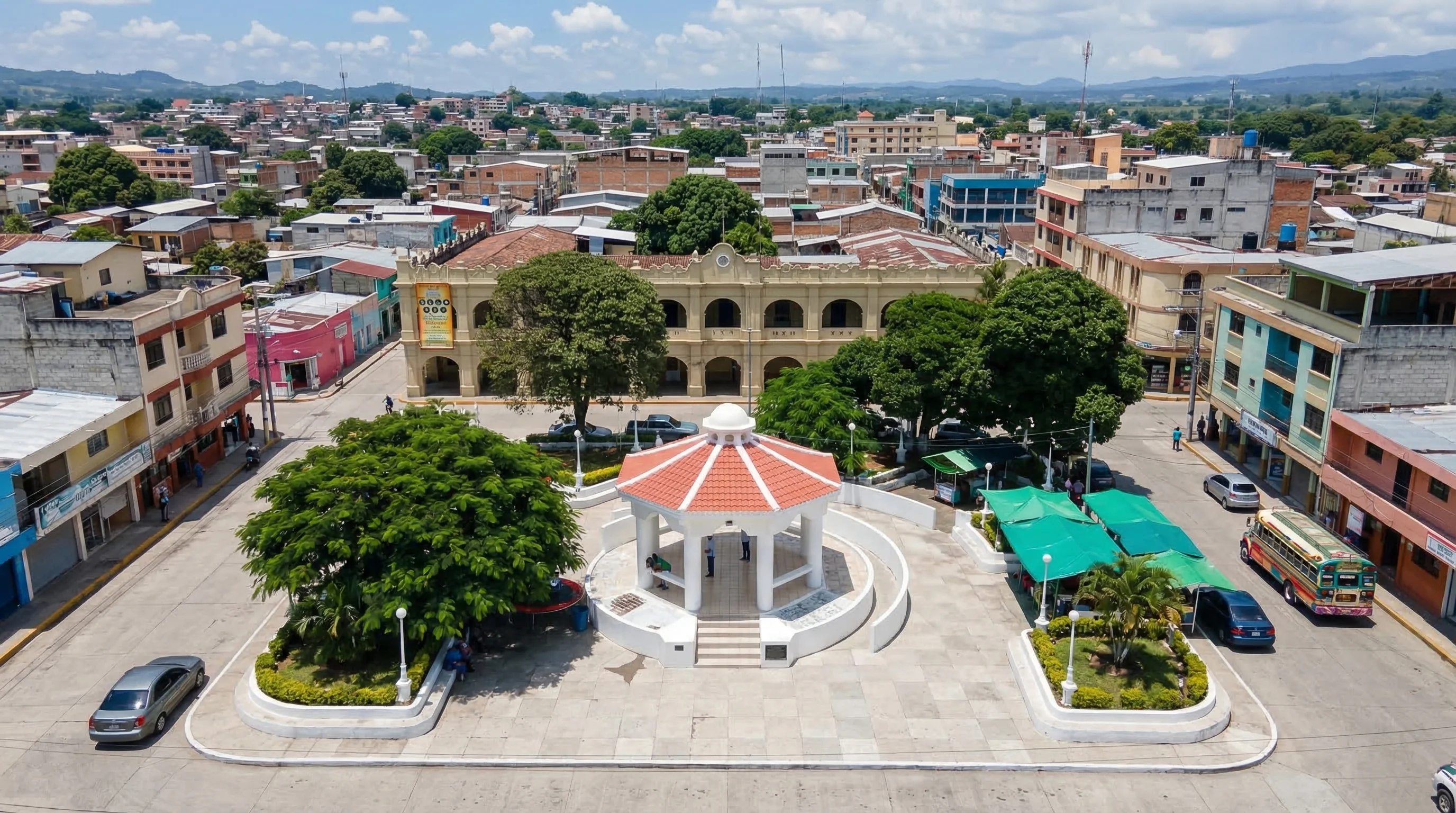
Jutiapa, located in southeastern Guatemala, serves as a strategic logistics gateway due to its proximity to borders with El Salvador and Honduras, enhancing regional trade connectivity. Economically, it is dominated by agriculture, with coffee, sugar cane, and tropical fruits as primary exports, alongside growing manufacturing and commercial sectors that rely on inbound freight for supplies. Transportation infrastructure centers on the CA-1 highway, part of the Central American road network, which links to major Pacific ports like Puerto Quetzal and facilitates domestic and international movement. This highway supports access to agricultural supply chains and industrial zones. For freight operations, Jutiapa requires expertise in local road conditions and customs procedures, but its infrastructure effectively serves as a hub for FTL services connecting Central America to North America.










