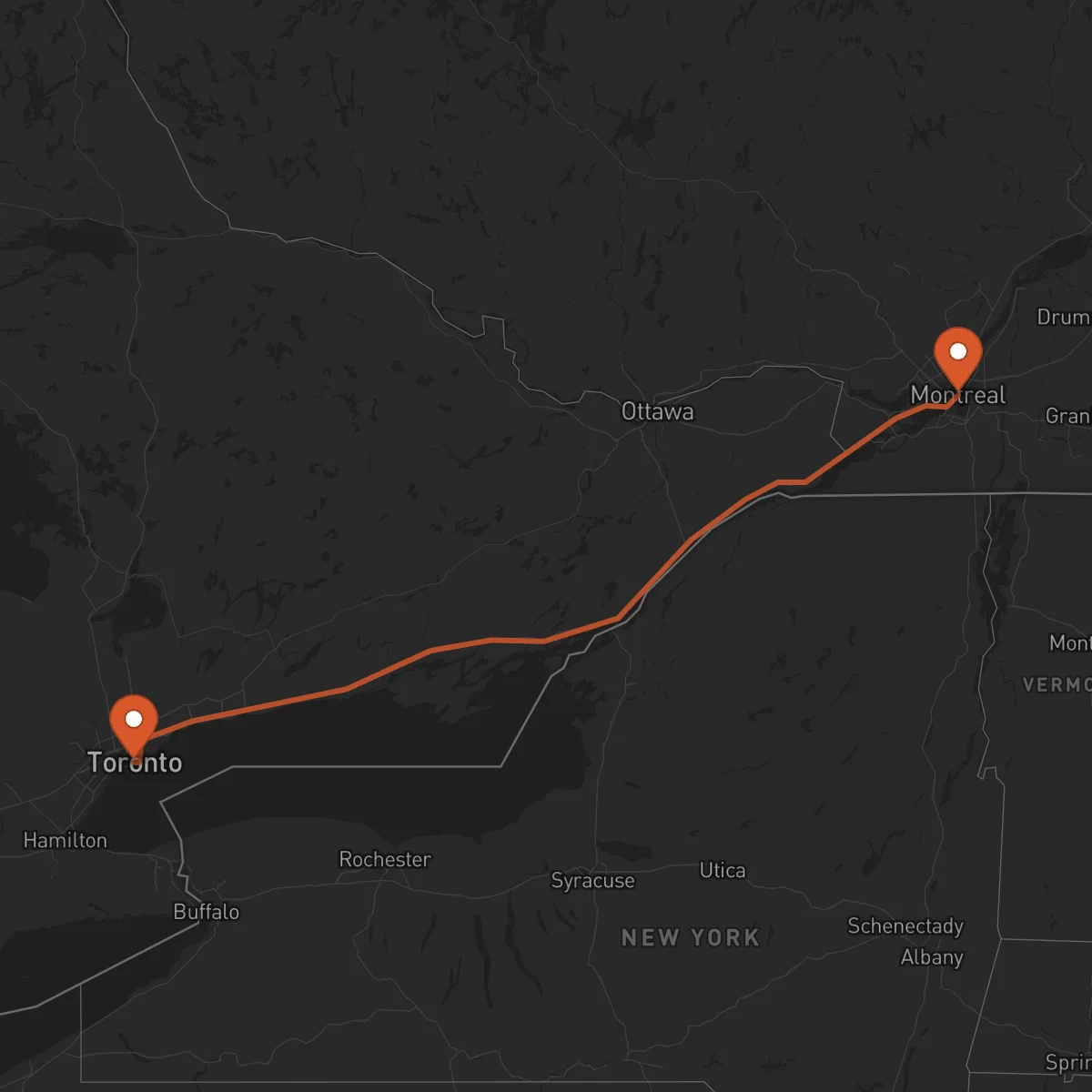
Montreal to Toronto
Toronto → MontrealFTL freight transportation service between Montreal and Toronto. Reliable logistics solutions for your business.
Route Description
Everything you need to know about the corridor Montreal - Toronto
The Montreal-Toronto corridor is one of Canada's most critical logistics routes, connecting two major economic hubs across a strategic distance of approximately 505 km. This corridor serves as a vital artery for domestic freight transportation, linking Quebec's largest city with Ontario's capital and Canada's financial center. The route facilitates the movement of goods between the St. Lawrence River economic region and the Great Lakes industrial heartland, making it essential for Canadian commerce and supply chain operations.
The corridor traverses diverse economic landscapes, from Montreal's aerospace and technology sectors to Toronto's financial services, manufacturing, and media industries. Along the route, numerous industrial centers and distribution hubs benefit from this strategic connection. The corridor's importance is amplified by its role in supporting cross-border trade with the United States, as Toronto serves as a gateway to major US markets. The region's robust economic activity generates substantial freight volume, particularly in automotive parts, consumer goods, electronics, and industrial equipment.
Control Terrestre leverages this strategic corridor through our network of certified transportation providers, offering reliable full truckload (FTL) services. Our providers maintain C-TPAT, FAST, and other certifications, ensuring secure and efficient cargo movement. We operate with various equipment types, including 48' and 53' dry vans and refrigerated units, to accommodate different cargo requirements. Our services along this corridor are designed to meet the demanding schedules of just-in-time manufacturing and distribution operations that characterize the Montreal-Toronto trade lane.
Services for this Route
Available services for the corridor Montreal - Toronto
 Origin
Montreal stands as a major logistics hub in eastern Canada, strategically positioned along the St. Lawrence River. The city's Port of Montreal, one of North America's largest inland ports, provides ocean access to global markets. Montreal's extensive transportation infrastructure includes major highways (Highway 20 and Highway 40), a comprehensive rail network operated by CN and CP, and Pierre Elliott Trudeau International Airport for air cargo. The city serves as a critical gateway for goods entering and exiting Quebec, with strong connections to the northeastern United States. Montreal's diverse economy encompasses aerospace, technology, pharmaceuticals, and manufacturing sectors, generating substantial freight volume that requires efficient ground transportation solutions to other major Canadian markets.
 Destination
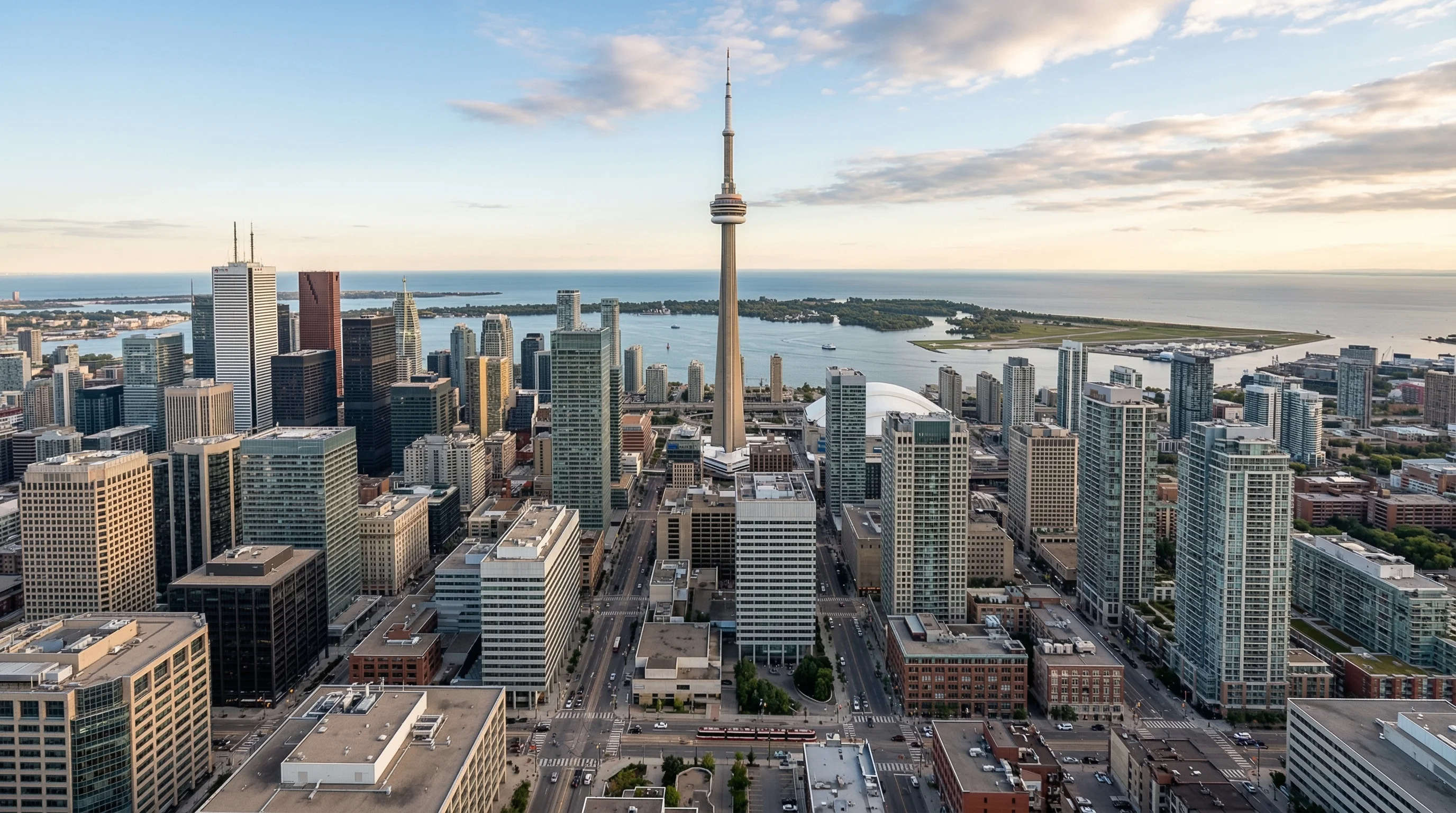
Toronto represents Canada's largest metropolitan area and a premier logistics center in North America. The city's strategic location in the Great Lakes region provides excellent access to major US markets via Highway 401, one of North America's busiest highways. Toronto Pearson International Airport serves as Canada's largest air cargo facility, while the city's extensive rail connections and highway network facilitate efficient ground transportation. The Greater Toronto Area (GTA) hosts numerous distribution centers, warehouses, and manufacturing facilities. Toronto's diverse economy spans financial services, technology, automotive, and consumer goods manufacturing, creating significant demand for reliable freight transportation services. The city's role as a commercial hub makes it a critical destination for goods moving throughout Ontario and beyond.










