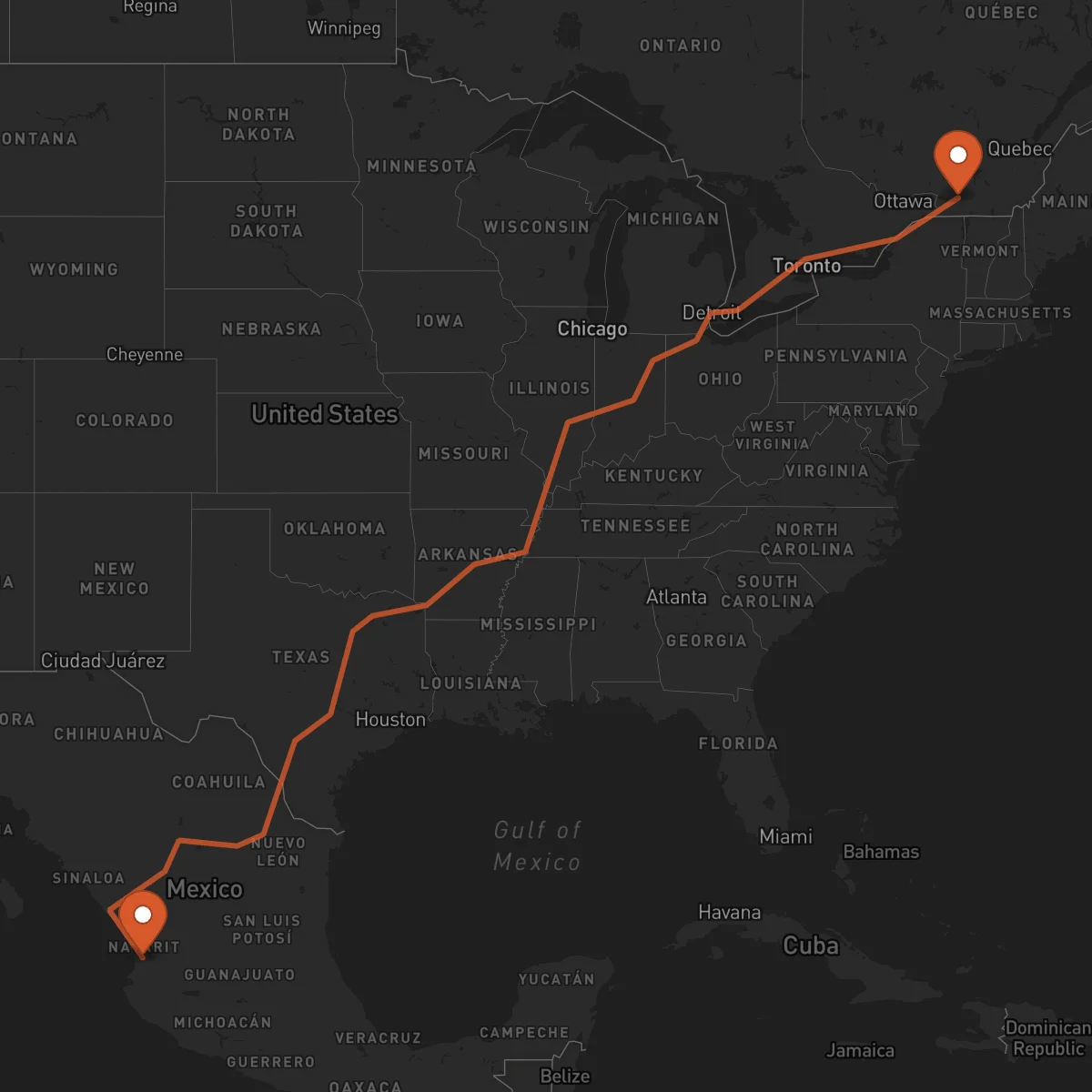
Montreal to Tepic
Tepic → MontrealFTL freight transportation service between Montreal and Tepic. Reliable logistics solutions for your business.
Route Description
Everything you need to know about the corridor Montreal - Tepic
The logistics corridor between Montreal and Tepic represents a vital cross-border connection linking Canada's industrial heartland with Mexico's Pacific coast. This 3,899 km route facilitates the movement of goods between two major economic regions, connecting Quebec's manufacturing and technology sectors with Mexico's growing industrial base in Nayarit. The corridor traverses diverse terrain and crosses multiple jurisdictions, requiring specialized expertise in cross-border logistics operations.
The route follows major transportation arteries through Canada, the United States, and Mexico, utilizing key highways such as Autoroutes 20 and 40 in Quebec, I-80 across the United States, and Mexican Federal Highways 45 and 15. The corridor passes through major commercial hubs including Detroit, Chicago, and Guadalajara, offering multiple routing options for efficient freight movement. Key border crossings at Detroit-Windsor and Laredo-Nuevo Laredo provide strategic entry points into Mexico.
Control Terrestre specializes in managing this complex cross-border operation, ensuring seamless freight movement through our network of certified transportation partners. Our expertise in customs documentation, regulatory compliance, and border procedures minimizes delays and ensures reliable delivery of full truckload shipments. We coordinate all aspects of the journey, from pickup in Montreal to final delivery in Tepic, providing real-time tracking and dedicated support throughout the transportation process.
Services for this Route
Available services for the corridor Montreal - Tepic
 Origin
Montreal serves as a strategic logistics hub in eastern Canada, positioned at the confluence of major transportation networks. The city's Port of Montreal, one of North America's largest inland ports, provides maritime connections to global markets. Montreal's extensive rail network, operated by CN and CP Rail, links to major manufacturing centers across Canada and the United States. The city's location along the St. Lawrence River provides additional water transportation options for bulk cargo and oversized shipments.
The greater Montreal area hosts diverse industrial sectors including aerospace, pharmaceuticals, electronics, and advanced manufacturing. Major companies like Bombardier, CAE, and numerous technology firms generate significant freight volumes requiring reliable transportation services. The region's robust logistics infrastructure includes multiple intermodal facilities, warehousing centers, and specialized handling capabilities for temperature-controlled and hazardous materials shipments.
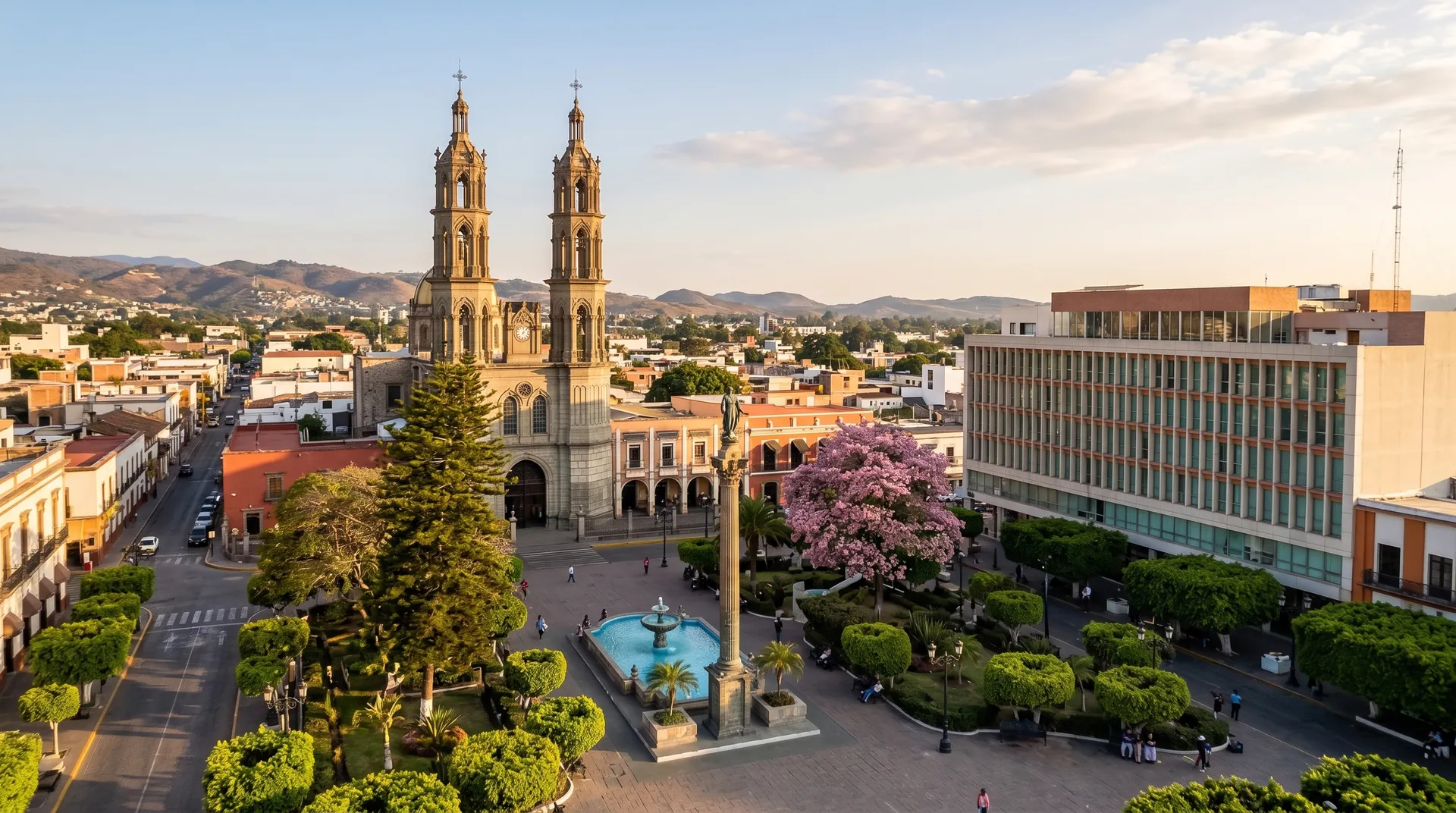 Destination
Tepic, the capital of Nayarit state, occupies a strategic position in western Mexico's emerging industrial corridor. The city benefits from proximity to major ports including Puerto Vallarta and Mazatlán, providing ocean freight access to Asian and North American markets. Tepic's location along Mexican Federal Highway 15 connects it to Guadalajara and the broader Pacific industrial belt, making it an attractive destination for manufacturing and distribution operations.
The region has experienced significant industrial growth, particularly in automotive components, electronics, and food processing sectors. Several maquiladora operations and manufacturing facilities have established operations in the Tepic area, creating demand for reliable cross-border freight services. The city's developing logistics infrastructure includes industrial parks, warehousing facilities, and specialized handling capabilities for various cargo types, supporting the growing industrial base.










