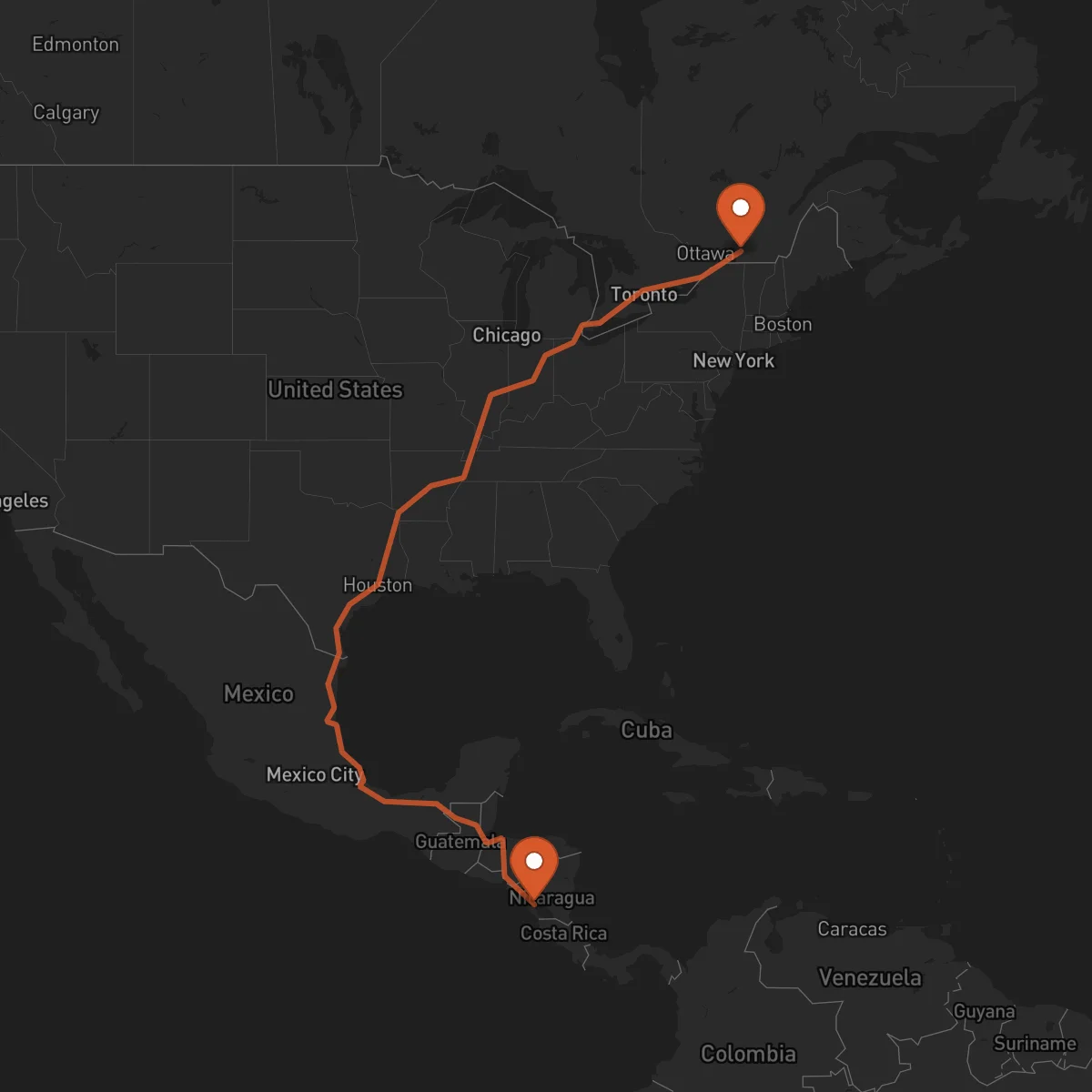
Montreal to Granada
Granada → MontrealFTL freight transportation service between Montreal and Granada. Reliable logistics solutions for your business.
Route Description
Everything you need to know about the corridor Montreal - Granada
This cross-border corridor connects the major Canadian hub of Montreal, Quebec, with Granada, Nicaragua, spanning approximately 3913 kilometers. It serves as a vital logistical artery, facilitating trade between North America and Central America. The strategic importance of this route lies in its ability to move goods efficiently between a major industrial center and a growing Central American market, linking established economies with emerging ones.
The economic context of this corridor is driven by diverse industrial activity. In Canada, manufacturing and agricultural sectors are key contributors, while the destination region sees growth in textiles, agriculture, and light manufacturing. This corridor supports the flow of raw materials and finished products for these industries. The primary transportation infrastructure relies on a network of major highways, including the Trans-Canada Highway and significant routes through the United States, connecting to Central American road systems. Border crossings involve thorough customs procedures where documentation and compliance are paramount.
Control Terrestre leverages its extensive network of specialized FTL providers operating with certified equipment, such as dry vans and refrigerated units, to manage this complex journey. Our partners hold critical certifications like C-TPAT and FAST, ensuring streamlined and responsible transport. We handle the specific requirements for cross-border freight, including specialized cargo needs, allowing our clients to focus on their core business while we facilitate the seamless movement of goods along this demanding route.
Services for this Route
Available services for the corridor Montreal - Granada
 Origin
Montreal, Quebec, serves as a crucial logistics hub in North America, offering strategic access to both domestic and international markets. Its location provides excellent connectivity for distributing goods across Canada and into the United States. The city is a center for diverse economic sectors, including aerospace, technology, manufacturing, and agribusiness, creating a consistent demand for robust transportation solutions. Montreal's infrastructure features major intermodal terminals and is well-served by a comprehensive network of highways and rail links, enabling efficient movement of full truckload (FTL) cargo. This infrastructure ensures that goods can be consolidated and prepared for long-haul transit southward with logistical precision.
 Destination
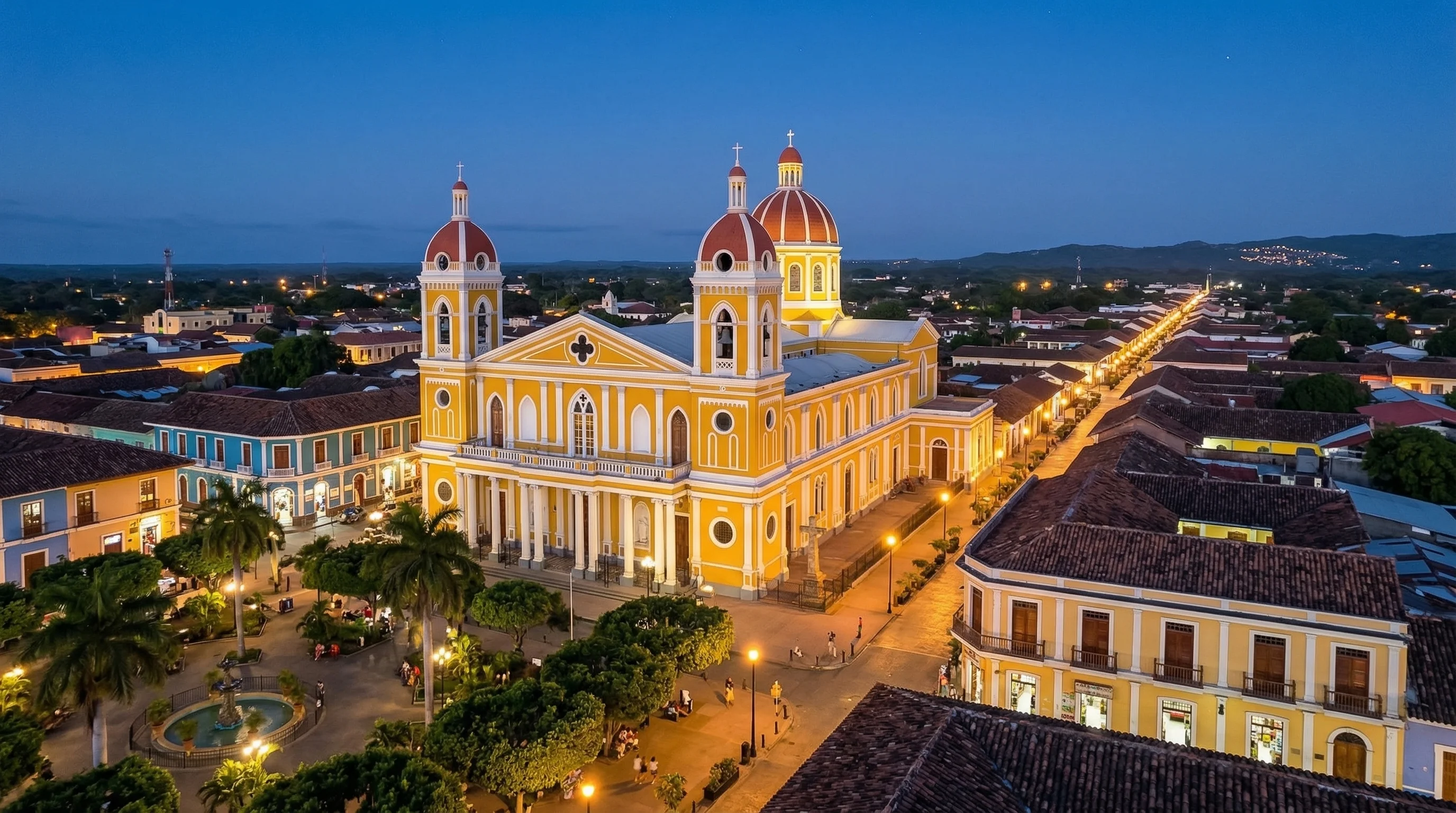
Granada, Nicaragua, is a significant urban and economic center in Central America, offering strategic access to regional markets. Its location facilitates the distribution of goods throughout Nicaragua and neighboring countries, supporting trade and commerce. Key economic sectors here include agriculture, textiles, manufacturing, and services, driving the need for reliable supply chains. The transportation infrastructure in Granada is developing, centered around road networks that connect to regional ports and neighboring countries. This infrastructure supports the final leg of the journey, allowing for the efficient unloading and distribution of FTL shipments. Control Terrestre ensures that these connections are managed with the same high standards of responsibility and care.










