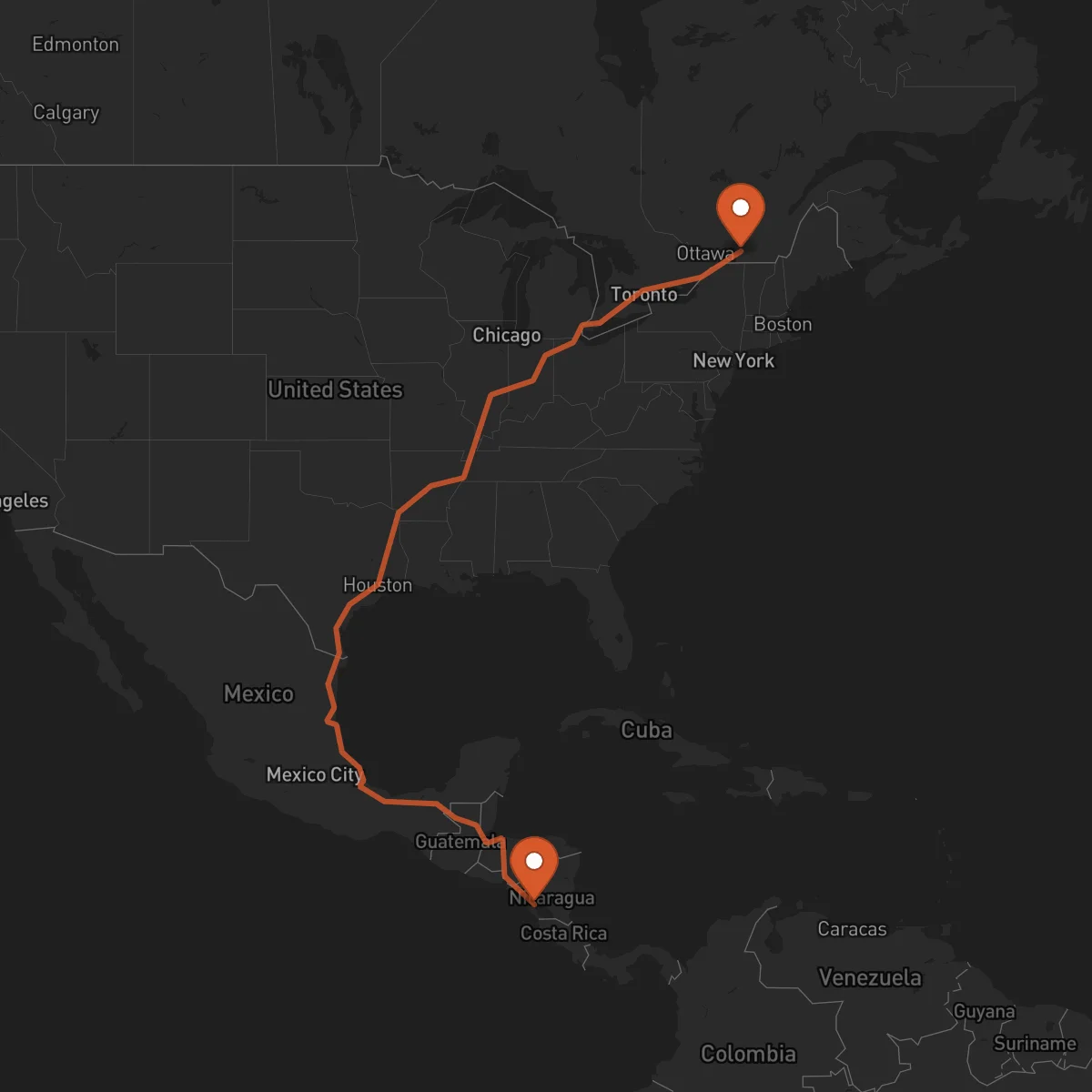
Granada to Montreal
Montreal → GranadaFTL freight transportation service between Granada and Montreal. Reliable logistics solutions for your business.
Route Description
Everything you need to know about the corridor Granada - Montreal
This cross-border corridor connects Granada, Nicaragua, to Montreal, Quebec, forming a vital link between Central America and North America. Its strategic importance lies in facilitating trade between these dynamic regions, enabling the efficient movement of goods over approximately 3913 km. The route integrates key transportation arteries, allowing for seamless distribution into the Canadian market.
The economic context of the region is marked by growing industrial activity and agricultural export, particularly from Nicaragua, alongside the advanced manufacturing and logistics sectors of Quebec. Industries such as consumer goods, agricultural products, and light manufacturing frequently utilize this corridor to access broader North American supply chains. The infrastructure relies on established national highways connecting to major international routes, culminating at a primary border crossing where customs procedures govern the transition into Canada.
Control Terrestre facilitates operations on this corridor by leveraging our exclusive full truckload (FTL) services, including specialized and refrigerated options. We work through our certified network of providers, ensuring compliance with cross-border requirements and optimizing the flow of cargo. Our focus on dedicated and expedited freight allows us to manage the specific needs of this route, connecting shippers between Granada and Montreal with professionalism and care.
The journey concludes in Montreal, a major North American logistics hub.
Services for this Route
Available services for the corridor Granada - Montreal
 Origin
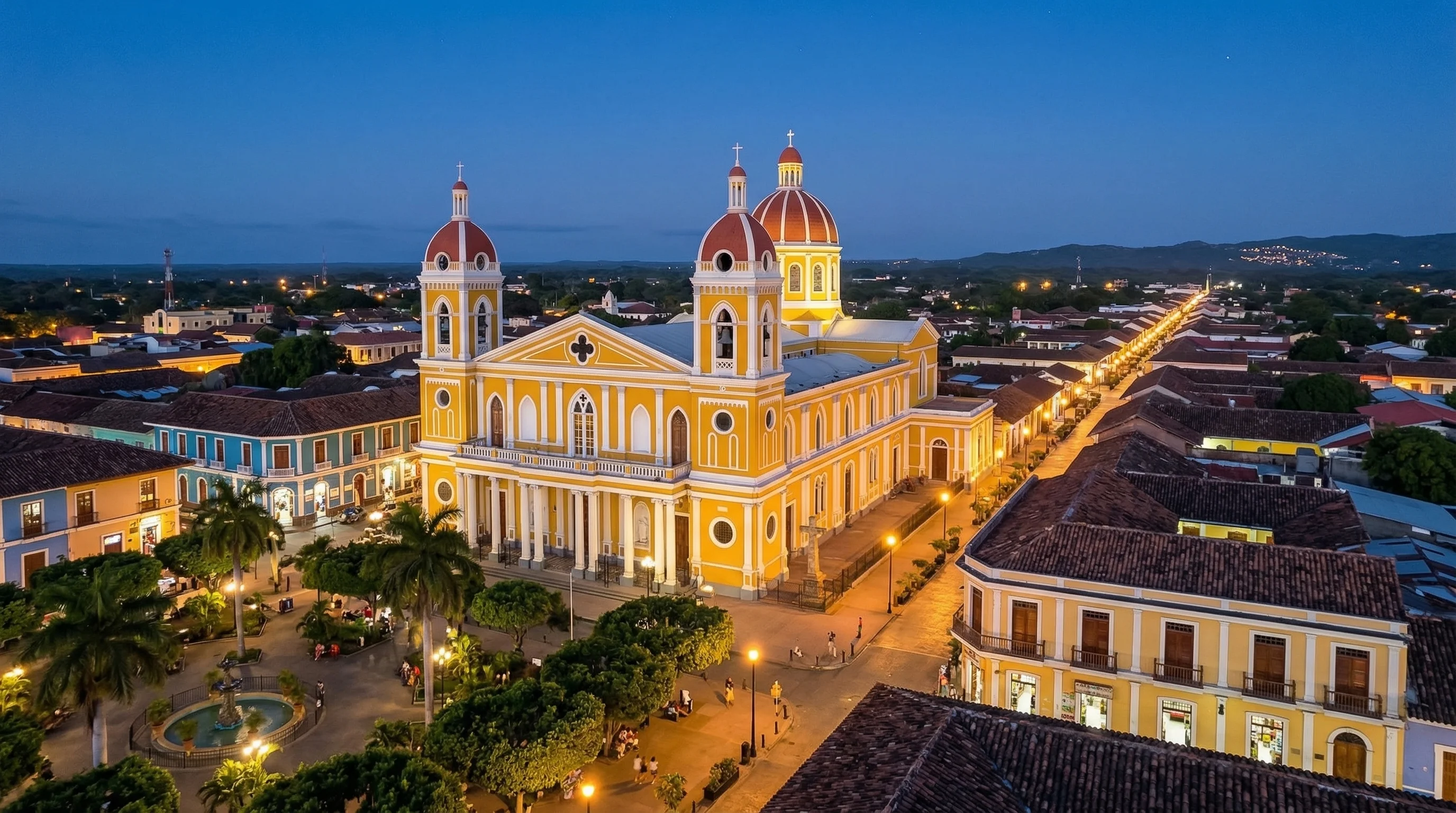
Granada serves as a strategic starting point for logistics, offering connectivity across Central America. Its economy is supported by sectors including agriculture, textiles, and light manufacturing, which generate consistent freight traffic. The available transportation infrastructure provides the necessary links to initiate long-haul transit southward, forming the origin of significant international flows. This location allows for the consolidation of cargo destined for northern markets.
 Destination
Montreal stands as a major destination and logistical gateway in Eastern Canada, driven by robust industries in aerospace, pharmaceuticals, food processing, and advanced manufacturing. The city benefits from extensive transportation infrastructure, including a major port, international airport, and a network of highways and rail lines. This infrastructure supports the efficient distribution of FTL cargo throughout North America, making it a pivotal endpoint for supply chains originating in Central America.










