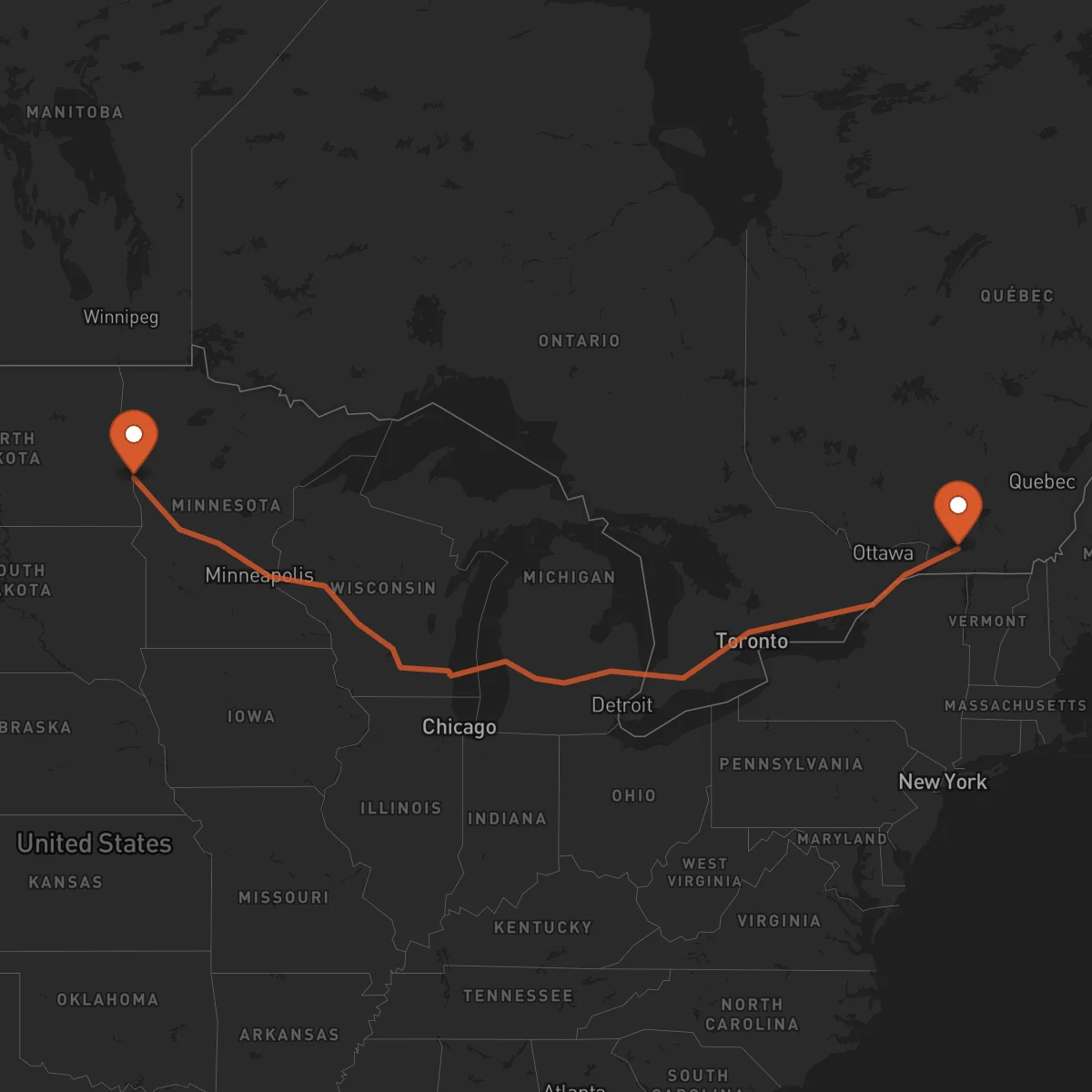
Montreal to Fargo
Fargo → MontrealFTL freight transportation service between Montreal and Fargo. Reliable logistics solutions for your business.
Route Description
Everything you need to know about the corridor Montreal - Fargo
The Montreal-Fargo corridor represents a vital logistics connection between Canada's economic powerhouse and the agricultural heartland of the United States. This 1,788 km cross-border route links Quebec's largest city with North Dakota's commercial center, facilitating the movement of goods between two major North American markets. The corridor traverses diverse terrain and crosses international borders, making it a strategic pathway for companies engaged in Canada-US trade.
The economic significance of this corridor is substantial, connecting Montreal's diverse industrial base with Fargo's strong agricultural and manufacturing sectors. Montreal serves as a major port city and industrial hub, while Fargo anchors a region known for food processing, technology, and agricultural equipment manufacturing. This complementary economic relationship drives consistent freight volumes along the route, with businesses requiring reliable transportation solutions to maintain their supply chains.
Key industries utilizing this corridor include agricultural products, food and beverages, manufacturing components, and industrial equipment. The route primarily follows major highway networks including I-29 and I-94 in the US, and A-20 and A-15 in Canada, providing efficient connectivity between the two cities. The corridor crosses at the Pembina-Emerson border crossing, one of the busiest commercial ports of entry between Canada and the US, requiring specialized knowledge of customs procedures and documentation.
Control Terrestre facilitates seamless operations on this corridor through our network of certified transportation providers. Our expertise in cross-border logistics ensures smooth customs clearance, proper documentation handling, and compliance with both Canadian and US regulations. We provide dedicated full truckload services with equipment options including dry vans and refrigerated units, ensuring your cargo moves efficiently between Montreal and Fargo while maintaining the integrity of your supply chain.
Services for this Route
Available services for the corridor Montreal - Fargo
 Origin
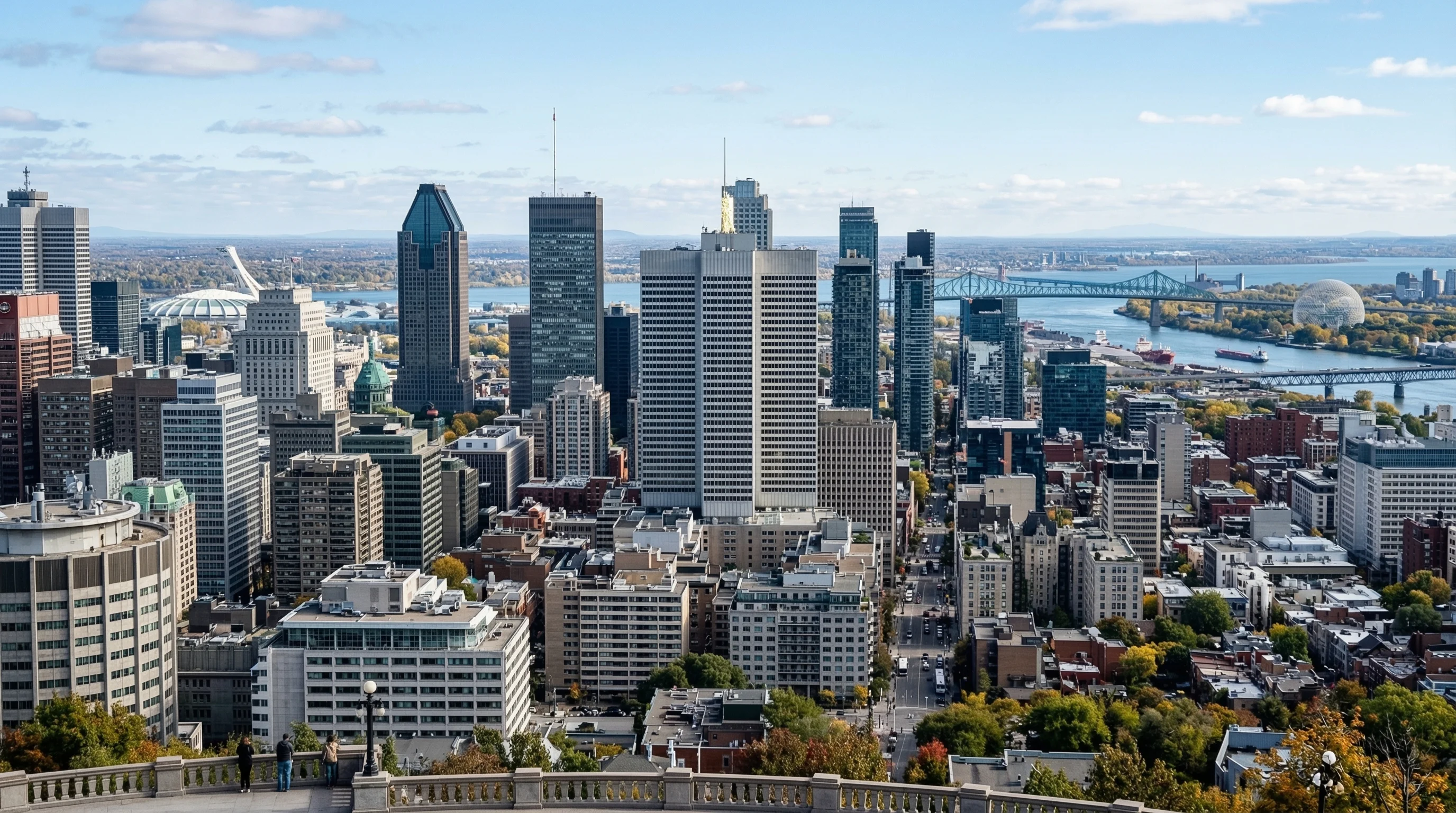
Montreal stands as a strategic logistics hub in eastern Canada, offering unparalleled connectivity through its multimodal transportation infrastructure. As Canada's second-largest city and Quebec's economic center, Montreal provides access to major highways, rail networks, and the Port of Montreal - one of North America's busiest inland ports. The city's location at the confluence of major transportation routes makes it an ideal origin point for cross-border freight movements to the United States.
The Greater Montreal area hosts diverse industries including aerospace, pharmaceuticals, technology, and advanced manufacturing. The region's strong industrial base generates substantial freight volumes, particularly in specialized cargo categories. Montreal's logistics infrastructure includes extensive warehousing facilities, distribution centers, and specialized handling capabilities for various cargo types. The city's proximity to major US markets and its role as a gateway to Atlantic Canada further enhance its strategic importance for cross-border transportation operations.
 Destination
Fargo
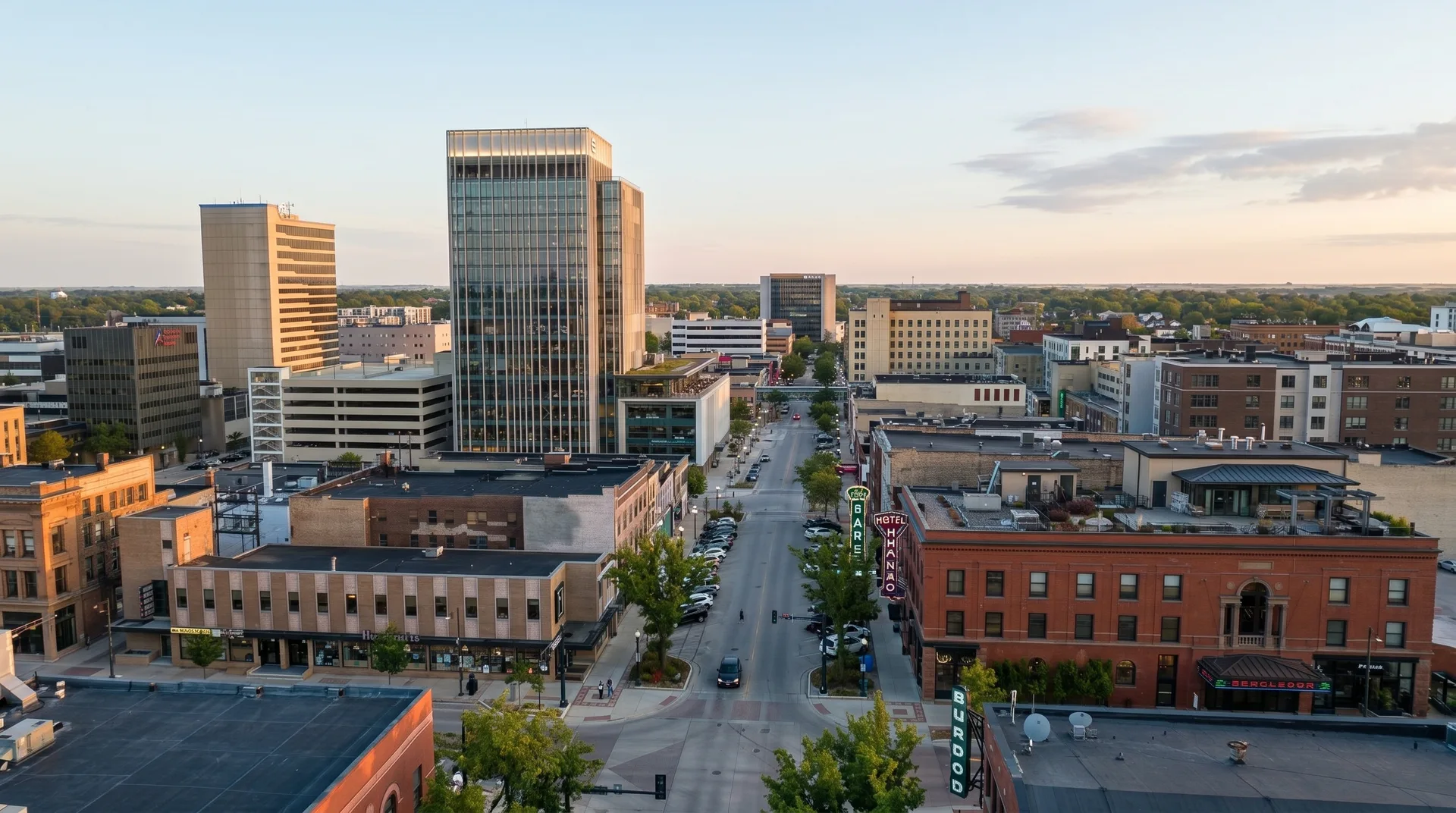
Fargo serves as a crucial logistics and distribution center in the Upper Midwest, strategically positioned at the crossroads of major transportation networks. Located in North Dakota's Red River Valley, Fargo benefits from excellent highway access via I-29 and I-94, connecting it to both Canadian and US markets. The city's location near the Canadian border makes it an important gateway for cross-border trade, while its central position in North America provides efficient access to major population centers within a 24-hour drive.
The Fargo economy is anchored by agriculture, food processing, technology, and manufacturing sectors. The region is known for its grain production, food processing facilities, and agricultural equipment manufacturing, creating consistent demand for freight transportation services. Fargo's logistics infrastructure includes modern warehousing facilities, intermodal terminals, and a robust network of local carriers. The city's growing technology sector and expanding manufacturing base continue to drive freight volumes, making it an increasingly important destination for cross-border logistics operations.










