Montreal to Campeche
Campeche → MontrealFTL freight transportation service between Montreal and Campeche. Reliable logistics solutions for your business.
Route Description
Everything you need to know about the corridor Montreal - Campeche
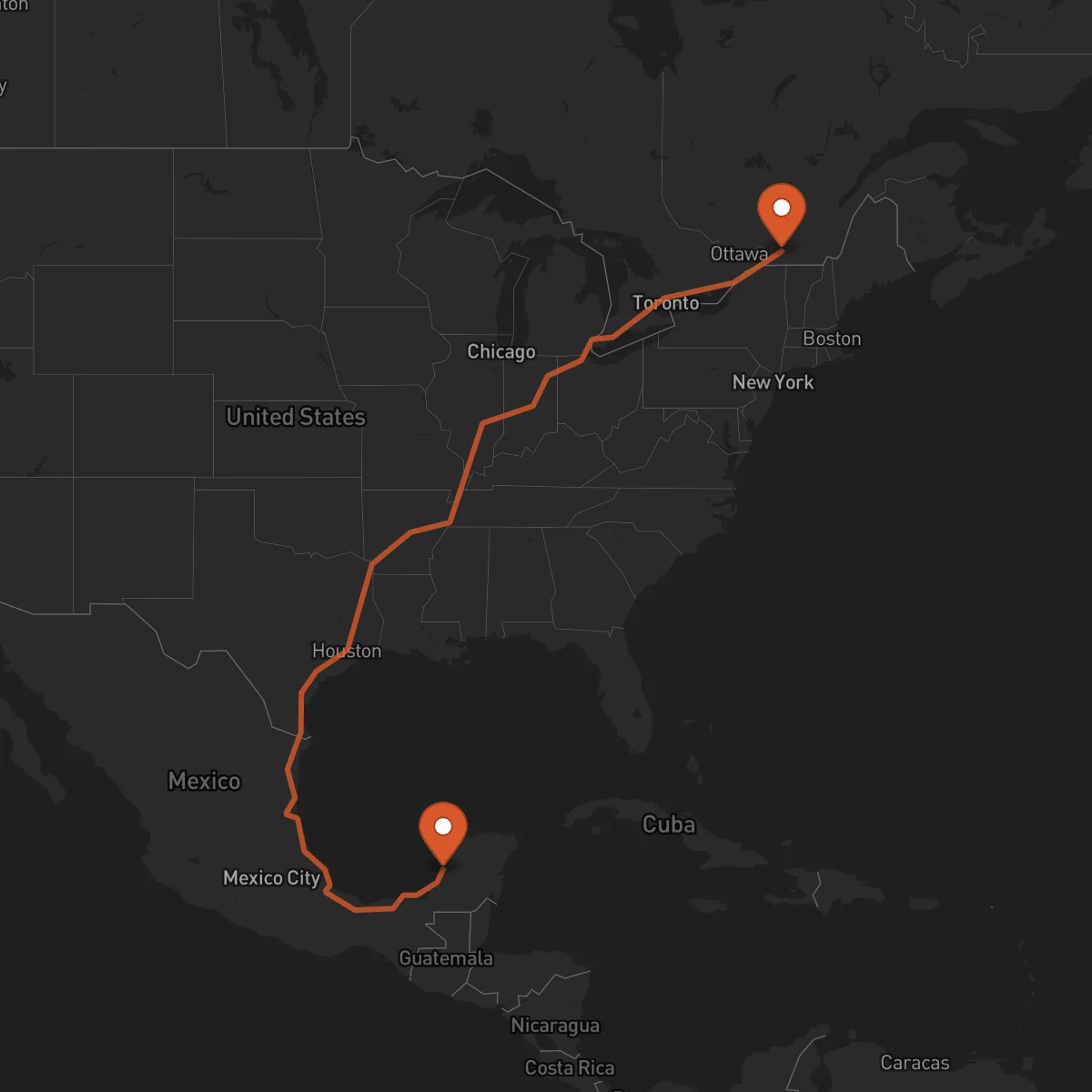
The logistics corridor connecting Montreal, Quebec, Canada to Campeche, Campeche, Mexico spans approximately 3,251 kilometers and represents a vital cross-border transportation route linking two major industrial regions. This corridor traverses diverse terrain and crosses multiple jurisdictions, connecting Canada's economic powerhouse in Quebec with Mexico's Gulf Coast energy hub. The route serves as a critical link for manufacturers, energy companies, and industrial suppliers moving goods between North American markets.
The corridor follows major transportation arteries including Highway 20 and Autoroute 20 through Quebec and Ontario, transitions through the United States via I-75 and I-35, and re-enters Mexico through Laredo to connect with Mexican Federal Highway 180. Key border crossings at Detroit-Windsor or Sarnia-Port Huron provide efficient customs clearance points. Control Terrestre's extensive network of certified carriers ensures seamless cross-border operations with expertise in customs documentation, regulatory compliance, and efficient transit management.
This route primarily serves the automotive, aerospace, energy, and manufacturing sectors. Montreal's industrial base exports machinery, electronics, and manufactured goods, while Campeche's economy focuses on petroleum extraction, seafood processing, and agricultural products. The corridor's strategic importance continues to grow as trade between Canada and Mexico expands, supported by our C-TPAT-certified partners who maintain the highest standards of security and reliability.
Services for this Route
Available services for the corridor Montreal - Campeche
 Origin
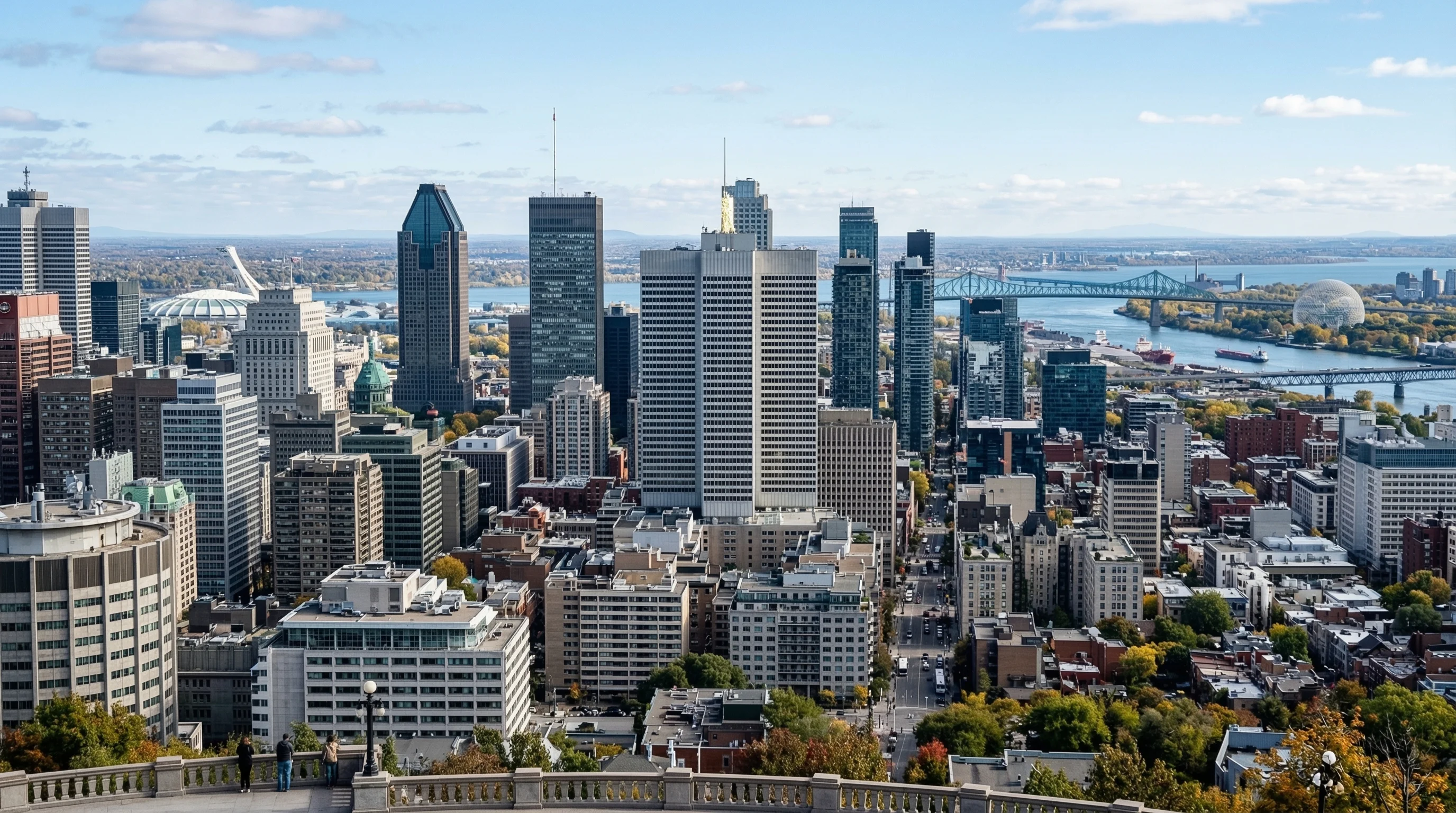
Montreal stands as Quebec's primary logistics hub, strategically positioned along the St. Lawrence River with access to major highways including Autoroute 20 and Autoroute 25. The city's extensive intermodal facilities, including the Port of Montreal and Pierre Elliott Trudeau International Airport, create a multimodal transportation network that efficiently connects to road freight operations. Montreal's central location in eastern Canada makes it an ideal origin point for cross-border shipments to Mexico and the southern United States.
The Greater Montreal area hosts a diverse industrial base including aerospace manufacturing, pharmaceutical production, electronics assembly, and advanced manufacturing. Major employers in the region include Bombardier, CAE, and numerous automotive suppliers. The city's concentration of research institutions and skilled workforce supports high-value manufacturing and technology sectors. Montreal's cold climate and seasonal variations require specialized transportation solutions, particularly for temperature-sensitive goods moving through the corridor.
 Destination
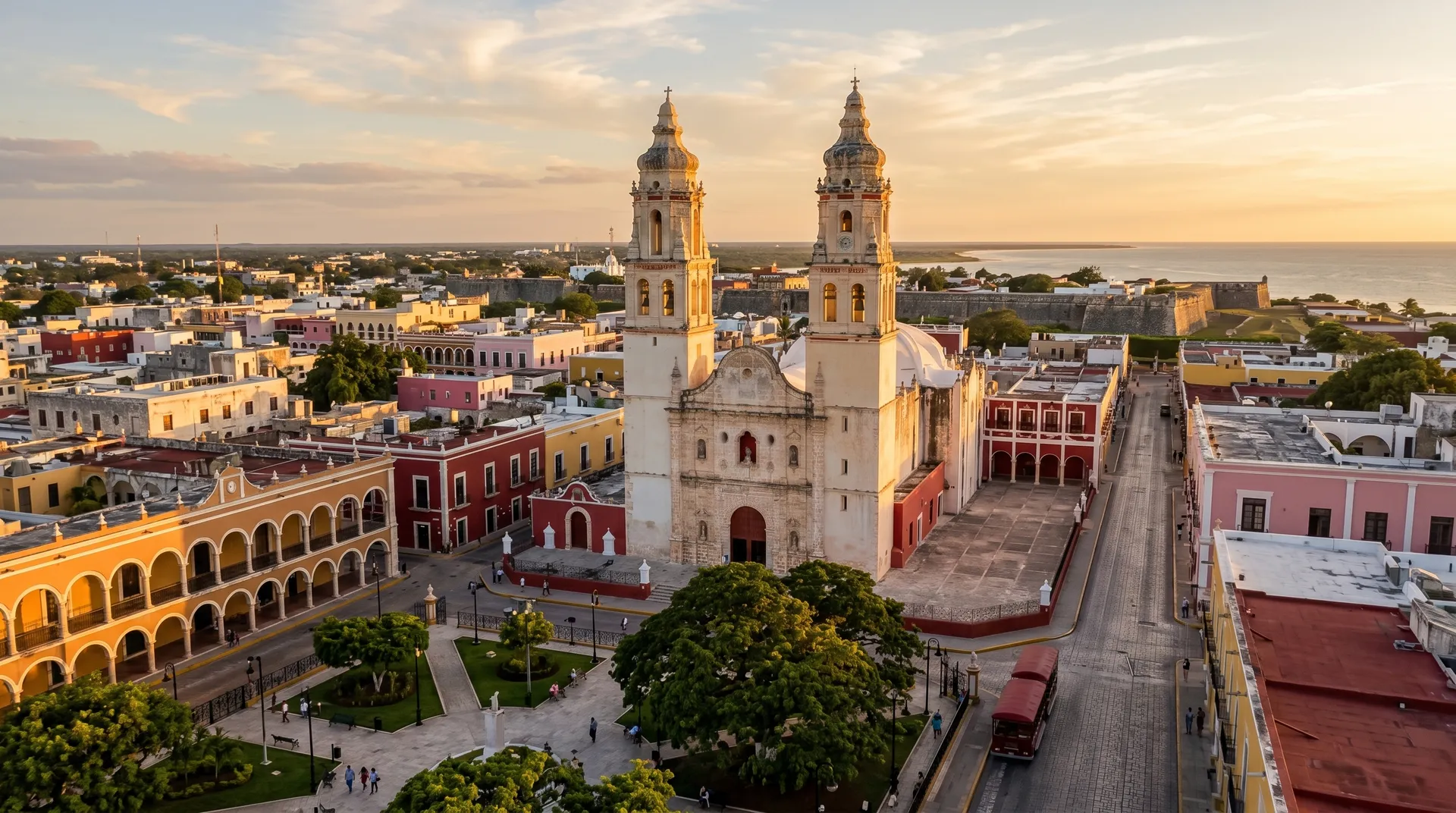
Campeche serves as a strategic logistics gateway to Mexico's Gulf Coast, with its port facilities providing ocean access for international trade. The city connects to major Mexican highways including Federal Highway 180, creating efficient inland distribution networks. Campeche's proximity to major oil fields in the Gulf of Mexico makes it a critical hub for energy sector logistics, while its location near the Yucatan Peninsula supports regional distribution throughout southeastern Mexico.
The local economy centers on petroleum extraction, with PEMEX operations driving significant industrial activity. Campeche also maintains important seafood processing facilities, agricultural operations, and light manufacturing sectors. The region's tropical climate and port facilities accommodate specialized cargo handling requirements, including refrigerated transport for perishable goods and heavy equipment for energy sector operations. Control Terrestre's network provides reliable connections from Campeche to major Mexican industrial centers.










