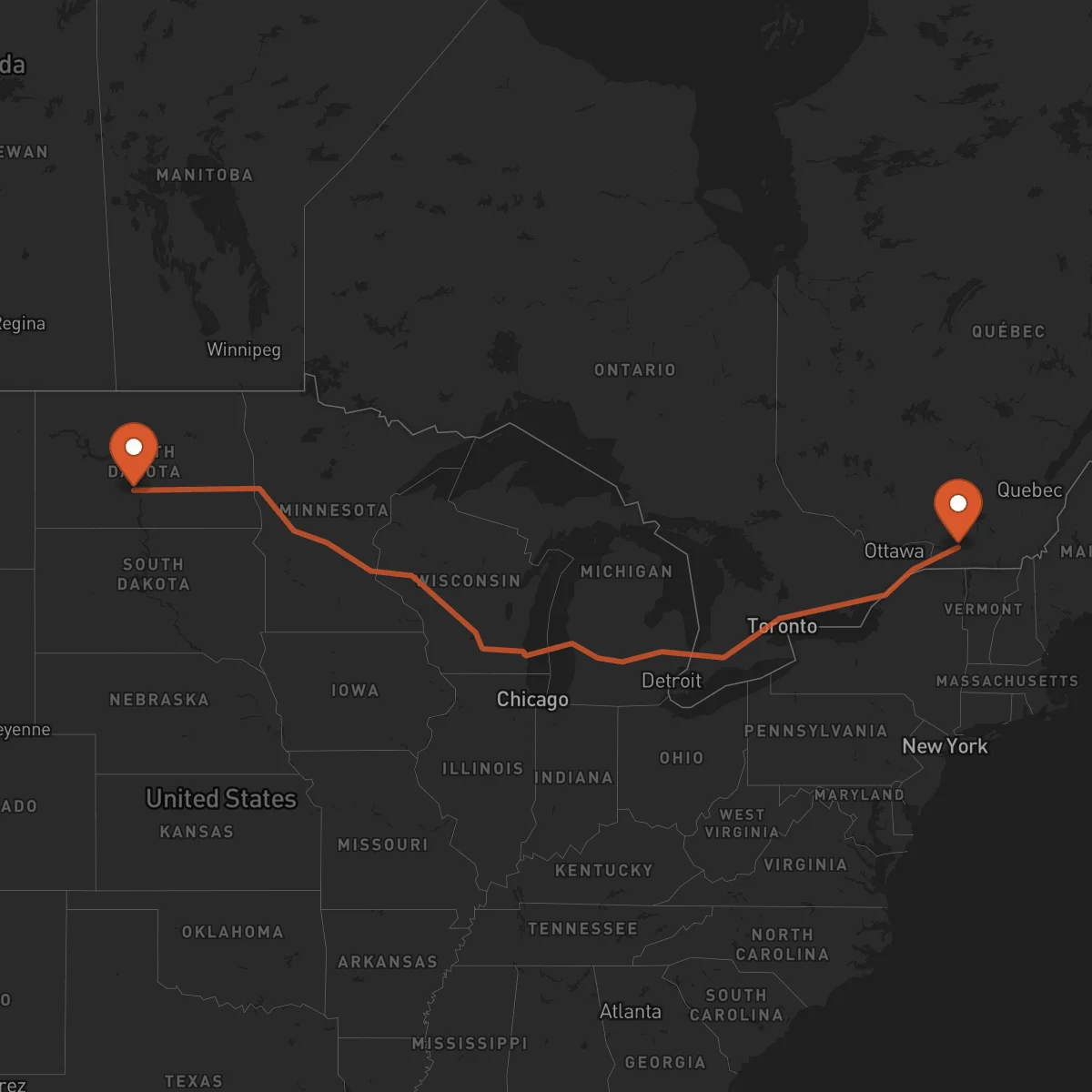
Montreal to Bismarck
Bismarck → MontrealFTL freight transportation service between Montreal and Bismarck. Reliable logistics solutions for your business.
Route Description
Everything you need to know about the corridor Montreal - Bismarck
The logistics corridor between Montreal and Bismarck represents a vital cross-border connection linking Canada's economic powerhouse to the industrial heart of North Dakota. This 2,091 km route traverses diverse landscapes and connects major economic regions, facilitating the movement of goods between two robust North American markets. The corridor serves as a critical artery for trade, enabling seamless transportation of freight across the US-Canada border and supporting the growing economic integration between these two nations.
This route connects Montreal's thriving port and manufacturing sector with Bismarck's energy, agriculture, and manufacturing industries. The corridor passes through key economic centers including Ottawa, Toronto, and Minneapolis, providing multiple opportunities for logistics hubs and distribution centers. Industries relying on this connection include automotive parts, agricultural equipment, energy sector machinery, and consumer goods. The diverse industrial base along the route creates a dynamic freight ecosystem with year-round shipping demands.
Transportation infrastructure along this corridor includes major highways such as Autoroute 20/40 through Quebec and Ontario, connecting to Interstate 94 in the United States. The corridor features several key border crossings, with the most strategic being the Thousand Islands Bridge and the Blue Water Bridge, both offering efficient customs processing for commercial freight. Control Terrestre's expertise in cross-border operations ensures smooth customs clearance and compliance with all regulatory requirements, minimizing delays and optimizing transit times for our clients' shipments.
Services for this Route
Available services for the corridor Montreal - Bismarck
 Origin
Montreal stands as a strategic logistics hub in eastern Canada, leveraging its position as North America's largest inland port and a major continental transportation nexus. The city's diverse economy encompasses aerospace, pharmaceuticals, electronics, and advanced manufacturing sectors, generating substantial freight movement. Montreal's multimodal infrastructure includes the Port of Montreal, extensive rail connections via CN and CPKC railways, and comprehensive highway networks including Autoroutes 20, 40, and 25. The city's proximity to major US markets and its role as a gateway to Canadian markets make it an ideal origin point for cross-border freight operations.
 Destination
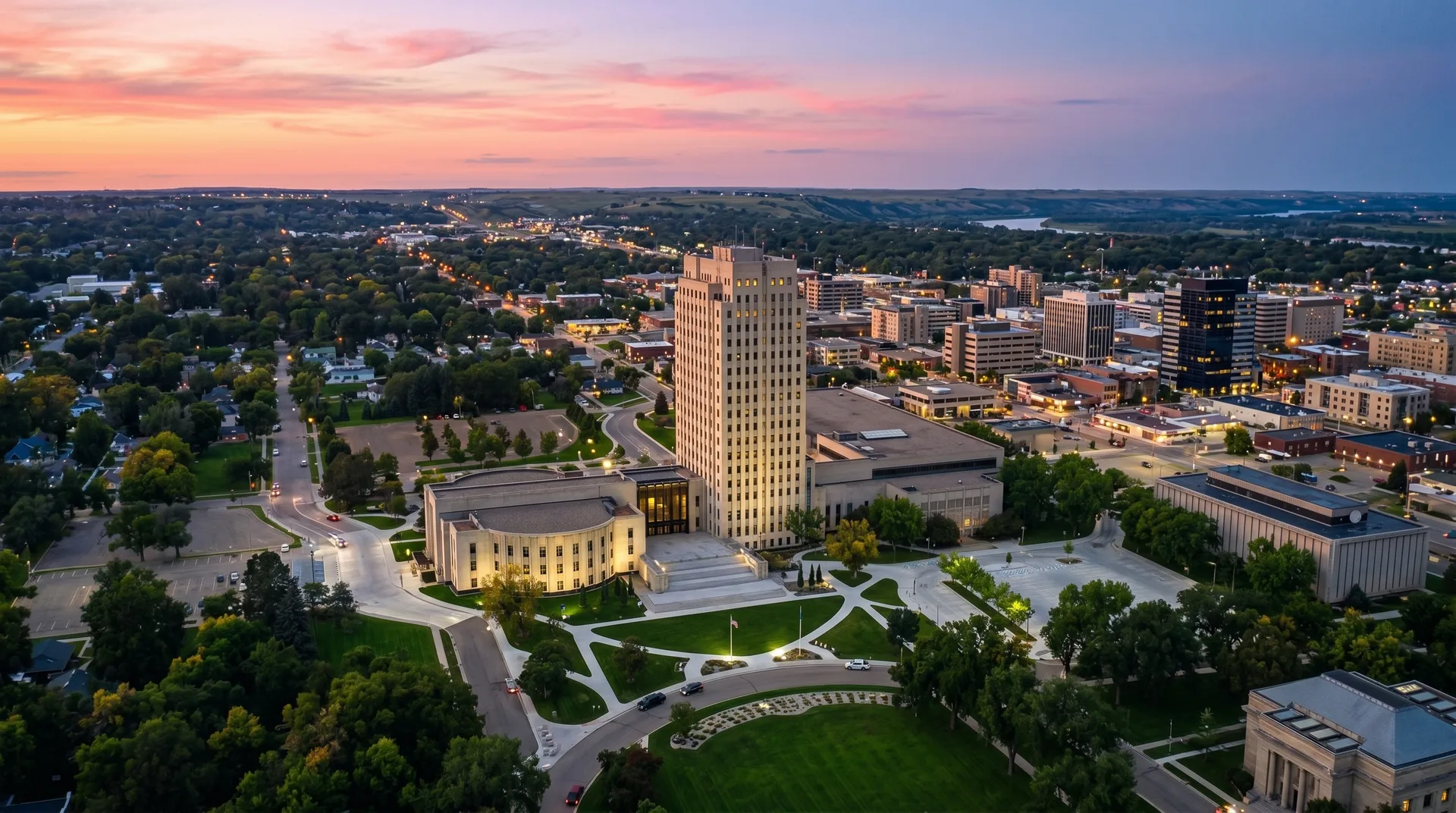
Bismarck
Bismarck serves as a strategic logistics center in North Dakota, positioned at the crossroads of major transportation routes in the American Midwest. The city's economy is anchored by energy production, agriculture, manufacturing, and healthcare sectors, creating consistent demand for freight services. Bismarck's transportation infrastructure includes access to Interstate 94, BNSF Railway connections, and Bismarck Municipal Airport. The city's location provides excellent connectivity to regional markets and serves as a distribution hub for western North Dakota's energy and agricultural products, making it a key destination for freight moving from eastern Canada.










