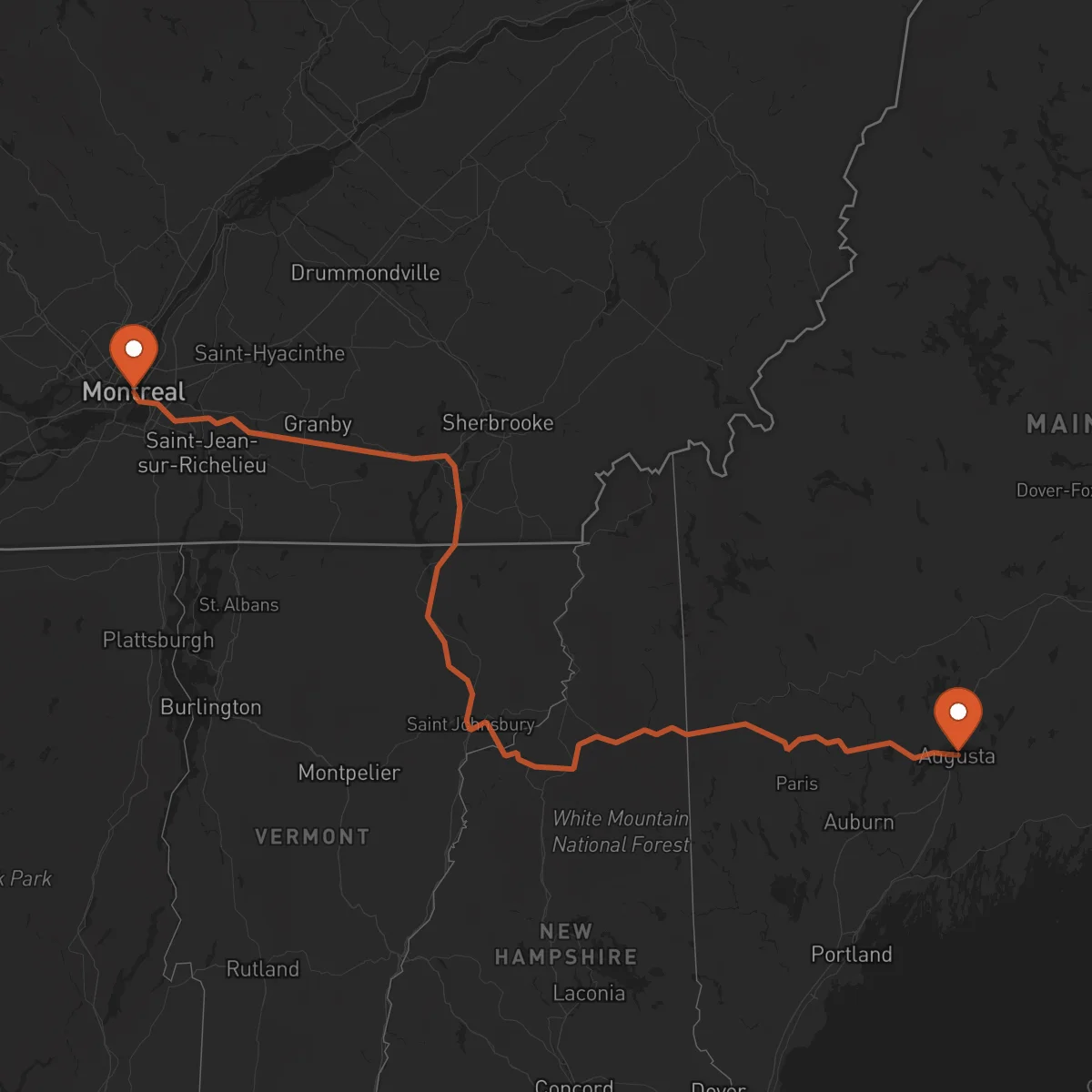
Montreal to Augusta
Augusta → MontrealFTL freight transportation service between Montreal and Augusta. Reliable logistics solutions for your business.
Route Description
Everything you need to know about the corridor Montreal - Augusta
The Montreal to Augusta corridor represents a vital cross-border freight transportation link connecting Quebec's largest metropolitan area with Maine's capital city. This 327 km route traverses the northeastern United States-Canada border, facilitating trade between two major economic regions. The corridor serves as a critical supply chain artery for businesses operating in both countries, particularly those requiring efficient movement of goods between the Canadian manufacturing base and U.S. distribution networks.
The economic significance of this corridor extends beyond simple transportation. Montreal, as a major industrial and commercial hub, produces a diverse range of manufactured goods, agricultural products, and raw materials that flow southward to U.S. markets. Conversely, Augusta and the broader Maine region supply specialized products, forest products, and industrial equipment that move northward. The corridor benefits from the strong trade relationship between Canada and the United States, with thousands of trucks crossing the border annually to support just-in-time inventory systems and supply chain efficiency.
Transportation infrastructure along this route includes major highways such as Autoroute 10 and Autoroute 35 in Quebec, transitioning to Interstate 95 in Maine. The primary border crossing at Norton/McIndoe Falls provides efficient processing for commercial vehicles, though Control Terrestre's expertise in cross-border documentation and customs compliance ensures smooth transit regardless of the specific crossing point. Our specialized knowledge of C-TPAT and FAST program requirements helps expedite border clearance, minimizing delays for time-sensitive freight. The route's strategic importance is amplified by its role in connecting the Great Lakes industrial corridor with Atlantic seaboard markets.
Services for this Route
Available services for the corridor Montreal - Augusta
 Origin
Montreal stands as Quebec's economic powerhouse and Canada's second-largest metropolitan area, offering exceptional strategic value for logistics operations. The city's location at the confluence of major waterways, rail lines, and highways creates a multimodal transportation hub that serves as a gateway to both Canadian and U.S. markets. Montreal's extensive port facilities on the St. Lawrence River complement its robust ground transportation network, while its proximity to major manufacturing centers in southern Quebec enhances its role as a distribution nexus.
The city's diverse industrial base includes aerospace manufacturing, pharmaceuticals, electronics, food processing, and advanced technology sectors. These industries generate substantial freight volumes requiring reliable transportation to U.S. markets. Montreal's infrastructure includes multiple intermodal terminals, warehousing facilities, and a well-developed highway system that provides direct access to cross-border routes. The presence of major logistics providers and freight forwarders in the Montreal area creates a competitive environment that benefits shippers through enhanced service options and competitive pricing.
 Destination
Augusta
Augusta, Maine's capital city, serves as a strategic distribution point for the state and surrounding regions, offering unique advantages for freight transportation. Located along the Kennebec River and positioned near the geographic center of Maine, Augusta provides efficient access to both coastal and inland destinations throughout New England. The city's transportation infrastructure includes connections to Interstate 95 and secondary highways that facilitate distribution throughout Maine and into neighboring states.
The Augusta region's economy encompasses government services, healthcare, education, and a growing technology sector, but its strategic importance for freight transportation lies in its role as a gateway to northern New England markets. The area's forest products industry, agricultural operations, and manufacturing facilities generate consistent freight volumes that benefit from efficient cross-border connections to Canadian suppliers and markets. Augusta's relatively uncongested road network compared to larger metropolitan areas can provide advantages for time-sensitive deliveries, while its central Maine location reduces transit times to key destinations throughout the state.










