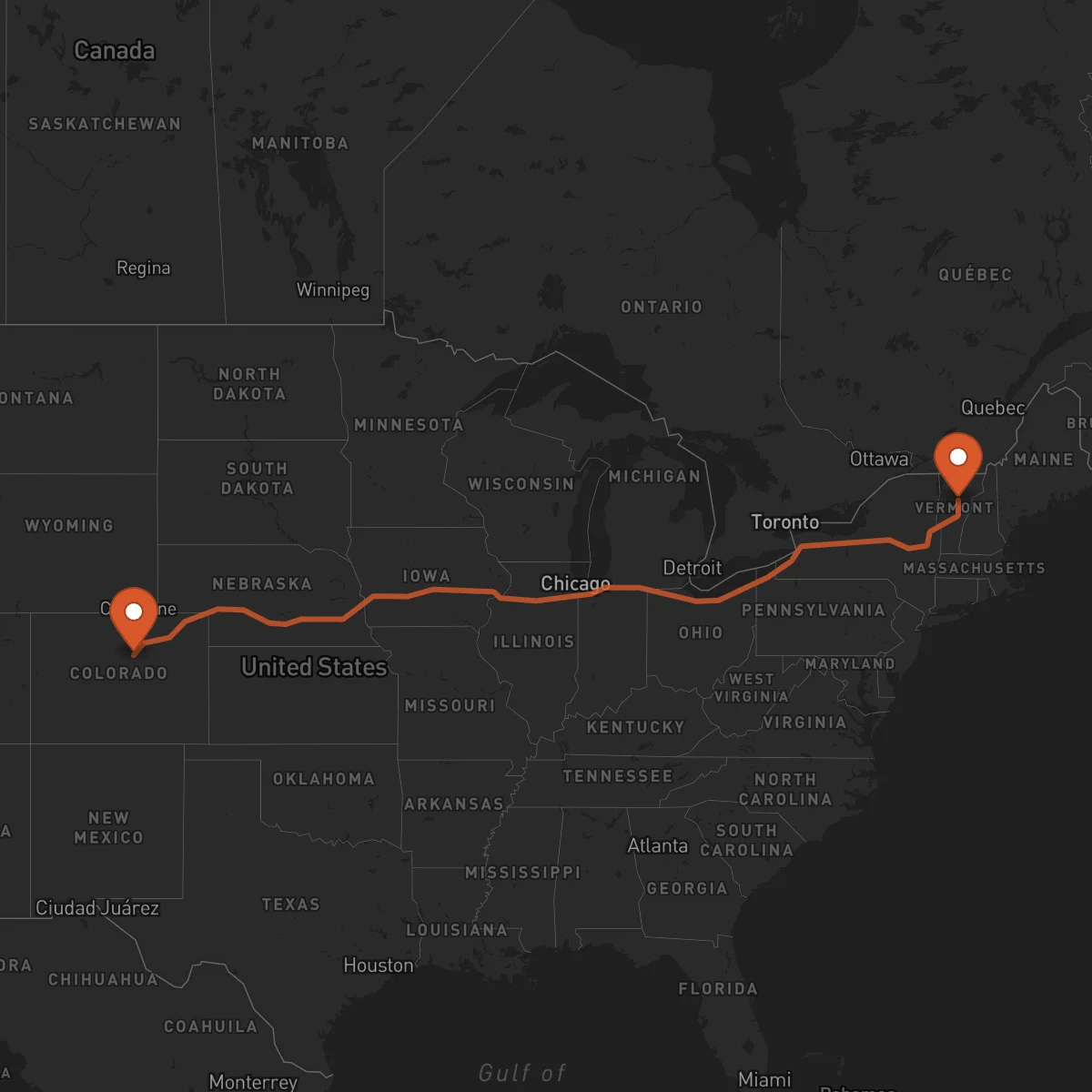
Montpelier to Denver
Denver → MontpelierFTL freight transportation service between Montpelier and Denver. Reliable logistics solutions for your business.
Route Description
Everything you need to know about the corridor Montpelier - Denver
The freight transportation corridor between Montpelier, Vermont, and Denver, Colorado, represents a vital link connecting the Northeast to the Rocky Mountain region of the United States. This 2,707-kilometer route traverses diverse landscapes and serves as a critical artery for moving goods between these two distinct economic regions. The corridor facilitates the movement of products from Vermont's manufacturing and agricultural sectors to Colorado's growing industrial and commercial markets, supporting the economic integration of both regions.
The route passes through major metropolitan areas including Albany, Buffalo, Chicago, Omaha, and finally Denver, providing access to numerous economic hubs along the way. This strategic pathway connects Vermont's specialized manufacturing sector with Colorado's diverse economy, which includes aerospace, technology, energy, and outdoor recreation industries. The corridor is particularly important for companies requiring specialized transportation services, including those handling oversized cargo, hazardous materials, or time-sensitive shipments.
Control Terrestre provides comprehensive FTL (Full Truckload) transportation services along this corridor, utilizing our network of certified carriers and specialized equipment. Our services include dedicated transportation solutions, expedited freight for urgent shipments, and specialized cargo handling for industries requiring specific expertise. We ensure seamless door-to-door delivery, managing all aspects of the transportation process including cross-border documentation, permits for oversized loads, and compliance with all regulatory requirements. Our strategic partnerships with C-TPAT-certified carriers guarantee secure and reliable transportation throughout the entire journey from Montpelier to Denver.
Services for this Route
Available services for the corridor Montpelier - Denver
 Origin
Montpelier
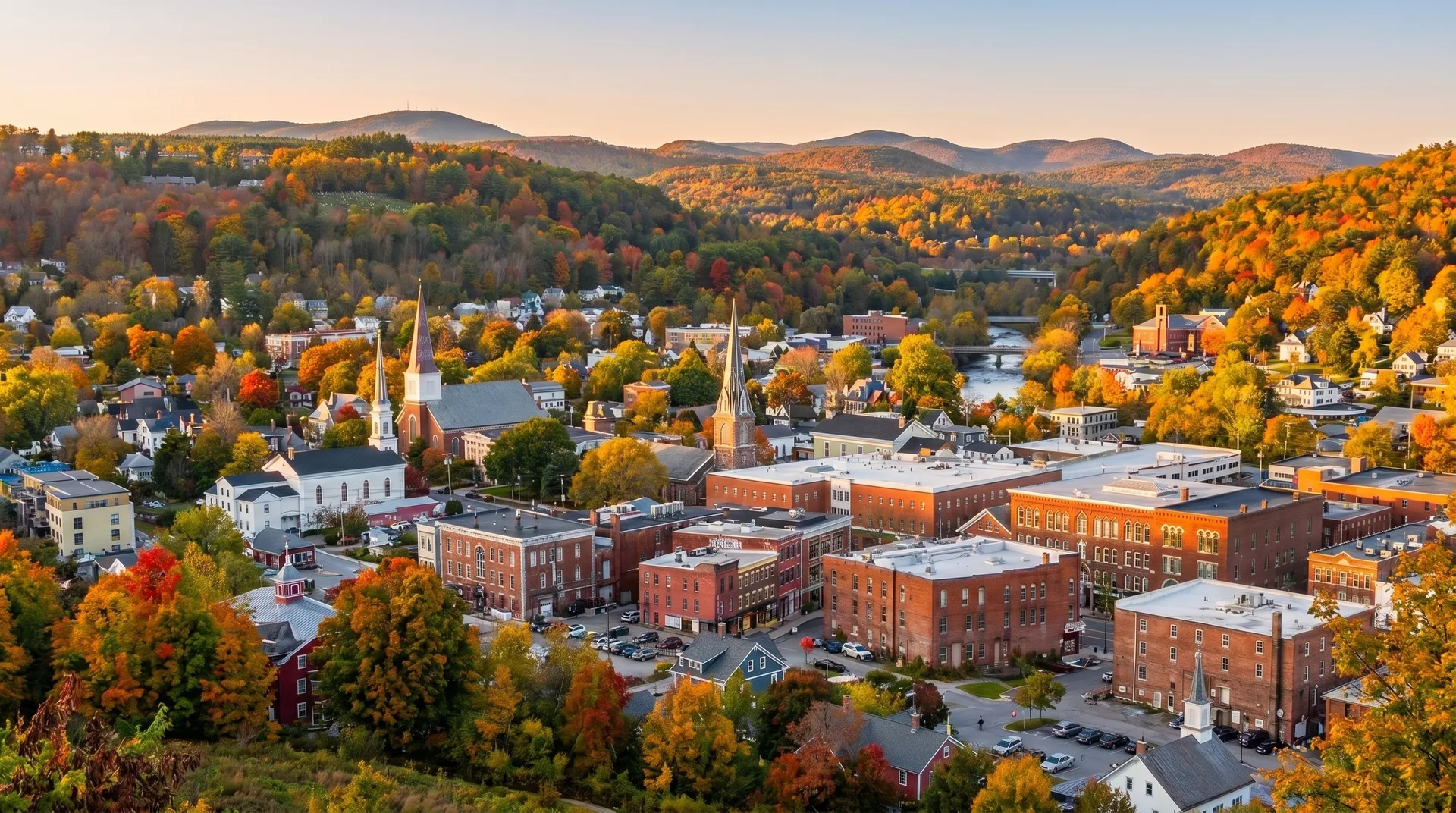
Montpelier, Vermont, serves as a strategic starting point for logistics operations in the Northeast region. Located in the heart of New England, Montpelier provides access to a network of highways including I-89 and I-91, connecting Vermont to major markets in the Northeast and beyond. The city's proximity to Burlington International Airport and rail connections through Vermont Railway enhances its logistics capabilities. Montpelier's location near the Canadian border also facilitates cross-border operations for companies engaged in international trade.
The region's economy is characterized by specialized manufacturing, including precision instruments, electronics, and high-tech equipment. Vermont's agricultural sector, particularly dairy and specialty food products, also contributes significantly to the freight volume moving through Montpelier. The area's focus on sustainable practices and green technologies has created a unique market for specialized freight services, particularly for companies transporting sensitive or environmentally regulated materials.
 Destination
Denver
Denver, Colorado, stands as a major logistics hub in the western United States, strategically positioned at the intersection of major transportation routes. The city's location at the base of the Rocky Mountains provides access to I-70, I-25, and I-76, creating a robust network for freight movement throughout the Mountain West and beyond. Denver International Airport, one of the largest cargo airports in the country, and the city's extensive rail connections through Union Pacific and BNSF railroads enhance its capabilities as a distribution center.
The Denver metropolitan area hosts a diverse range of industries including aerospace, technology, energy, healthcare, and outdoor recreation. The region's growing population and economic expansion have increased demand for efficient freight transportation services. Denver's role as a gateway to the Rocky Mountain region and its proximity to major energy resources make it a critical destination for specialized freight, including oversized equipment for energy projects and temperature-controlled shipments for the region's agricultural and food processing industries.










