Moncton to Baltimore
Baltimore → MonctonFTL freight transportation service between Moncton and Baltimore. Reliable logistics solutions for your business.
Route Description
Everything you need to know about the corridor Moncton - Baltimore
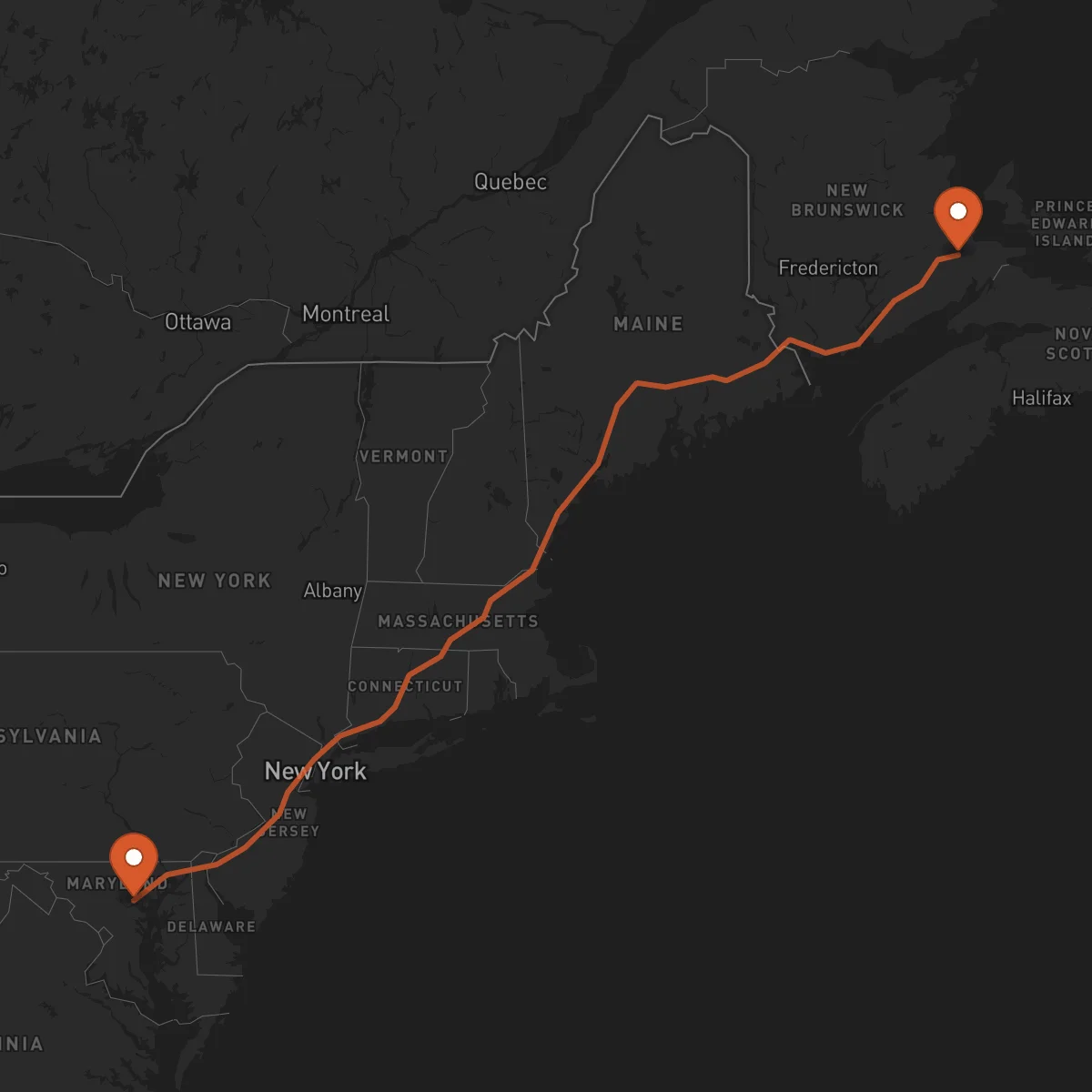
The Moncton-Baltimore corridor represents a vital cross-border logistics route connecting the Atlantic region of Canada with the strategic port of Baltimore on the U.S. East Coast. This 1,225 km transportation corridor facilitates the movement of goods between New Brunswick's industrial centers and Maryland's distribution hubs, serving as a key link in North American supply chains. The route traverses diverse economic regions, connecting manufacturing, agricultural, and resource-based industries with major consumer markets and international trade gateways.
The corridor's significance stems from its role in connecting Atlantic Canada's export-oriented economy with the U.S. Mid-Atlantic region. Moncton serves as a logistics hub for New Brunswick's forestry, agriculture, and seafood industries, while Baltimore functions as a major port city with extensive warehousing and distribution capabilities. The route supports industries including automotive parts, agricultural products, seafood, manufactured goods, and retail merchandise, with many companies relying on this corridor for just-in-time inventory management and supply chain efficiency.
Transportation infrastructure along this corridor includes major highways such as the Trans-Canada Highway (Route 2) through New Brunswick, connecting to Interstate 95 in the United States. The route passes through key border crossings, with the most commonly used being the Calais-St. Stephen crossing in Maine, which offers efficient processing for commercial vehicles. Control Terrestre's expertise in cross-border operations ensures seamless customs clearance, compliance with regulations, and optimized routing to minimize transit times and costs for our clients utilizing this important trade corridor.
Services for this Route
Available services for the corridor Moncton - Baltimore
 Origin
Moncton
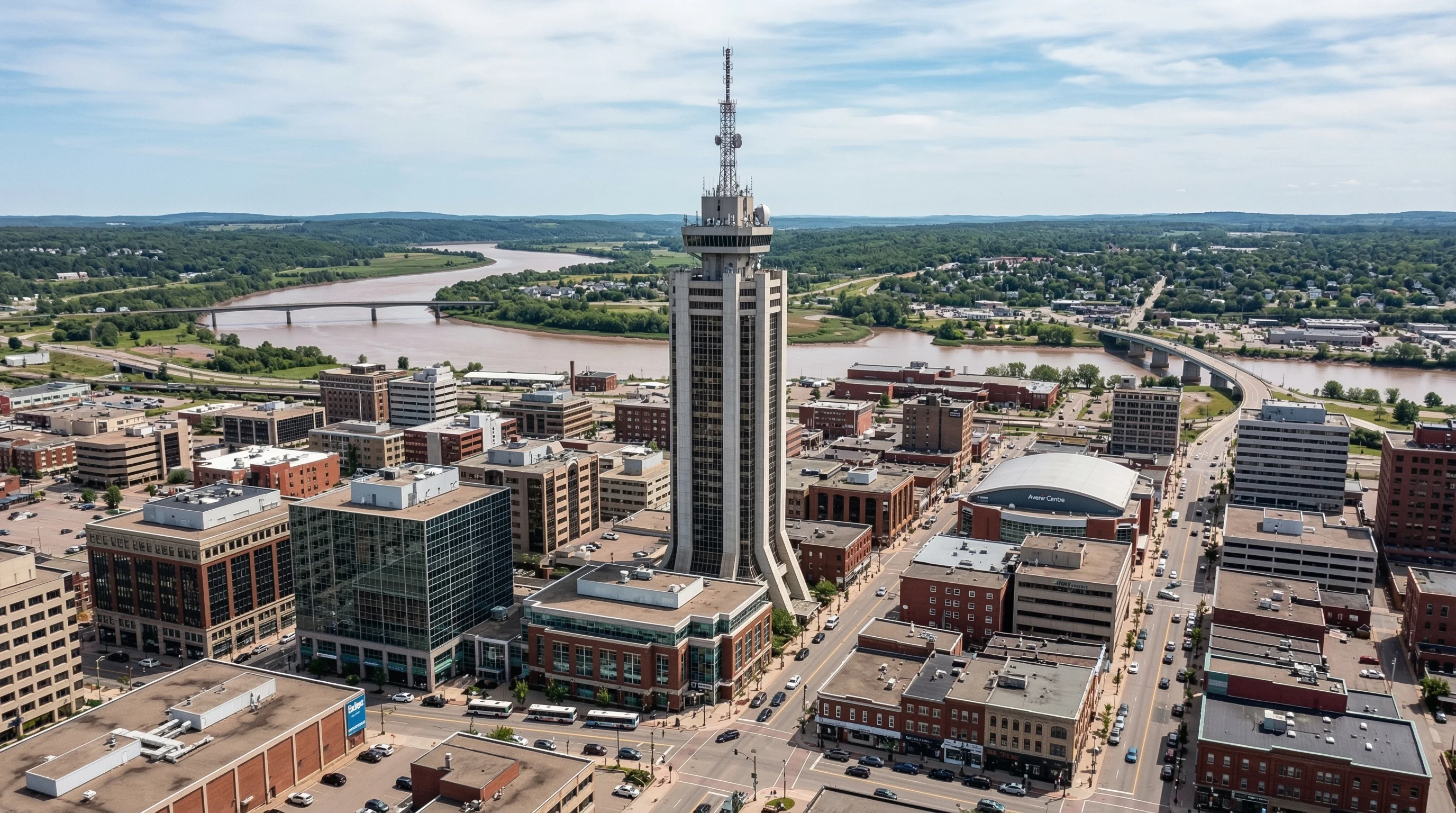
Moncton, located in New Brunswick, Canada, serves as a strategic logistics hub for Atlantic Canada due to its central location within the Maritimes and excellent transportation infrastructure. The city's position at the crossroads of major highways, including the Trans-Canada Highway and Route 15, makes it an ideal origin point for freight distribution throughout the region. Moncton's international airport and VIA Rail connections further enhance its logistics capabilities, supporting both domestic and international freight movements.
The region's economy is diverse, with key industries including forestry and wood products, agriculture, seafood processing, and manufacturing. New Brunswick's forestry sector is particularly significant, with numerous sawmills and wood processing facilities in the surrounding areas. The agricultural industry produces potatoes, dairy products, and various crops, while the seafood industry processes lobster, scallops, and other Atlantic species. These industries generate substantial freight volumes that require reliable transportation to U.S. markets and beyond.
 Destination
Baltimore
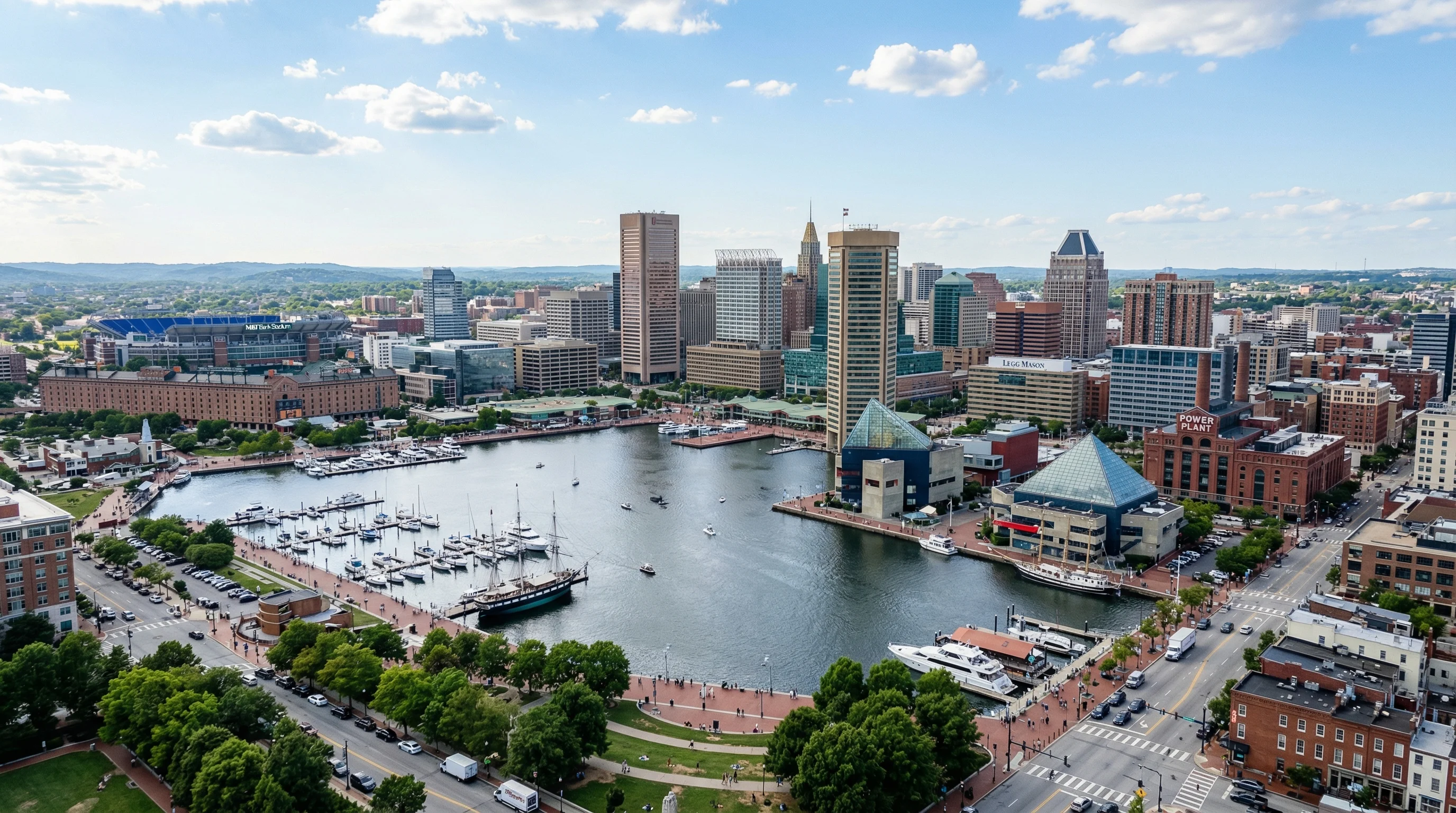
Baltimore, Maryland, stands as a major logistics and distribution center on the U.S. East Coast, strategically positioned to serve both domestic and international markets. The city's location provides access to the Port of Baltimore, one of the busiest ports in the United States, handling over 40 million tons of cargo annually. Baltimore's extensive transportation infrastructure includes major highways such as I-95, I-83, and I-70, along with rail connections through CSX and Norfolk Southern, making it a crucial node in North American supply chains.
The Baltimore metropolitan area hosts a diverse industrial base, with significant concentrations in healthcare, education, financial services, and advanced manufacturing. The region is home to major corporations in biotechnology, cybersecurity, and logistics services. Baltimore's port facilities support import/export activities for automotive, agricultural, and manufactured goods, while the surrounding area contains numerous warehouses and distribution centers serving the Mid-Atlantic region. The city's proximity to Washington D.C. and other major East Coast markets makes it an ideal destination for freight consolidation and distribution.










