Mississauga to Tucson
Tucson → MississaugaFTL freight transportation service between Mississauga and Tucson. Reliable logistics solutions for your business.
Route Description
Everything you need to know about the corridor Mississauga - Tucson
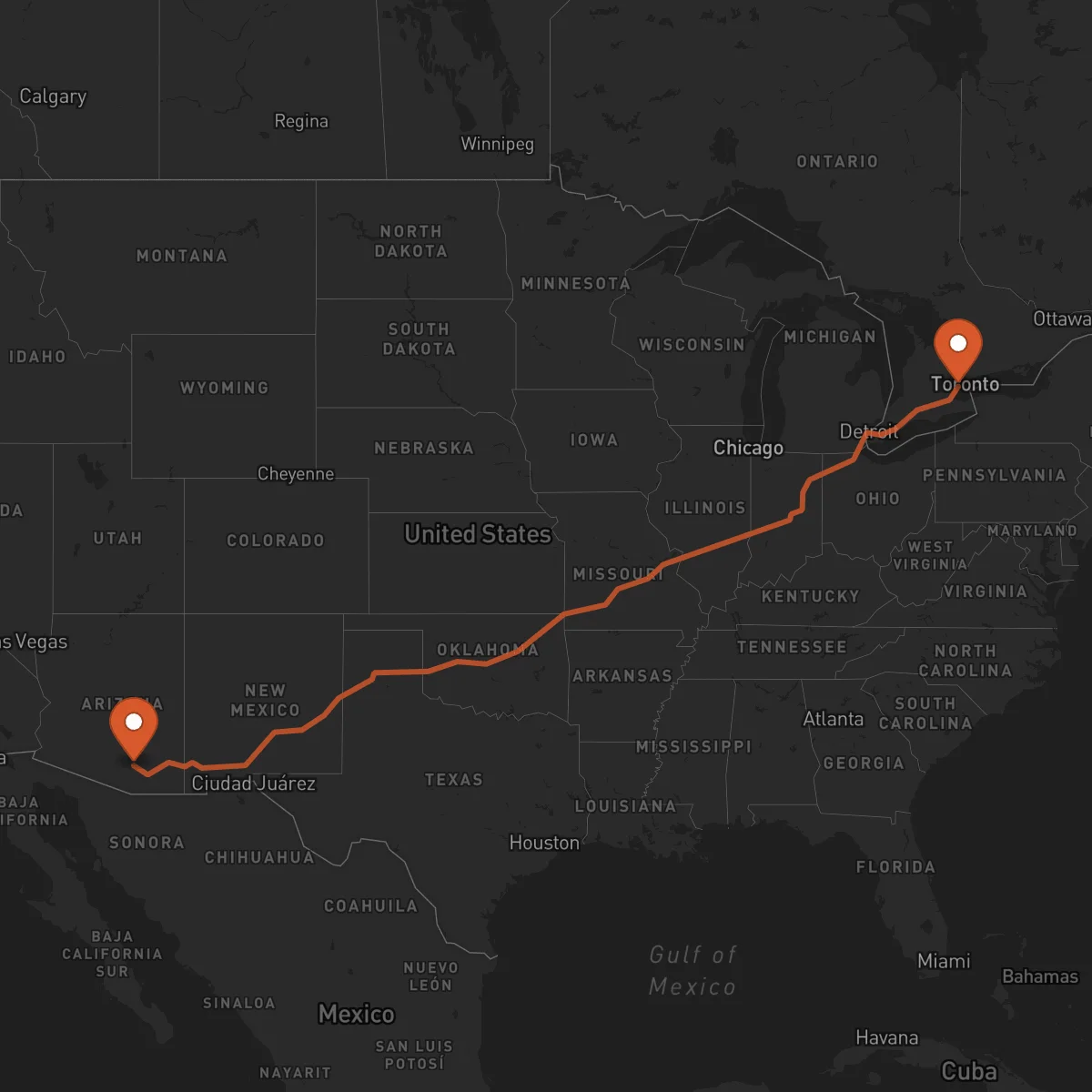
The Mississauga to Tucson corridor represents a vital logistics route connecting Canada's largest transportation hub with one of the most dynamic industrial centers in the southwestern United States. This cross-border freight corridor spans approximately 3000 kilometers, traversing major economic regions and facilitating the movement of goods between North America's most important markets. The route strategically connects Ontario's manufacturing powerhouse with Arizona's growing industrial base, supporting trade flows that drive economic growth on both sides of the border.
The corridor serves diverse industries including automotive manufacturing, electronics, aerospace components, and advanced manufacturing. Mississauga, as Canada's gateway to global trade, generates significant freight volumes that require efficient transportation to U.S. markets. Tucson's strategic location in Arizona's logistics network makes it an ideal destination for cross-border freight, with its proximity to major U.S. markets and growing industrial sector creating consistent demand for reliable transportation services.
Transportation infrastructure along this corridor includes major highways such as I-69W, I-75, I-55, I-40, and I-10, providing multiple routing options for freight movement. Key border crossings at Detroit-Windsor and Port Huron-Sarnia facilitate the Canada-U.S. transition, while advanced customs facilities and programs like FAST and C-TPAT help expedite cross-border movements. Control Terrestre's expertise in managing cross-border documentation, customs compliance, and strategic routing ensures seamless freight movement along this critical corridor.
Services for this Route
Available services for the corridor Mississauga - Tucson
 Origin
Mississauga stands as Canada's premier logistics hub, strategically located in the Greater Toronto Area with direct access to major transportation networks. The city hosts Canada's busiest airport, Toronto Pearson International Airport, and serves as a critical node in the country's freight distribution system. Mississauga's robust infrastructure includes extensive highway connections, rail terminals, and proximity to the Port of Hamilton, making it an ideal origin point for cross-border freight movements. The city's economic strength lies in advanced manufacturing, automotive production, aerospace, pharmaceuticals, and technology sectors, generating consistent high-volume freight flows that require specialized transportation solutions.
 Destination
Tucson
Tucson occupies a strategic position in Arizona's logistics network, serving as a gateway to the southwestern United States and Mexico. The city benefits from its location along major interstate highways, including I-10, which provides direct access to Phoenix, Los Angeles, and other key markets. Tucson's economic landscape includes aerospace and defense industries, mining equipment manufacturing, electronics, and growing technology sectors. The region's logistics infrastructure features modern warehousing facilities, intermodal yards, and proximity to major distribution centers, making it an efficient destination for cross-border freight. Tucson's status as a logistics hub is enhanced by its connection to the Sun Corridor, one of the fastest-growing economic regions in the United States.










