Milwaukee to Regina
Regina → MilwaukeeFTL freight transportation service between Milwaukee and Regina. Reliable logistics solutions for your business.
Route Description
Everything you need to know about the corridor Milwaukee - Regina
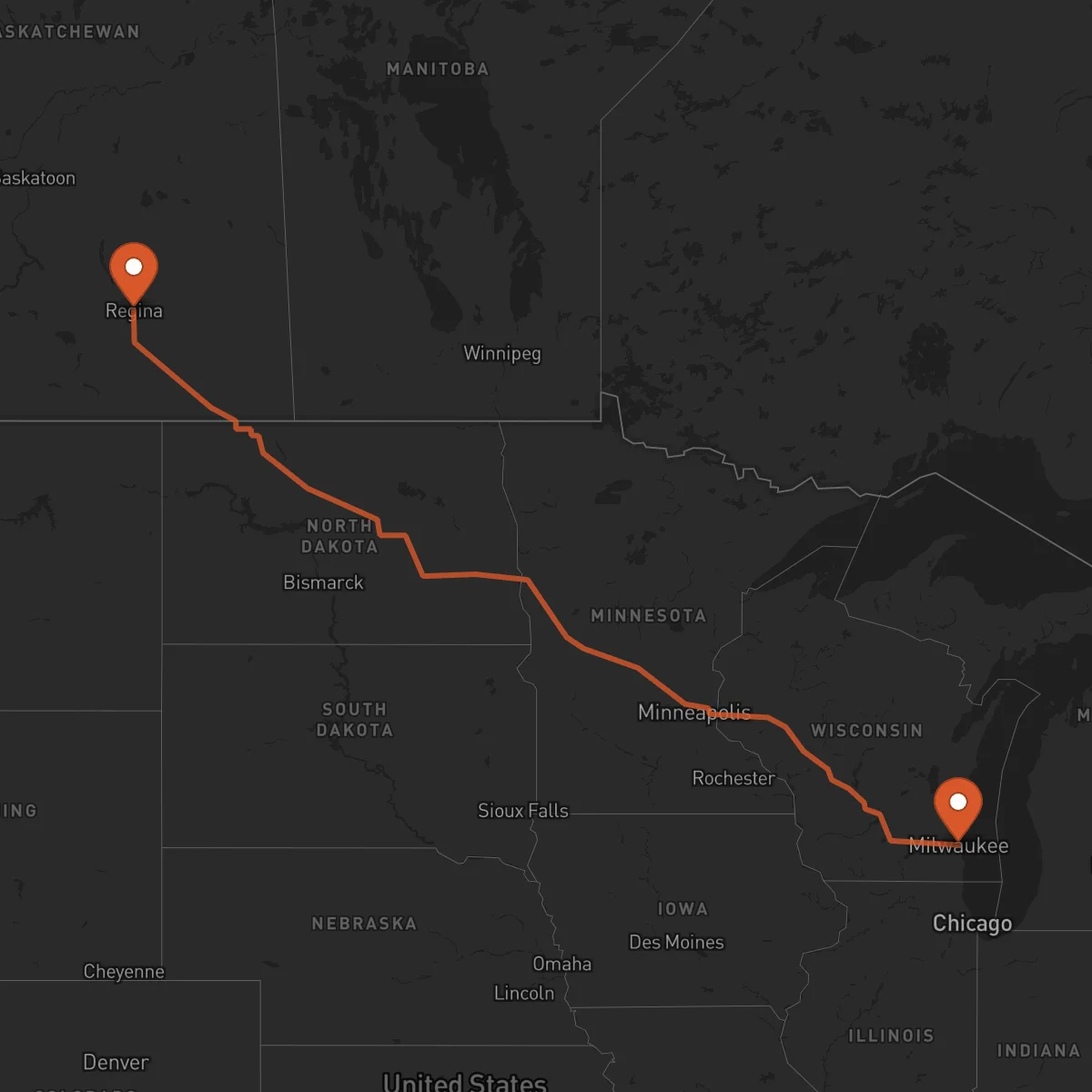
The Milwaukee to Regina corridor represents a vital cross-border logistics connection between the United States and Canada, spanning approximately 1,511 kilometers through the heart of North America. This strategic route links Wisconsin's industrial powerhouse with Saskatchewan's agricultural and energy hub, creating essential supply chain opportunities for businesses operating in both countries. The corridor traverses diverse landscapes and crosses international borders, requiring specialized expertise in customs clearance and cross-border documentation.
The economic significance of this corridor cannot be overstated, as it connects two major economic regions with complementary industrial strengths. Milwaukee serves as a manufacturing and distribution center for machinery, food processing, and transportation equipment, while Regina anchors Saskatchewan's agricultural exports, mining operations, and energy sector. This complementary economic relationship drives consistent freight demand along the route, with manufacturers, processors, and distributors relying on efficient cross-border transportation to maintain their supply chains.
Transportation infrastructure along this corridor includes major highways such as I-94 and I-29 in the United States, transitioning to Canadian routes including the Trans-Canada Highway. The primary border crossing at Portal, North Dakota, provides efficient processing for commercial vehicles, though alternative crossings may be utilized based on specific shipment requirements. Control Terrestre's expertise in cross-border operations ensures seamless customs clearance, proper documentation handling, and compliance with both US and Canadian regulations, minimizing delays and optimizing transit times for our clients' critical freight shipments.
Services for this Route
Available services for the corridor Milwaukee - Regina
 Origin
Milwaukee
Milwaukee, Wisconsin serves as a strategic logistics hub in the Great Lakes region, offering exceptional connectivity to major markets across the Midwest and beyond. The city's location on Lake Michigan provides multimodal transportation options, while its extensive network of highways and rail connections facilitates efficient distribution throughout the region. Milwaukee's industrial heritage has created a robust infrastructure capable of handling diverse freight requirements, from manufacturing components to finished goods.
The city's economy is anchored by manufacturing, food processing, and advanced manufacturing sectors, with major employers in machinery, medical equipment, and consumer products. This industrial diversity creates consistent freight demand for both inbound raw materials and outbound finished products. Milwaukee's transportation infrastructure includes the Port of Milwaukee for international cargo, General Mitchell International Airport for air freight, and extensive warehousing and distribution facilities that support regional supply chains.
 Destination
Regina
Regina, Saskatchewan stands as a crucial logistics center in Canada's prairie provinces, strategically positioned to serve both domestic and international markets. The city's location in the heart of Saskatchewan's agricultural belt, combined with its role as the provincial capital, creates a unique blend of government, commercial, and industrial activity. Regina's transportation infrastructure includes major highways connecting to all parts of Canada, as well as rail connections that link to national and international networks.
The local economy is dominated by agriculture, mining, and energy sectors, with Saskatchewan being a leading producer of potash, oil, and agricultural commodities. This economic foundation drives significant freight movement, both inbound for processing and outbound for distribution. Regina's warehousing and distribution facilities are equipped to handle bulk commodities, specialized equipment, and temperature-sensitive products, supporting the diverse needs of businesses operating in the region.










