Miami to Madison
Madison → MiamiFTL freight transportation service between Miami and Madison. Reliable logistics solutions for your business.
Route Description
Everything you need to know about the corridor Miami - Madison
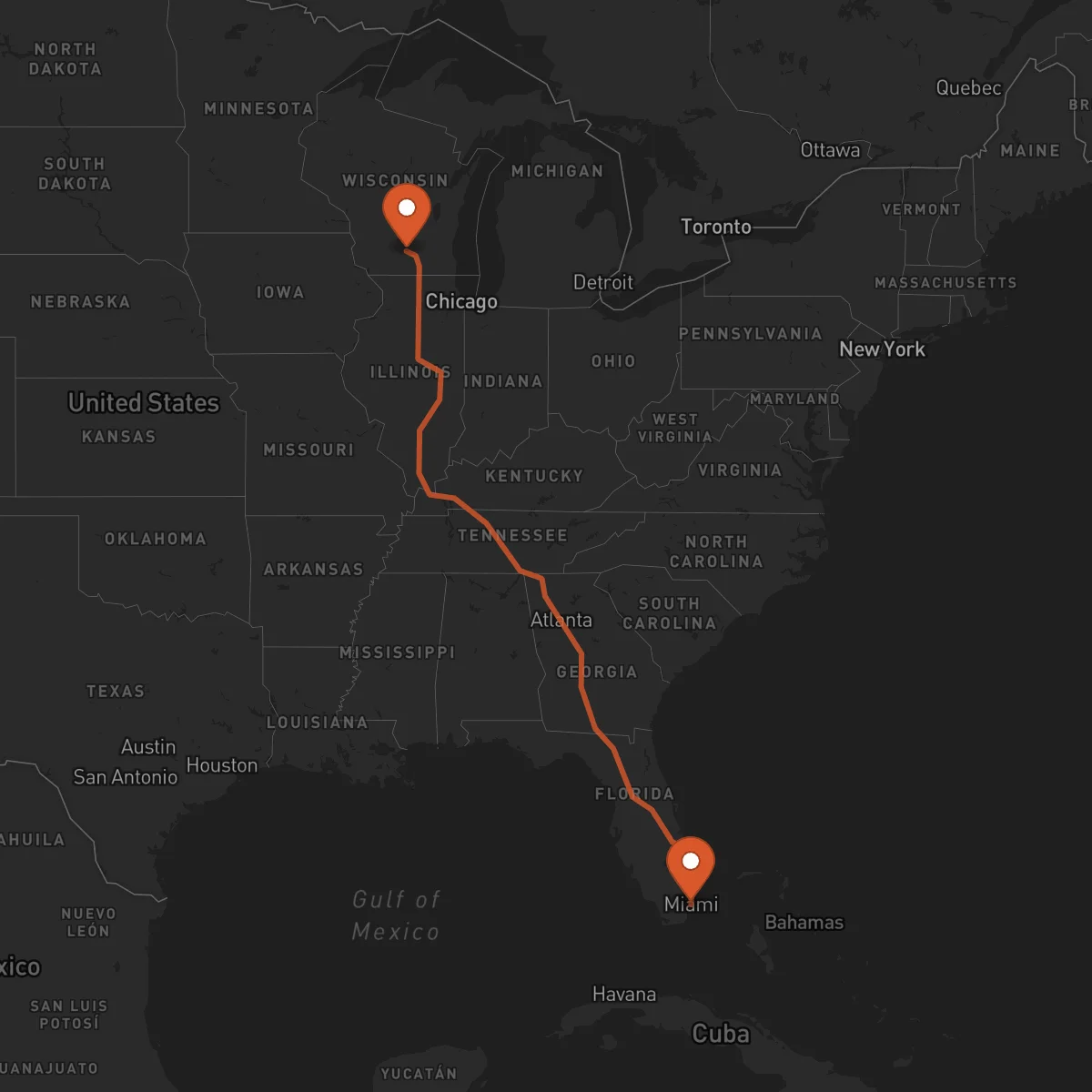
The Miami-Madison corridor connects Florida's vibrant port city with Wisconsin's capital, spanning approximately 2,099 kilometers across the southeastern and midwestern United States. This domestic route traverses key economic regions, linking the southeastern manufacturing and agricultural base with the industrial heartland of the Midwest. The corridor primarily follows Interstate 75 northward through Florida, Georgia, and Tennessee, then transitions to Interstate 65 through Kentucky and Indiana before connecting to Interstate 90/94 into Wisconsin.
The Miami-Madison route serves critical supply chain needs between these diverse economic regions. Miami functions as a major gateway for Latin American trade and a hub for perishable goods, electronics, and consumer products, while Madison anchors a region known for manufacturing, healthcare, and agricultural equipment production. This corridor facilitates the movement of temperature-sensitive products, industrial machinery, automotive components, and general freight between these complementary markets.
Control Terrestre optimizes transportation along this corridor through our specialized FTL services, ensuring efficient cargo movement with our certified carrier network. Our strategic approach leverages the established interstate infrastructure while providing dedicated solutions for full truckload shipments, including expedited options for time-sensitive cargo and specialized handling for oversized or temperature-controlled freight.
Services for this Route
Available services for the corridor Miami - Madison
 Origin
Miami
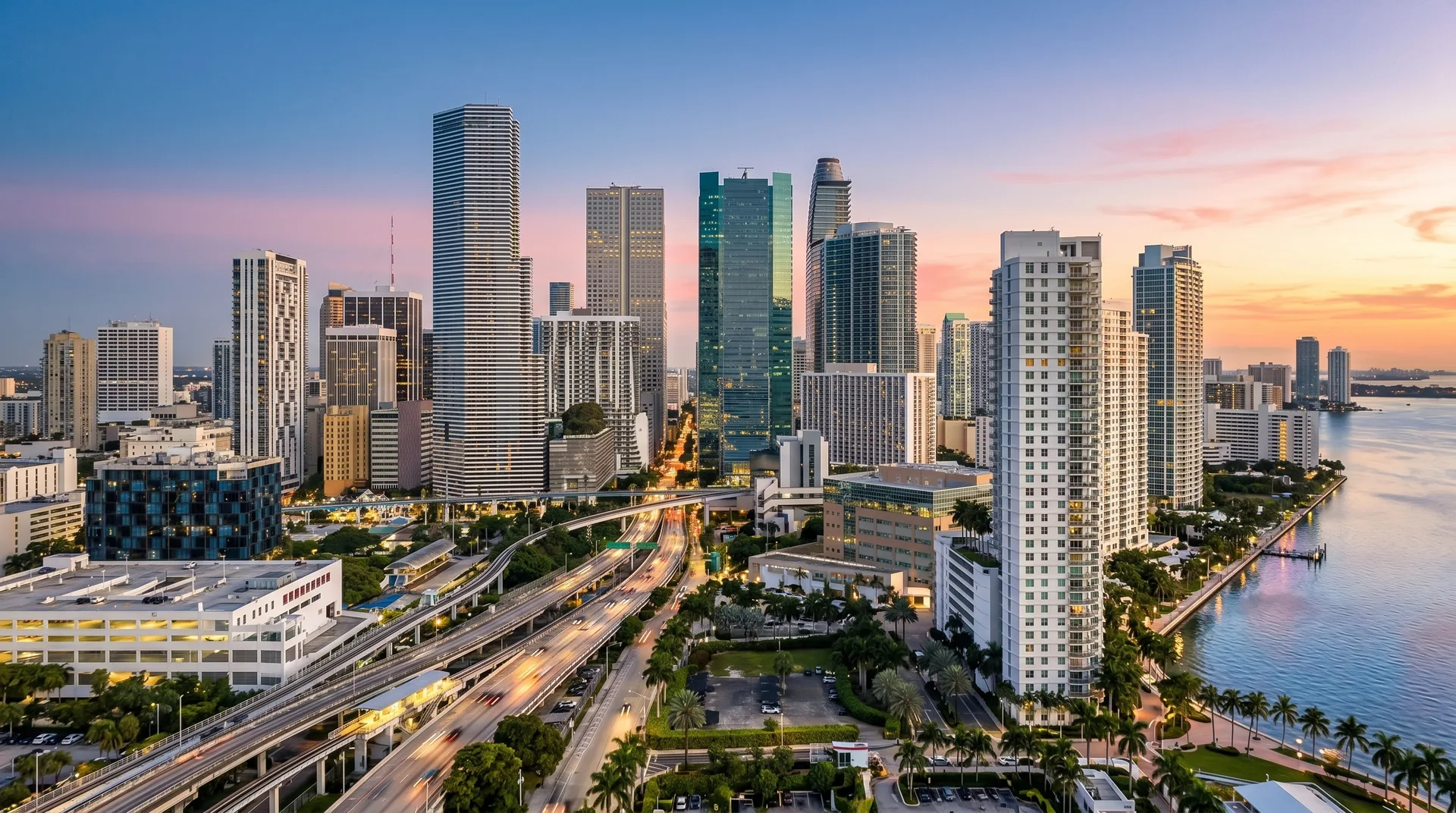
Miami serves as a strategic logistics hub on Florida's southeastern coast, offering unparalleled access to international trade routes and domestic distribution networks. The city's location provides direct connectivity to Latin American markets and the Caribbean, making it a critical entry point for imported goods and a major export center for U.S. products. Miami's transportation infrastructure includes the Port of Miami, one of the busiest container ports in the United States, Miami International Airport (one of the world's top cargo airports), and an extensive highway network including I-95 and I-75.
The region's economy thrives on international trade, tourism, agriculture (particularly tropical fruits and winter vegetables), and technology sectors. Miami is home to numerous multinational corporations, financial institutions, and a growing tech ecosystem. The city's warehousing and distribution facilities are concentrated around the airport and port areas, with modern logistics parks supporting the efficient movement of goods throughout the southeastern United States and beyond.
 Destination
Madison
Madison, Wisconsin's capital city, occupies a strategic position in the Midwest's industrial and agricultural heartland. Located between Chicago and Minneapolis along major interstate corridors, Madison provides excellent connectivity to the broader North American supply chain. The city sits at the intersection of I-90/94, offering direct routes to major manufacturing centers, agricultural regions, and consumer markets throughout the Midwest and beyond.
Madison's economy is anchored by healthcare, education (home to the University of Wisconsin), manufacturing, and technology sectors. The region is known for its medical device manufacturing, precision machinery, food processing, and agricultural equipment production. The city's logistics infrastructure includes multiple industrial parks, warehousing facilities, and proximity to major rail terminals and trucking corridors. Madison's central location makes it an ideal distribution point for reaching the densely populated Midwest corridor, with excellent access to both Canadian and Mexican markets through the integrated North American highway system.










