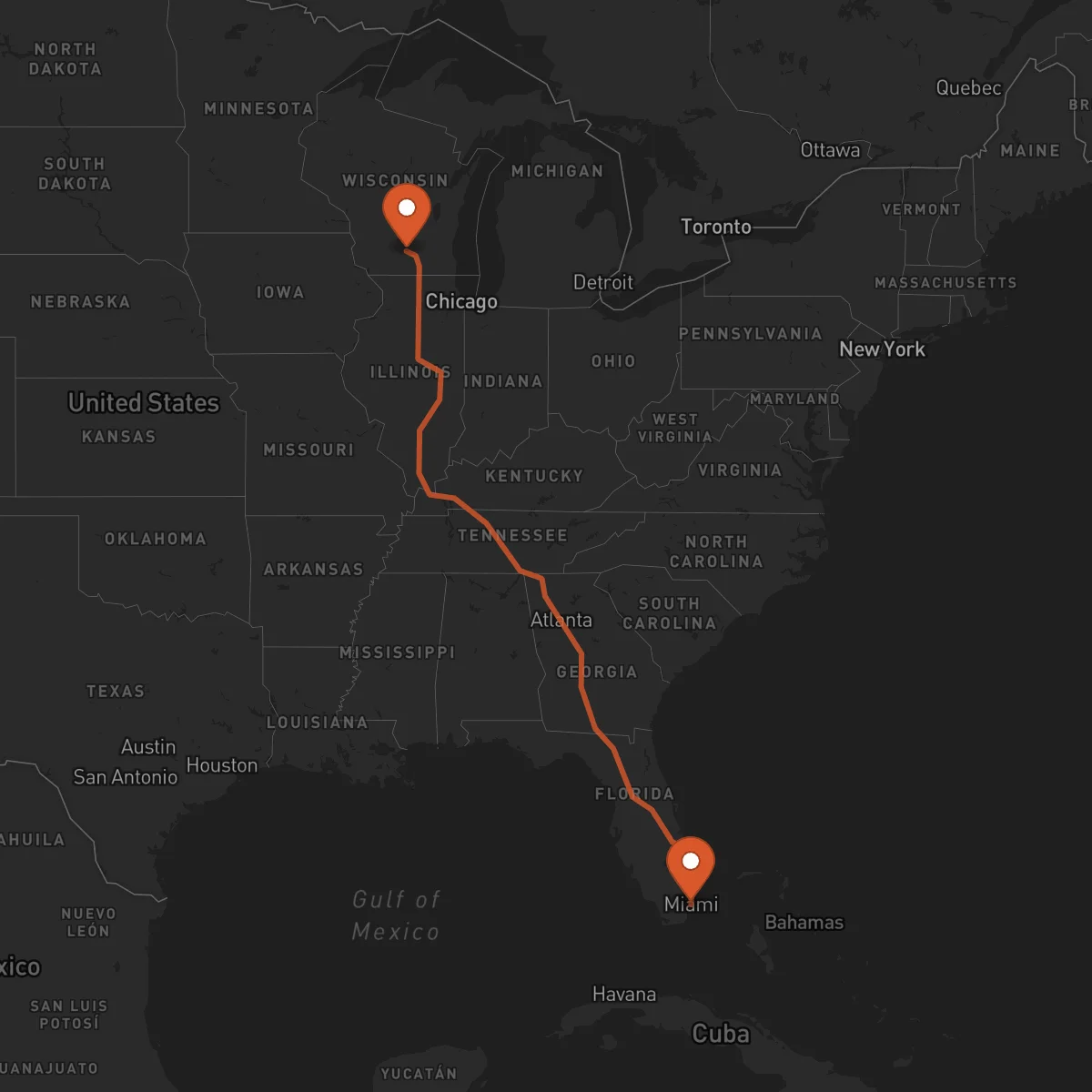
Madison to Miami
Miami → MadisonFTL freight transportation service between Madison and Miami. Reliable logistics solutions for your business.
Route Description
Everything you need to know about the corridor Madison - Miami
The logistics corridor connecting Madison, Wisconsin to Miami, Florida represents a vital freight transportation route spanning approximately 2,099 kilometers across the heart of the United States. This north-south corridor traverses diverse economic regions, connecting the industrial Midwest with the vibrant trade hub of South Florida. The route serves as a critical link for businesses moving goods between manufacturing centers, agricultural regions, and international ports, facilitating commerce across multiple economic zones.
The corridor follows major interstate highways including I-65 South through Indiana and Kentucky, transitioning to I-75 South through Tennessee, Georgia, and into Florida. This well-established freight route provides reliable access to major distribution centers, manufacturing facilities, and port infrastructure. The journey connects the logistics ecosystem of the Upper Midwest with the strategic gateway of Miami, which serves as a primary entry point for Latin American and Caribbean trade.
Control Terrestre specializes in full truckload (FTL) freight transportation along this corridor, offering dedicated services that ensure your cargo moves efficiently from origin to destination. Our experienced carrier network understands the nuances of this route, including optimal scheduling, regulatory compliance, and the specific requirements of time-sensitive freight. We provide the expertise and reliability needed to maintain your supply chain integrity across this extensive distance.
Services for this Route
Available services for the corridor Madison - Miami
 Origin
Madison
Madison, Wisconsin serves as a strategic logistics hub in the Upper Midwest, positioned advantageously for freight distribution throughout the region. The city benefits from its location within Wisconsin's robust transportation network, including proximity to major highways such as I-90 and I-94 that connect to national freight corridors. Madison's economy is anchored by manufacturing, healthcare, and technology sectors, with significant activity in food processing, agricultural equipment, and medical devices. The University of Wisconsin-Madison also contributes to a thriving research and development ecosystem that generates specialized freight needs.
The city's transportation infrastructure includes multiple freight carriers, warehousing facilities, and distribution centers strategically located to serve both local businesses and broader regional markets. Madison's position near the geographic center of the United States makes it an ideal origin point for long-haul freight movements to both coasts and southern destinations. The area's strong manufacturing base, particularly in machinery, fabricated metal products, and food manufacturing, creates consistent demand for reliable full truckload transportation services to major markets across the country.
 Destination
Miami
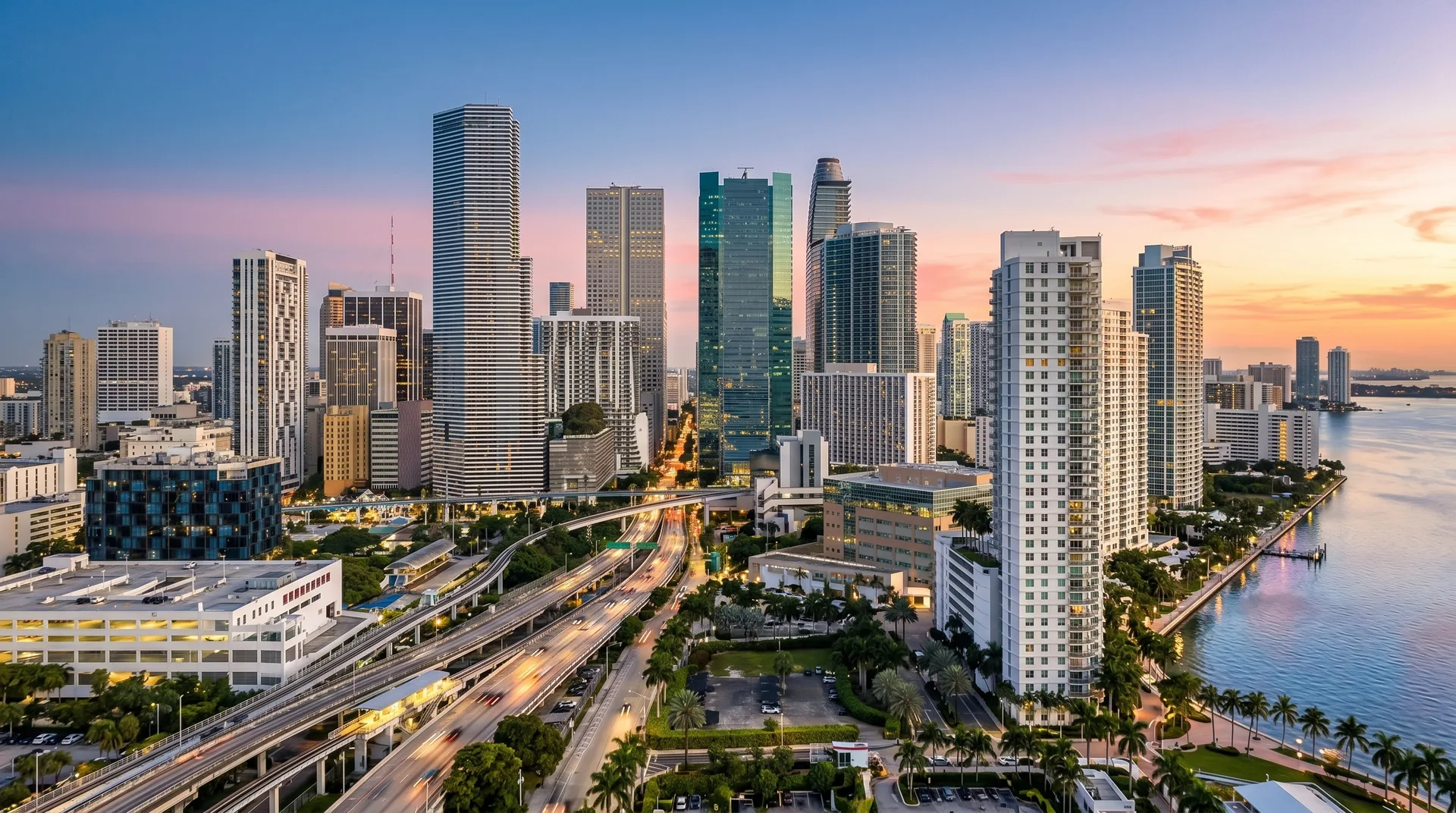
Miami, Florida stands as one of the most strategically important logistics hubs in the United States, serving as the primary gateway to Latin America and the Caribbean. Located at the southeastern tip of Florida, Miami offers unparalleled access to international trade routes and serves as a critical distribution point for goods entering and exiting the U.S. The city's PortMiami, known as the "Cargo Gateway of the Americas," handles millions of tons of freight annually, while Miami International Airport ranks among the top air cargo facilities in the nation. This infrastructure makes Miami an essential destination for businesses engaged in import-export activities.
The Miami metropolitan area's economy is diverse and dynamic, with strong presence in international trade, tourism, healthcare, and technology sectors. The region's proximity to major consumer markets in the southeastern United States, combined with its role as a transshipment point for goods destined throughout the Americas, creates substantial demand for reliable freight transportation. Miami's extensive warehousing and distribution network, coupled with its position at the intersection of major highways including I-95 and the Florida Turnpike, provides efficient connectivity for full truckload shipments moving throughout the state and beyond.










