Miami to El Paso
El Paso → MiamiFTL freight transportation service between Miami and El Paso. Reliable logistics solutions for your business.
Route Description
Everything you need to know about the corridor Miami - El Paso
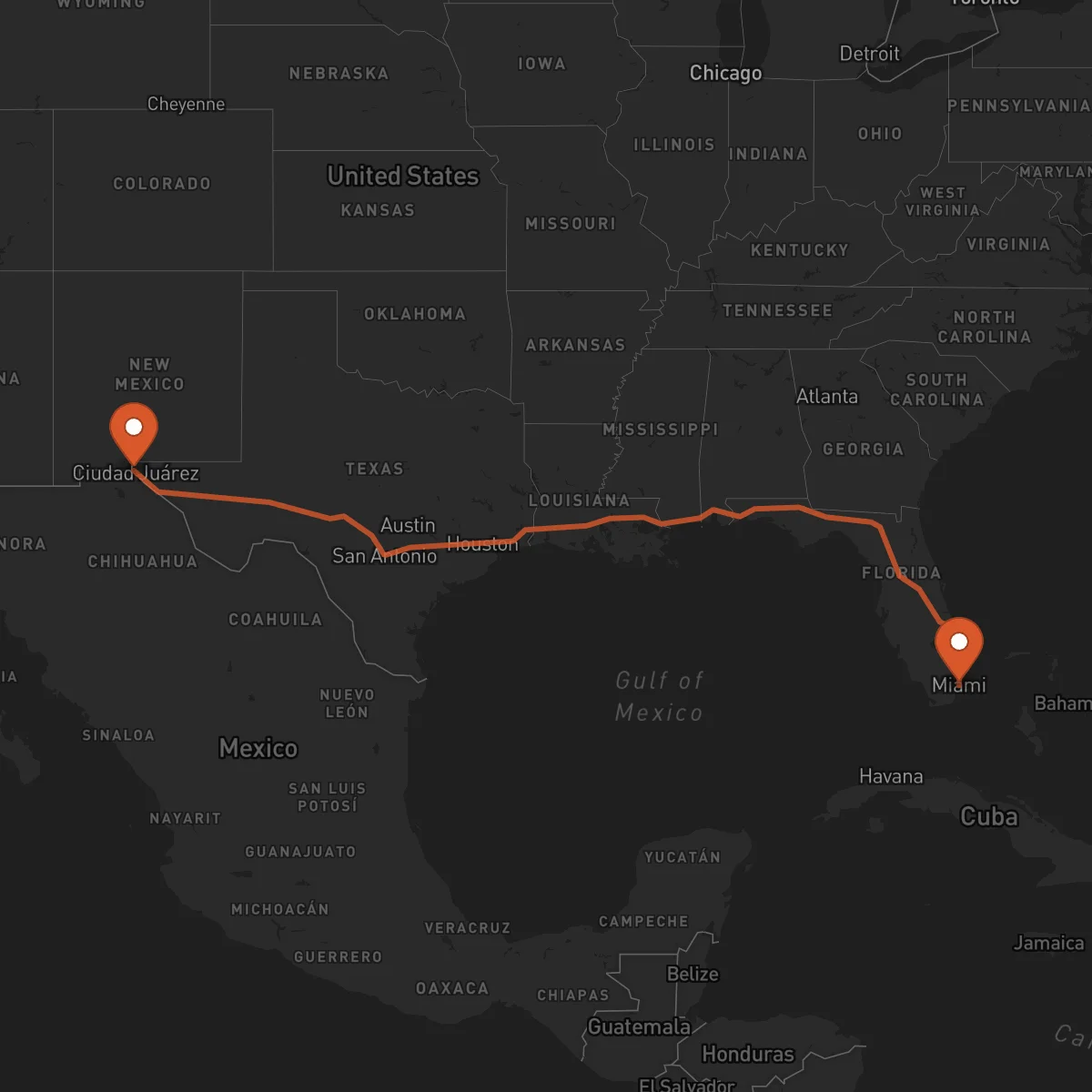
The Miami-El Paso corridor represents one of the most important logistics routes in the United States, connecting the vibrant port of Miami on the Atlantic coast with the strategic border city of El Paso on the Mexican frontier. This 2,641 km route traverses the heart of the American continent, linking two fundamental economic poles: the southeastern hub with the southwestern gateway. The corridor is vital for the transportation of goods between the Atlantic and Pacific coasts, as well as for international trade with Latin America and Asia.
The economic significance of this corridor is undeniable. Miami, with its consolidated position as the gateway to Latin America, concentrates a large part of international trade, while El Paso serves as a crucial logistics node for trade with Mexico and the southwestern United States. This route facilitates the flow of merchandise from multiple industrial sectors, including automotive, technology, pharmaceuticals, and consumer products, supporting the supply chains of companies operating in both regions.
The main transportation infrastructure along this corridor includes Interstate 10 (I-10), which runs from Jacksonville, Florida, to Los Angeles, California, passing through key cities such as Houston and San Antonio. This highway is fundamental for freight transportation, offering a direct and efficient connection between Miami and El Paso. Additionally, the corridor benefits from the presence of several logistics terminals and freight distribution centers along the route, optimizing the flow of goods.
At Control Terrestre, we understand the strategic importance of this corridor and are committed to facilitating efficient and reliable operations for our clients. With our network of certified carriers and specialized equipment, we ensure that your cargo travels safely and on time from Miami to El Paso, optimizing your supply chain and contributing to the success of your business.
Services for this Route
Available services for the corridor Miami - El Paso
 Origin
Miami
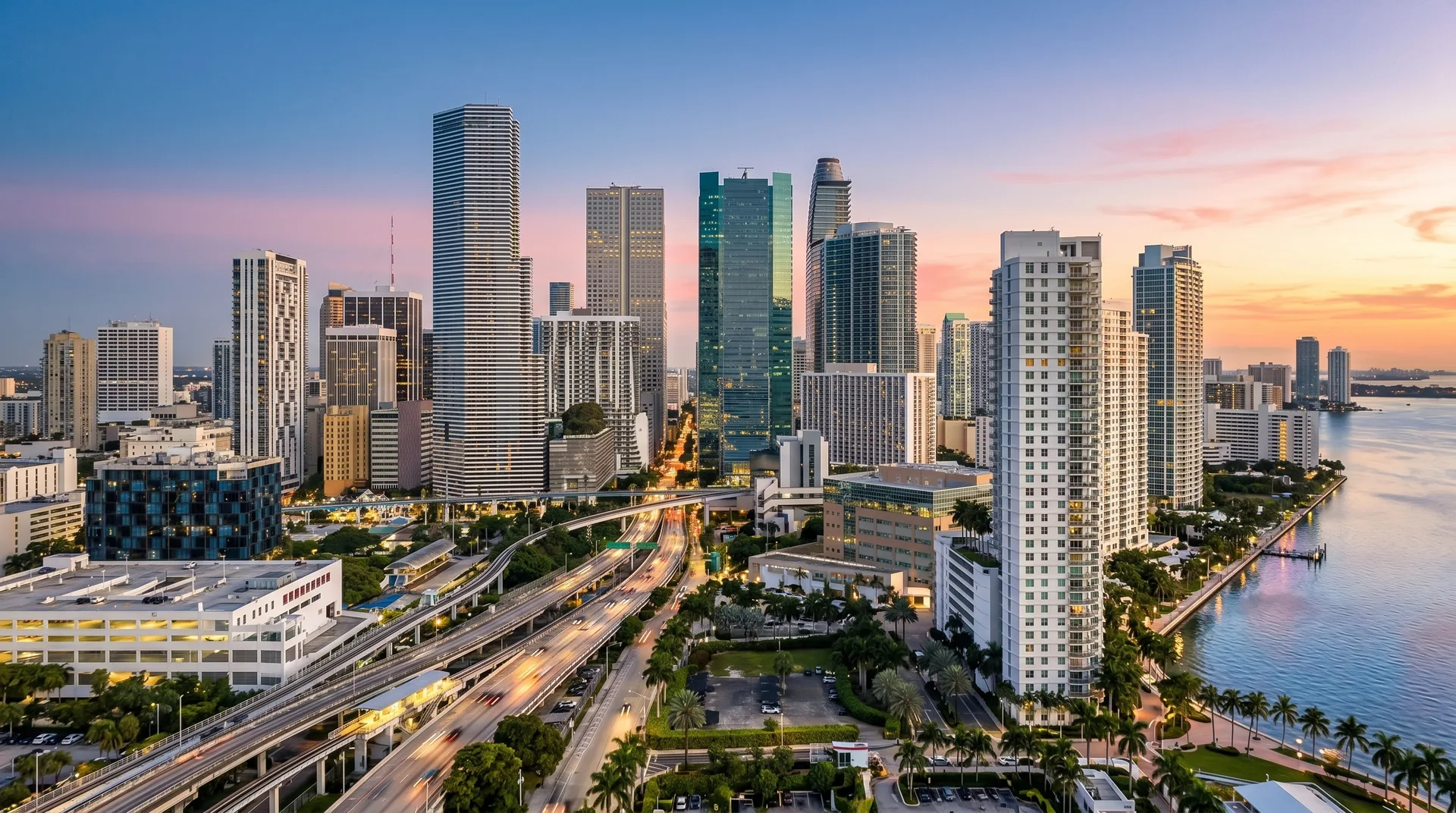
Miami, Florida, is a strategic epicenter for logistics in the southeastern United States. Its position on the Atlantic coast and its proximity to Latin America make it a key gateway for international trade. The city is home to one of the busiest ports in the country, the Port of Miami, known as the "Cruise Capital of the World" and a vital hub for containerized cargo. Additionally, Miami International Airport is a major cargo center, facilitating the rapid movement of goods to and from international destinations.
The region's economy is diverse and dynamic, with strong sectors in international trade, tourism, technology, and healthcare. Miami is particularly known for being the commercial capital of Latin America, hosting the headquarters of numerous multinational companies and serving as a regional hub for many industries. This economic dynamism drives a constant demand for freight transportation services, both domestically and internationally.
 Destination
El Paso
El Paso, Texas, is a strategic city for logistics in the southwestern United States, located on the border with Mexico. Its geographic position makes it a crucial gateway for trade between the United States and Mexico, facilitating the flow of goods and services between the two countries. The city is connected to Ciudad Juárez, Mexico, forming one of the largest binational metropolitan areas in the world, which enhances its importance as a logistics center.
The economy of El Paso is strongly linked to international trade, manufacturing, and logistics. The region is home to numerous maquiladoras and manufacturing companies that depend on the efficient transportation of raw materials and finished products. Additionally, El Paso benefits from its proximity to major transportation routes, including Interstate 10, which connects the city to other key markets in the United States. The city also has a robust transportation infrastructure, including the El Paso International Airport and several freight rail terminals, facilitating the multimodal movement of goods.










