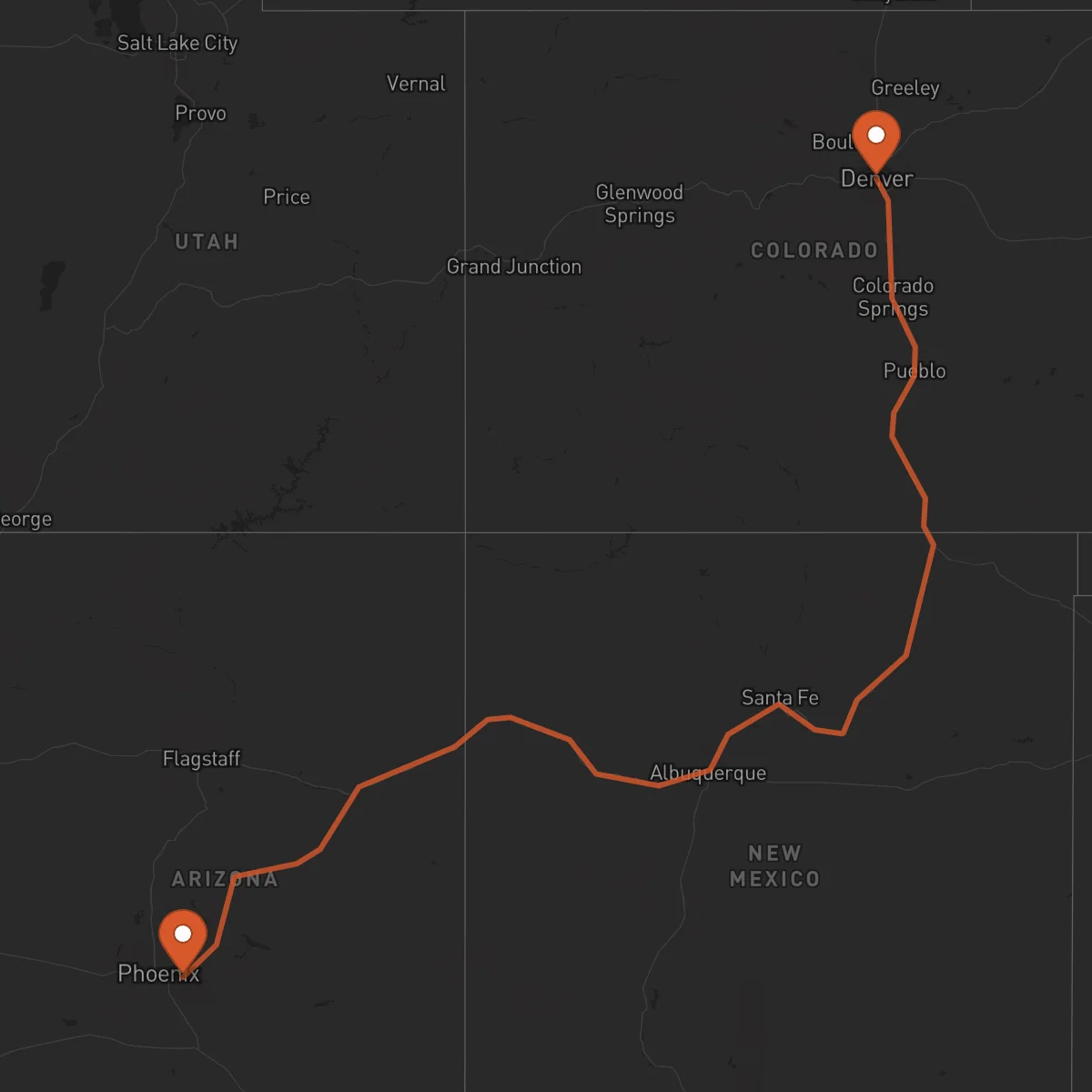
Mesa to Denver
Denver → MesaFTL freight transportation service between Mesa and Denver. Reliable logistics solutions for your business.
Route Description
Everything you need to know about the corridor Mesa - Denver
The Mesa-Denver corridor is a vital logistics artery connecting two key economic centers in the southwestern United States. This strategic route spans approximately 931 kilometers, linking Arizona's vibrant East Valley with Colorado's capital and gateway to the Rocky Mountains. The corridor plays a crucial role in facilitating the movement of goods between the Sonoran Desert region and the Rocky Mountain states, supporting a diverse range of industries and economic activities.
The economic significance of this corridor is underscored by the complementary industrial strengths of both regions. Mesa, part of the Phoenix metropolitan area, is a hub for aerospace, electronics, and advanced manufacturing, while Denver serves as a major center for energy, technology, and financial services. The corridor also supports the agricultural sector, with Mesa's proximity to farming regions and Denver's role as a distribution point for Rocky Mountain states. Key industries utilizing this route include automotive parts, high-tech equipment, consumer goods, and agricultural products.
Transportation infrastructure along the Mesa-Denver corridor is robust, primarily utilizing Interstate 17 and Interstate 25. These major highways provide efficient north-south connectivity, linking with other key interstates such as I-10 and I-40. The route passes through diverse landscapes, from the Sonoran Desert to the high plains, requiring specialized knowledge of regional weather patterns and terrain challenges. Control Terrestre leverages this infrastructure to provide reliable, full truckload (FTL) services, ensuring timely and secure delivery of freight between these important economic centers.
Services for this Route
Available services for the corridor Mesa - Denver
 Origin
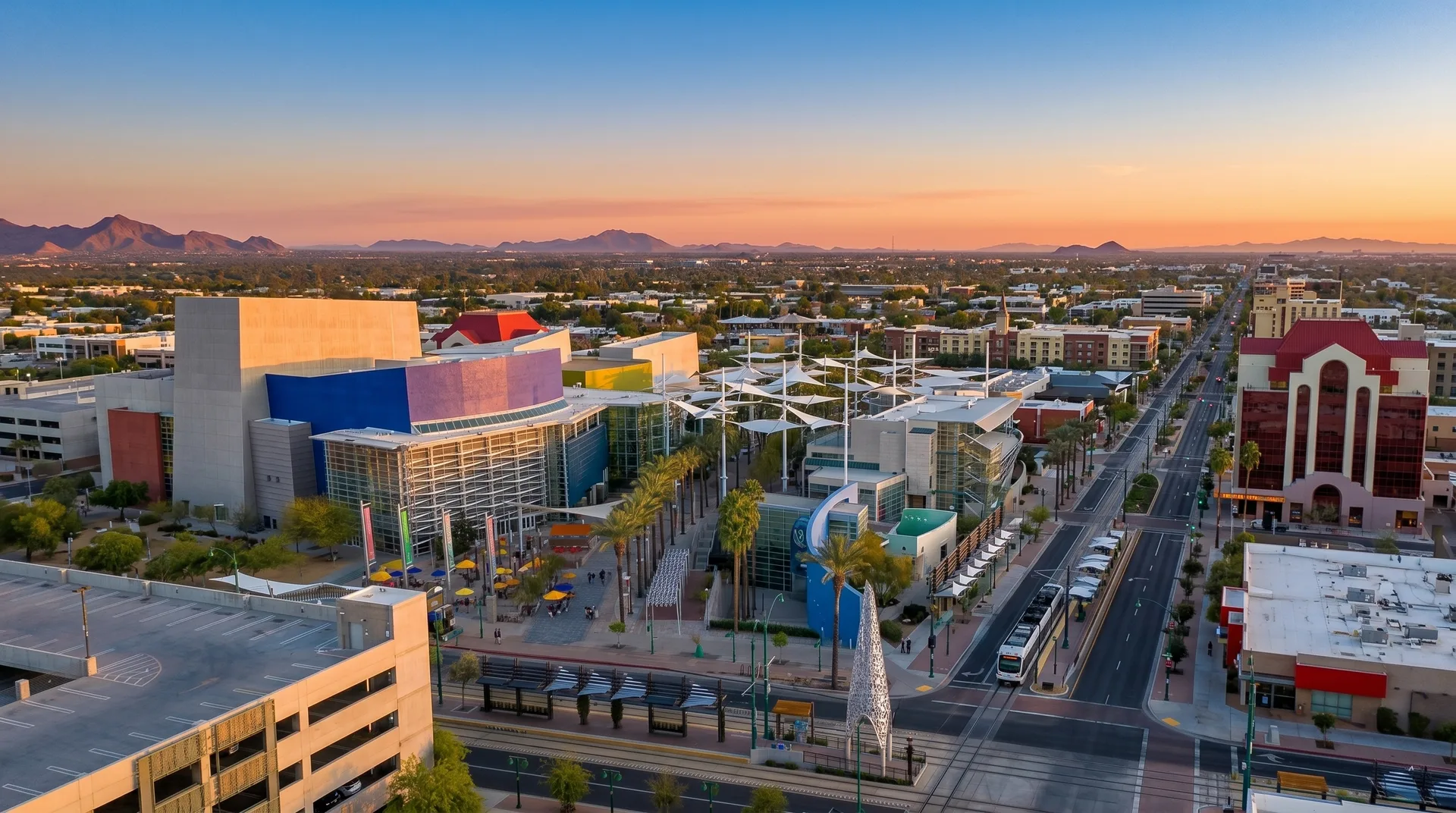
Mesa
Mesa, Arizona, strategically located in the East Valley of the Phoenix metropolitan area, is a significant logistics hub in the southwestern United States. Its proximity to Phoenix Sky Harbor International Airport and major highways like US-60 and Loop 202 provides excellent multimodal transportation options. The city's location in the Sonoran Desert offers year-round freight movement capabilities, with minimal weather-related disruptions.
The economic landscape of Mesa is diverse, with strong presence in aerospace, electronics manufacturing, and renewable energy sectors. The city is home to several major employers in these fields, creating a steady demand for freight transportation services. Additionally, Mesa's growing technology sector and its role as a distribution center for the Southwest contribute to its importance in regional logistics. The city's infrastructure includes modern warehousing facilities and industrial parks, supporting efficient cargo handling and storage.
 Destination
Denver
Denver, Colorado, known as the Mile High City, is a critical logistics hub for the Rocky Mountain region and beyond. Its strategic location at the intersection of major interstates (I-25, I-70, and I-76) makes it a natural gateway for freight movement between the western and central United States. Denver International Airport, one of the largest airports in the world by land area, further enhances the city's connectivity and logistics capabilities.
The Denver metropolitan area boasts a diverse economy, with strong sectors in energy (particularly oil and gas), technology, aerospace, and financial services. The city's role as the capital of Colorado and its position as a distribution center for the Rocky Mountain states create a constant flow of goods through its transportation network. Denver's infrastructure includes extensive rail connections, a well-developed highway system, and numerous warehousing and distribution centers, supporting efficient freight handling and distribution across the region.










