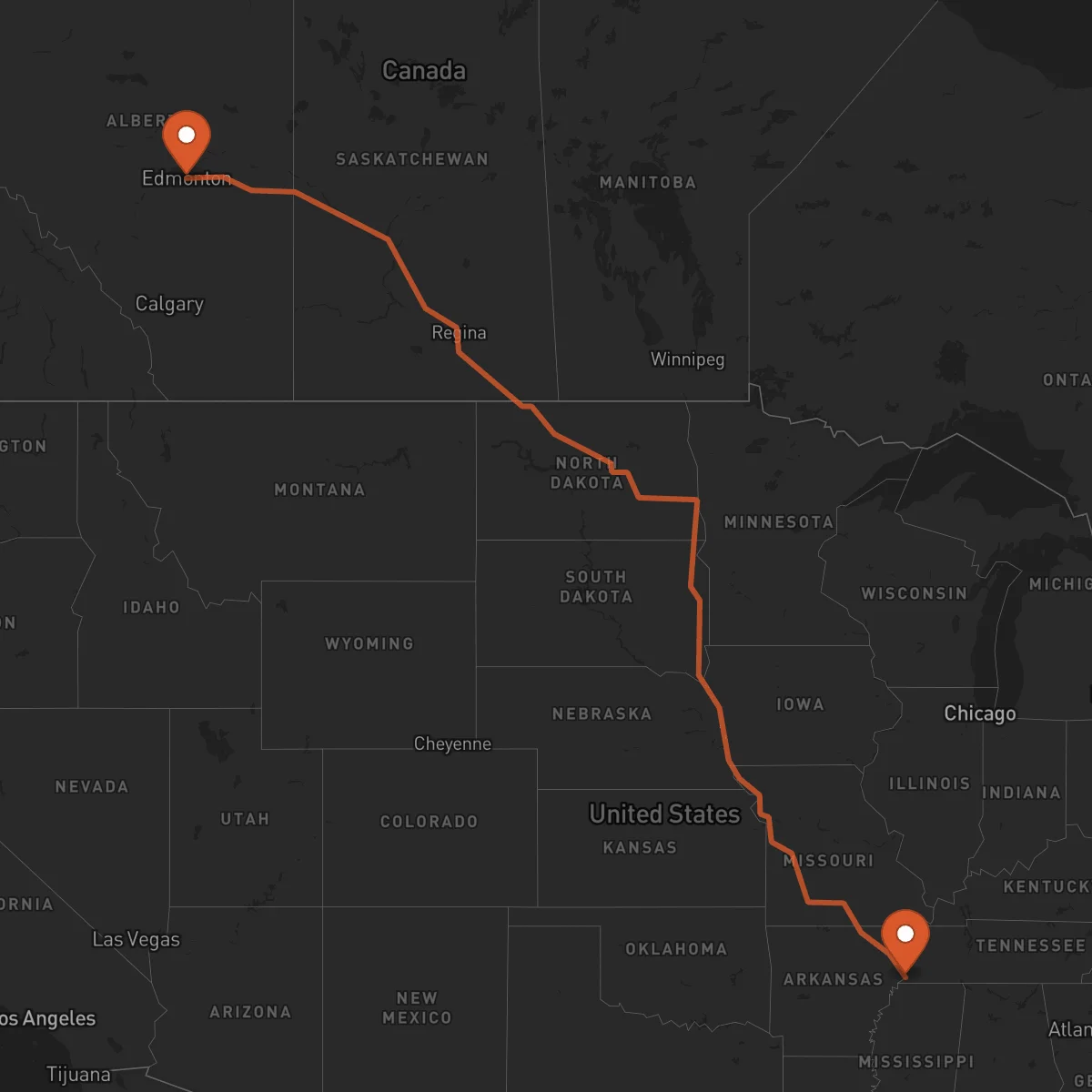
Memphis to Edmonton
Edmonton → MemphisFTL freight transportation service between Memphis and Edmonton. Reliable logistics solutions for your business.
Route Description
Everything you need to know about the corridor Memphis - Edmonton
The logistics corridor connecting Memphis, Tennessee, with Edmonton, Alberta, represents a vital cross-border freight transportation route spanning approximately 2,742 kilometers. This corridor serves as a crucial link between the central United States and western Canada, facilitating the movement of goods across diverse economic regions. The route traverses multiple states and provinces, crossing international borders at key points that require specialized customs expertise and compliance with both US and Canadian regulations.
The economic significance of this corridor is substantial, connecting major industrial hubs and supporting trade between the two nations. Memphis, known for its strategic location in the southeastern United States, serves as a major distribution center, while Edmonton functions as a key gateway to northern Canada and the oil sands region. The corridor supports various industries including automotive, manufacturing, energy, and consumer goods, with freight volumes reflecting the strong economic ties between the regions.
Transportation infrastructure along this route includes major interstate highways such as I-40 and I-29 in the United States, transitioning to Canadian highways including the Trans-Canada Highway and Yellowhead Highway. The corridor features several border crossing options, with the most commonly used being locations that offer efficient processing for commercial vehicles. Control Terrestre provides comprehensive cross-border logistics solutions for this corridor, ensuring seamless customs clearance, regulatory compliance, and reliable transportation services that keep your supply chain moving efficiently between Memphis and Edmonton.
Services for this Route
Available services for the corridor Memphis - Edmonton
 Origin
Memphis
Memphis, Tennessee, serves as a strategic logistics hub in the southeastern United States, offering exceptional connectivity and infrastructure for freight transportation. The city's location at the crossroads of major interstate highways, including I-40, I-55, and I-69, provides direct access to key markets across the country. Memphis International Airport, one of the busiest cargo airports globally, complements the ground transportation network, while the city's position along the Mississippi River enables multimodal shipping capabilities. The region's logistics infrastructure includes numerous distribution centers, warehousing facilities, and specialized freight handling services that support efficient cargo movement.
The local economy is diverse, with strong presence in logistics, healthcare, manufacturing, and food processing industries. Memphis is home to major corporations and distribution centers for national retailers, making it a critical node in North American supply chains. The city's strategic location allows for same-day or next-day delivery to many major US markets, enhancing its appeal as a distribution point. Control Terrestre leverages Memphis's robust logistics infrastructure to provide reliable full truckload services, connecting this dynamic hub to destinations across North America, including the vital Canadian market.
 Destination
Edmonton, Alberta, stands as a strategic logistics center in western Canada, serving as the capital city of Alberta and a major gateway to northern Canada and the oil sands region. The city's location along the North Saskatchewan River and its proximity to major transportation routes, including the Yellowhead Highway (Highway 16) and proximity to the Trans-Canada Highway, provides excellent connectivity for freight movement. Edmonton International Airport supports air cargo operations, while the city's rail connections through Canadian National Railway and Canadian Pacific Railway enhance its multimodal transportation capabilities. The region's infrastructure includes modern warehousing facilities and distribution centers that accommodate various cargo types and volumes.
The Edmonton economy is heavily influenced by the energy sector, with significant activities in oil and gas exploration, production, and services. Additionally, the city has strong manufacturing, technology, and agricultural processing industries. Edmonton's strategic position makes it a natural distribution point for goods destined for northern Canada, including remote communities and industrial sites. The city's role as a logistics hub is further strengthened by its function as a staging point for freight moving to and from Alaska and other northern destinations. Control Terrestre utilizes Edmonton's comprehensive transportation infrastructure to provide efficient full truckload services, connecting this western Canadian hub with key markets throughout the United States and beyond.










