Memphis to Concord
Concord → MemphisFTL freight transportation service between Memphis and Concord. Reliable logistics solutions for your business.
Route Description
Everything you need to know about the corridor Memphis - Concord
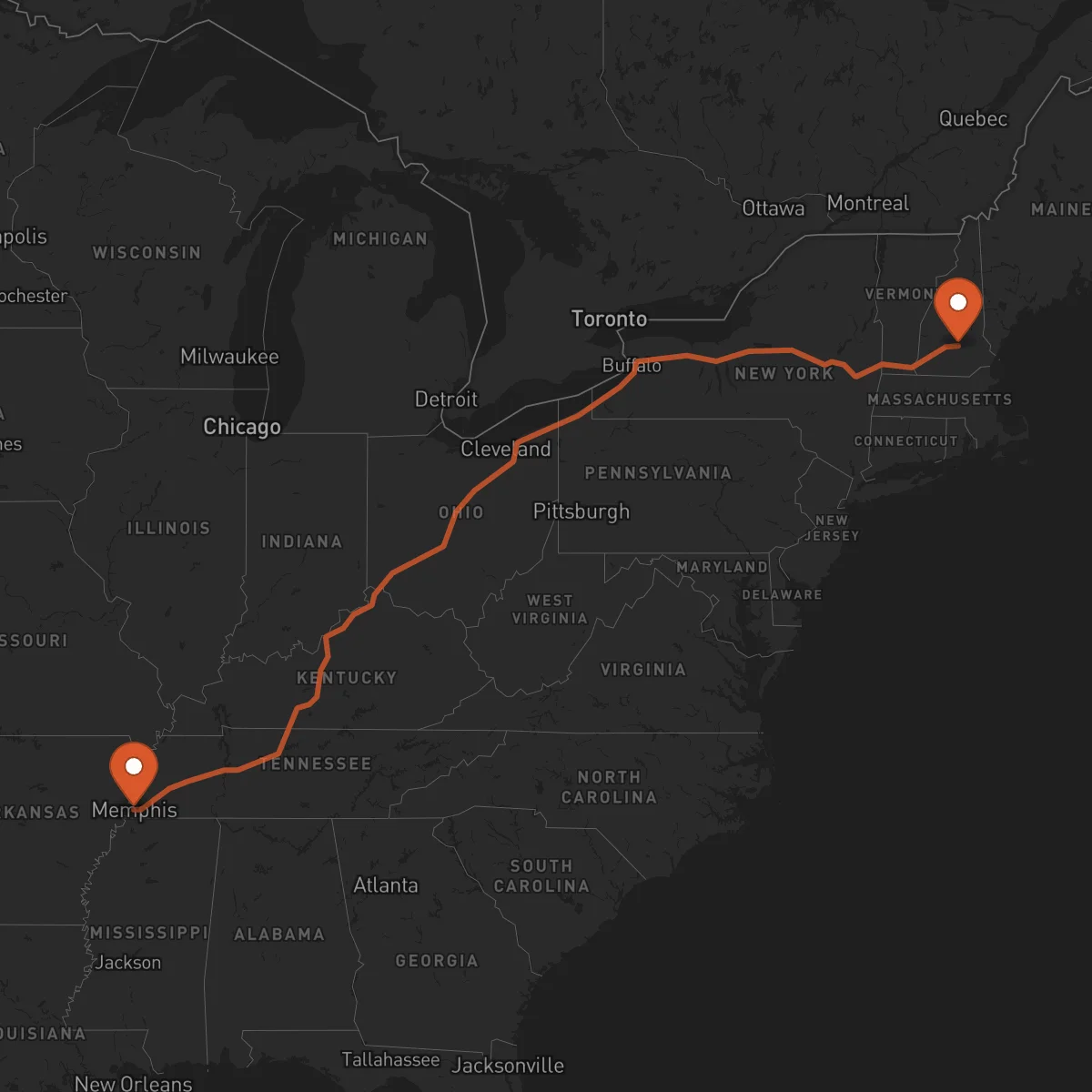
The freight transportation corridor between Memphis, Tennessee, and Concord, New Hampshire, represents a vital link connecting the Mid-South to New England across a distance of approximately 1,824 kilometers. This east-west route traverses diverse landscapes and crosses multiple state lines, serving as a critical artery for domestic supply chains. The corridor facilitates the movement of goods from the industrial and distribution hubs of the Southeast to the manufacturing and commercial centers of the Northeast.
The economic significance of this corridor is substantial, connecting Memphis's logistics powerhouse with New Hampshire's industrial base. This route supports the flow of automotive parts, industrial equipment, consumer goods, and raw materials essential for regional economies. The transportation infrastructure along this corridor includes major interstate highways such as I-40, I-81, and I-89, providing efficient and reliable freight movement. These well-maintained highways ensure consistent transit times and support the high-volume freight traffic characteristic of this domestic lane.
Control Terrestre specializes in optimizing freight operations along this corridor through our network of certified transportation providers. Our full truckload (FTL) services ensure dedicated capacity for your shipments, eliminating the delays and handling risks associated with consolidated freight. With our strategic partnerships and experienced carriers, we provide reliable, end-to-end transportation solutions that keep your supply chain moving efficiently between Memphis and Concord, regardless of seasonal weather challenges or regional demand fluctuations.
Services for this Route
Available services for the corridor Memphis - Concord
 Origin
Memphis
Memphis, Tennessee, stands as a major logistics hub in the southeastern United States, strategically positioned at the crossroads of major transportation networks. The city's location on the Mississippi River and its extensive rail connections make it a critical distribution center for the region. Memphis is home to one of the world's busiest cargo airports and serves as a major inland port, facilitating both domestic and international freight movement. The city's logistics infrastructure includes numerous warehousing facilities, distribution centers, and intermodal yards that support diverse industries including automotive, healthcare, and e-commerce.
The economic landscape of Memphis is characterized by strong manufacturing, healthcare, and logistics sectors. The city hosts major corporations and distribution centers for national retailers, making it a key origin point for freight shipments across the country. Memphis's transportation infrastructure includes extensive highway networks, with major interstates converging in the area, providing seamless connections to national freight corridors. The city's logistics ecosystem is further enhanced by its proximity to major manufacturing centers in the Southeast, making it an ideal starting point for freight moving to destinations across the eastern United States.
 Destination
Concord
Concord, New Hampshire, serves as the state capital and a key commercial center in New England, strategically located in the heart of the state. The city benefits from its position within New Hampshire's robust transportation network, with access to major highways including I-93 and I-89 that connect it to Boston, Montreal, and other regional markets. Concord's location provides efficient access to the broader New England market, making it an important destination for freight shipments from across the country. The city's infrastructure includes modern warehousing facilities and distribution centers that support its role in regional logistics.
The economic base of Concord and the surrounding Merrimack County includes advanced manufacturing, healthcare, education, and state government operations. The region has seen growth in technology and precision manufacturing sectors, creating demand for reliable freight transportation services. Concord's proximity to Boston and other major New England cities, combined with New Hampshire's business-friendly environment, makes it an attractive destination for companies requiring consistent, high-quality logistics support. The city's transportation infrastructure is well-maintained and capable of handling the freight volumes necessary to support both local industries and the broader regional economy.










