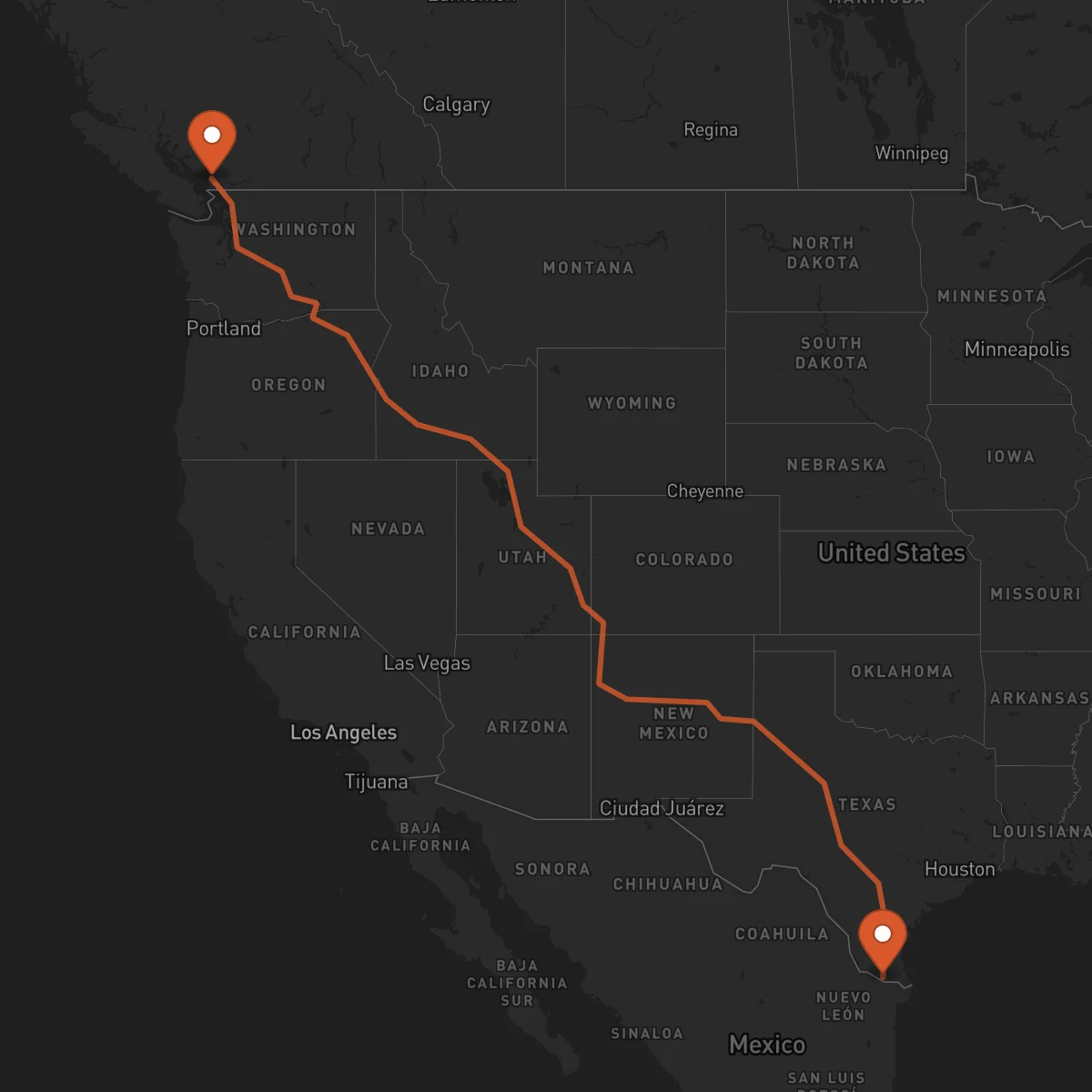
McAllen to Vancouver
Vancouver → McAllenFTL freight transportation service between McAllen and Vancouver. Reliable logistics solutions for your business.
Route Description
Everything you need to know about the corridor McAllen - Vancouver
The logistics corridor connecting McAllen, Texas to Vancouver, British Columbia represents a critical north-south freight route spanning over 3,341 kilometers across the North American continent. This corridor serves as a vital link between Mexico's industrial heartland and Canada's Pacific gateway, facilitating the movement of goods through some of North America's most important economic regions. The route traverses diverse landscapes and crosses multiple state and provincial lines, requiring specialized knowledge of regional regulations and transportation requirements.
The economic significance of this corridor cannot be overstated, as it connects major industrial centers, agricultural regions, and manufacturing hubs. McAllen serves as a crucial entry point for goods entering the United States from Mexico, while Vancouver functions as Canada's primary Pacific port and a gateway to Asian markets. This corridor supports industries ranging from automotive and electronics to agriculture and consumer goods, with manufacturing facilities and distribution centers strategically located along the route.
Transportation infrastructure along this corridor includes major interstate highways such as I-35, I-25, and I-90, connecting to Canadian routes through the Pacific Northwest. The corridor benefits from multiple border crossing options, with efficient customs processing facilities at key points. Control Terrestre provides comprehensive cross-border transportation services along this route, ensuring seamless freight movement through our network of certified carriers and our expertise in handling customs documentation and compliance requirements for both US-Mexico and US-Canada border crossings.
Services for this Route
Available services for the corridor McAllen - Vancouver
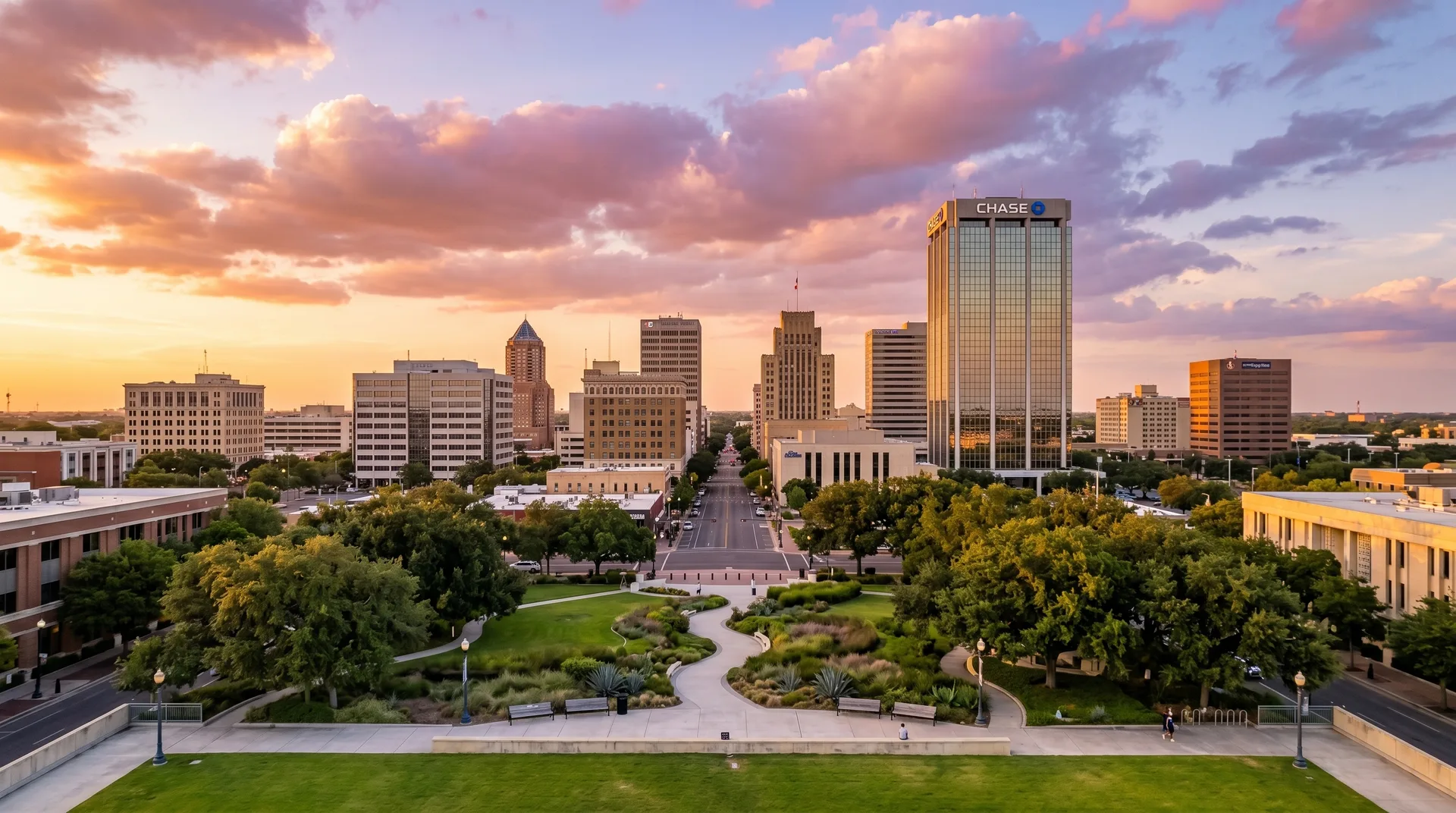 Origin
McAllen
McAllen, Texas serves as a strategic logistics hub positioned at the southern tip of Texas, directly across the border from Mexico. The city's location makes it a critical entry point for goods entering the United States from Mexico's industrial regions, particularly benefiting from its proximity to major manufacturing centers in the Mexican states of Tamaulipas and Nuevo León. McAllen's transportation infrastructure includes access to major highways, an international airport, and proximity to the McAllen-Hidalgo-Reynosa International Bridge, facilitating efficient cross-border operations.
The region's economy is driven by international trade, retail, and healthcare sectors, with a strong presence of maquiladora operations and manufacturing facilities. The area's logistics infrastructure has been developed to handle high volumes of cross-border freight, with specialized facilities for customs processing and freight consolidation. McAllen's strategic position in the Rio Grande Valley makes it an essential node in the North American supply chain, particularly for companies engaged in US-Mexico trade.
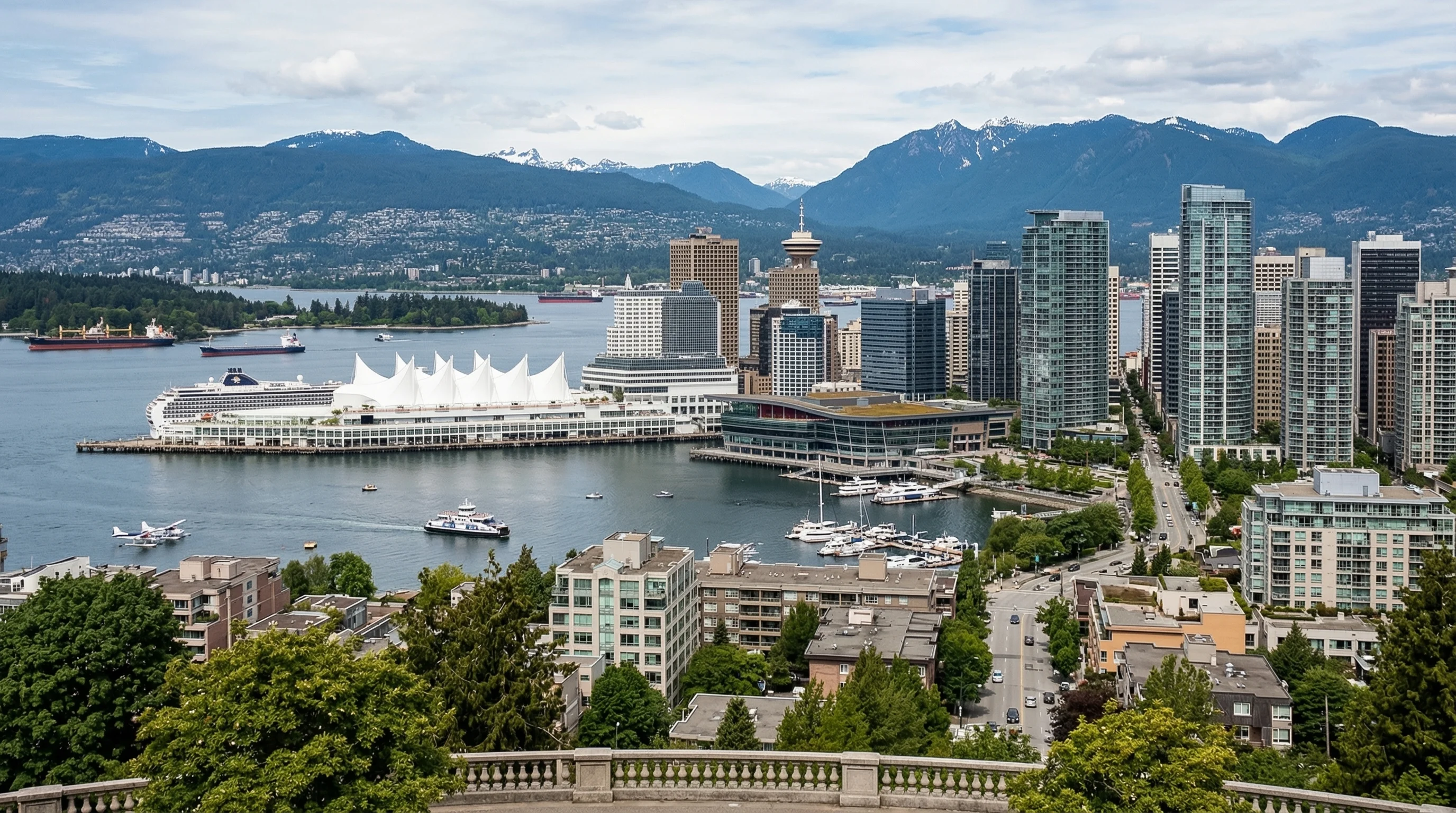 Destination
Vancouver
Vancouver, British Columbia stands as Canada's primary Pacific gateway and a major logistics hub on the west coast. The city's strategic location provides direct access to Asian markets and serves as the terminus for major transcontinental rail lines and highway systems. Vancouver's port facilities are among the busiest in North America, handling a diverse range of cargo including containerized goods, bulk commodities, and specialized freight. The city's transportation infrastructure includes extensive highway networks, rail connections, and the Vancouver International Airport, supporting efficient distribution throughout Western Canada and beyond.
The region's economy is characterized by international trade, technology, natural resources, and film production industries. Vancouver's position as a major port city has led to the development of sophisticated logistics and warehousing facilities, supporting both import and export activities. The city's role in connecting North American markets with Asia-Pacific regions makes it a crucial endpoint for cross-continental freight movements, with specialized facilities for handling various types of cargo including refrigerated goods, hazardous materials, and oversized shipments.










