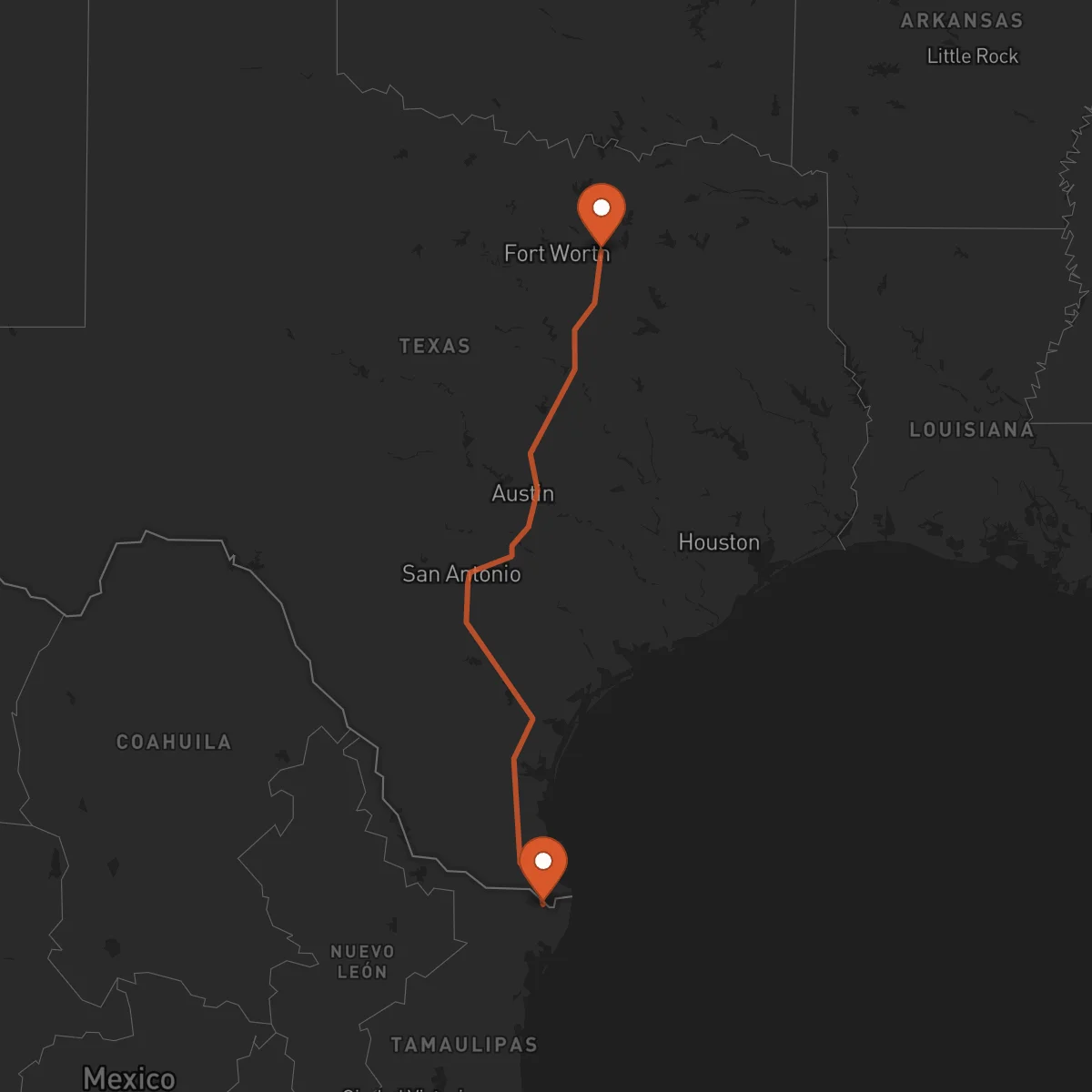
Matamoros to Dallas
Dallas → MatamorosFTL freight transportation service between Matamoros and Dallas. Reliable logistics solutions for your business.
Route Description
Everything you need to know about the corridor Matamoros - Dallas
The Matamoros-Dallas corridor represents a vital logistics link between northeastern Mexico and the heart of Texas, spanning approximately 771 kilometers. This strategic route connects the industrial powerhouse of Matamoros with the bustling economic center of Dallas, facilitating the movement of goods between two major manufacturing and commercial regions. The corridor serves as a critical artery for cross-border trade, enabling companies to efficiently transport raw materials, components, and finished products between Mexico and the United States.
The economic significance of this corridor cannot be overstated. Matamoros, located directly across the border from Brownsville, Texas, is a key manufacturing hub with a strong presence in automotive, electronics, and aerospace industries. Dallas, meanwhile, stands as a major distribution center and corporate headquarters location, with thriving sectors in technology, telecommunications, and logistics. This complementary economic relationship creates substantial freight demand along the route, with businesses requiring reliable transportation solutions to maintain their supply chains.
Transportation infrastructure along the Matamoros-Dallas corridor is well-developed, with the primary route following Mexican Federal Highway 40 to the border, then connecting to US Interstate 35 upon entering Texas. This highway network provides efficient transit for freight trucks, though it's essential to consider border crossing times and customs procedures when planning shipments. The Pharr International Bridge and the Brownsville & Matamoros International Bridge serve as the main border crossings, each with its own processing times and requirements.
Control Terrestre specializes in facilitating seamless freight transportation along this corridor, offering full truckload (FTL) services that ensure dedicated capacity for your cargo. Our expertise in cross-border operations means we can navigate the complexities of customs clearance and documentation, minimizing delays and ensuring your shipments reach their destination efficiently. With our C-TPAT certified partners and extensive experience in US-Mexico logistics, we provide the reliability and security that businesses require for their critical freight movements between Matamoros and Dallas.
Services for this Route
Available services for the corridor Matamoros - Dallas
 Origin
Matamoros
Matamoros, Tamaulipas, stands as a strategic logistics hub in northeastern Mexico, positioned directly on the US-Mexico border. This location provides immediate access to both Mexican and American markets, making it an ideal point for companies looking to optimize their North American supply chains. The city's proximity to major US cities like Houston and San Antonio, combined with its own industrial development, creates a dynamic environment for freight transportation and distribution. Matamoros benefits from its connection to the Matamoros-Brownsville Metropolitan Area, which functions as a binational economic zone, further enhancing its importance in cross-border logistics operations.
 Destination
Dallas
Dallas, Texas, serves as a major logistics and distribution hub in the southern United States, strategically positioned at the crossroads of several major transportation networks. The city's location provides excellent access to the central United States, with its extensive highway system connecting to Interstate 35, I-20, and I-30. Dallas/Fort Worth International Airport, one of the busiest cargo airports in the country, complements the city's robust ground transportation infrastructure. The Dallas-Fort Worth metroplex is home to numerous corporate headquarters and distribution centers, making it a critical node in the national supply chain. The region's strong economy, driven by technology, telecommunications, and manufacturing sectors, generates substantial freight demand, requiring efficient transportation solutions to move goods in and out of the area.










