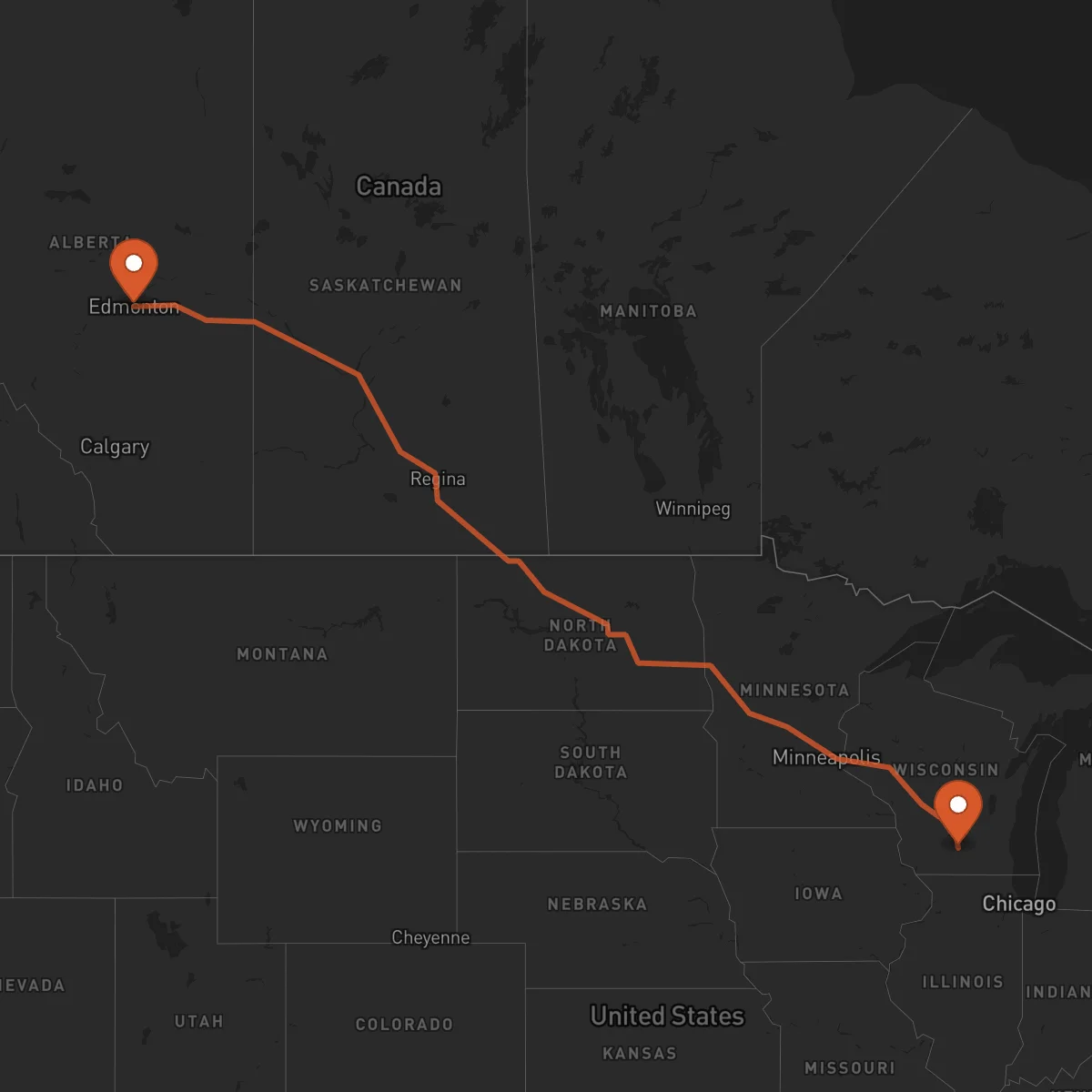
Madison to Edmonton
Edmonton → MadisonFTL freight transportation service between Madison and Edmonton. Reliable logistics solutions for your business.
Route Description
Everything you need to know about the corridor Madison - Edmonton
The logistics corridor between Madison, Wisconsin and Edmonton, Alberta represents a vital cross-border connection between the United States and Canada. This strategic route spans approximately 2,113 kilometers, traversing the heart of North America's industrial and agricultural regions. The corridor serves as a critical link between the Midwest's manufacturing and agricultural powerhouse and Canada's western economic engine, facilitating the movement of goods essential to both nations' economies.
The region's economic significance is underscored by its diverse industrial base. Madison serves as a hub for advanced manufacturing, biotechnology, and agricultural processing, while Edmonton stands as a major center for energy production, particularly oil sands operations, and logistics distribution. This complementary economic structure creates substantial freight demand, with manufacturers, energy companies, and agricultural producers relying on efficient cross-border transportation to maintain their supply chains.
Transportation infrastructure along this corridor is robust, primarily utilizing Interstate 94 and Highway 28 through the United States, connecting to Canadian routes through major border crossings such as Pembina, North Dakota. The route benefits from modern highway systems designed to handle heavy freight loads, with multiple lanes supporting high-volume traffic. Control Terrestre leverages this infrastructure through our network of certified carriers, ensuring seamless cross-border operations. Our expertise in customs procedures, C-TPAT certification, and dedicated FTL services allows us to navigate the complexities of international freight movement, providing our clients with reliable, time-sensitive transportation solutions that maintain the integrity of their supply chains across international boundaries.
Services for this Route
Available services for the corridor Madison - Edmonton
 Origin
Madison
Madison, Wisconsin serves as a strategic logistics hub in the American Midwest, offering exceptional connectivity and infrastructure for freight transportation. Located in south-central Wisconsin, Madison benefits from its position at the intersection of major transportation networks, including Interstate 90/94, which provides direct access to both Chicago and Minneapolis markets. The city's economic landscape is characterized by a strong presence of advanced manufacturing, biotechnology, and agricultural processing industries, creating consistent demand for freight services. Madison's Dane County Regional Airport and extensive rail connections complement its highway infrastructure, making it an ideal origin point for both domestic and international shipments. The region's skilled workforce and concentration of research institutions, particularly the University of Wisconsin-Madison, contribute to a sophisticated logistics ecosystem that supports complex supply chain operations.
 Destination
Edmonton, Alberta stands as a critical logistics and distribution center in Western Canada, strategically positioned to serve the vast northern territories and energy-rich provinces. Located along the North Saskatchewan River, Edmonton's economic foundation is built on energy production, particularly oil sands operations, which creates substantial freight demand for specialized equipment and materials. The city's Yellowhead Highway (Highway 16) and proximity to major rail lines provide excellent connectivity to both Pacific ports and eastern Canadian markets. Edmonton International Airport and the Port Alberta initiative further enhance its logistics capabilities, offering air cargo and intermodal transportation options. The city's designation as a Gateway to the North makes it an essential hub for freight movement to remote communities and industrial sites, with its infrastructure designed to handle heavy loads and specialized cargo typical of the energy and mining sectors.










