Louisville to Lincoln
Lincoln → LouisvilleFTL freight transportation service between Louisville and Lincoln. Reliable logistics solutions for your business.
Route Description
Everything you need to know about the corridor Louisville - Lincoln
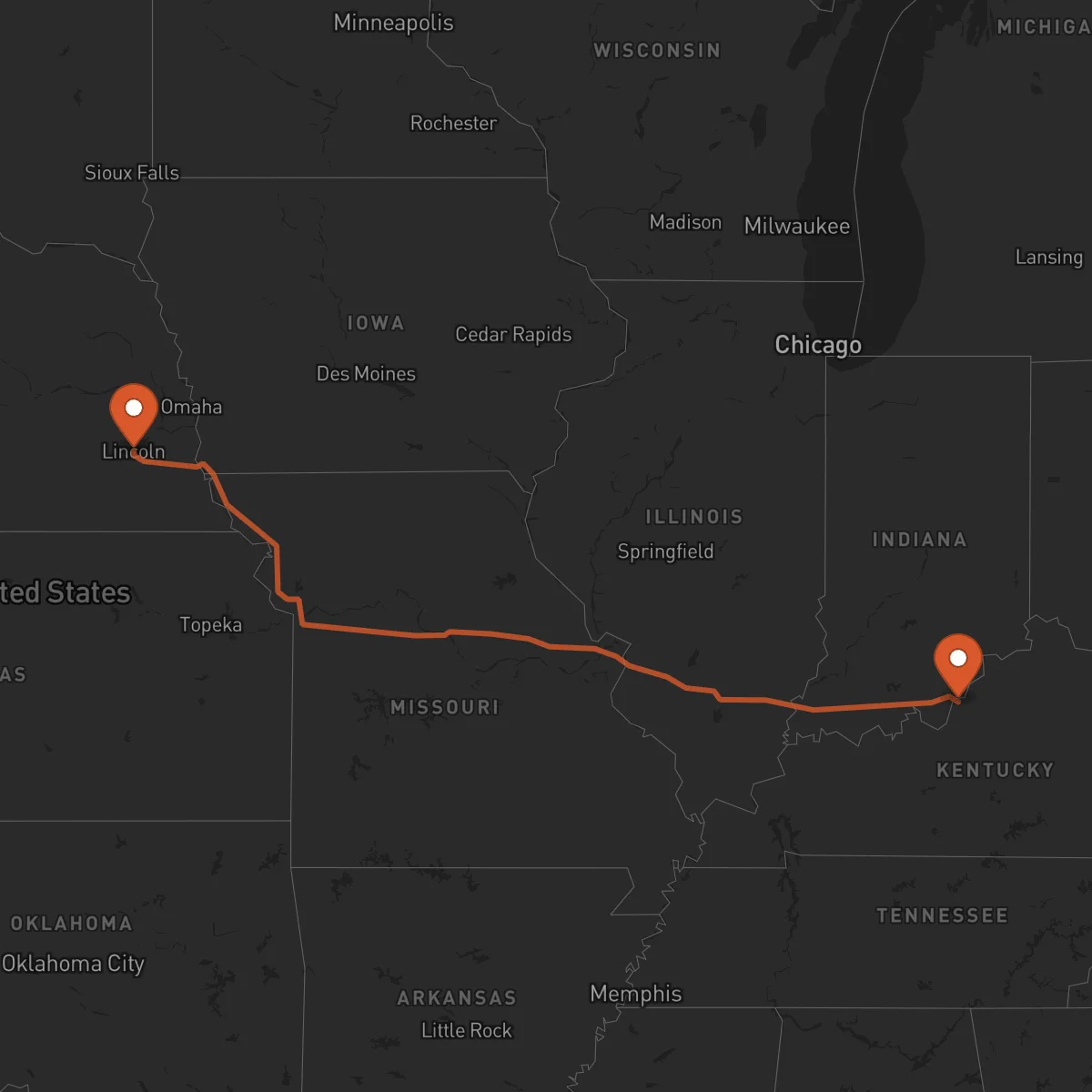
The logistics corridor between Louisville, Kentucky, and Lincoln, Nebraska, represents a vital freight transportation route connecting the industrial Midwest with the agricultural heartland of the United States. This 980-kilometer domestic corridor traverses key economic regions, facilitating the movement of goods between two strategically positioned cities that serve as major distribution hubs. The route primarily follows major interstate highways, including I-65 and I-80, providing reliable and efficient transportation infrastructure for full truckload (FTL) freight operations.
The economic significance of this corridor is substantial, linking Louisville's robust manufacturing and logistics sector with Lincoln's agricultural processing and distribution industries. Louisville serves as a critical gateway to the eastern United States, with its strategic location near major population centers and transportation networks. Lincoln, positioned in the heart of the Corn Belt, is a key center for agricultural commodities, food processing, and manufacturing. This corridor enables the seamless flow of raw materials, finished products, and agricultural goods between these complementary economic regions.
Control Terrestre specializes in facilitating full truckload transportation along this crucial corridor, offering dedicated services that ensure timely and secure delivery of freight. Our experienced network of transportation providers understands the unique requirements of this route, including the handling of specialized cargo such as agricultural products, industrial equipment, and temperature-sensitive goods. We provide comprehensive door-to-door service, leveraging our expertise in cross-country logistics to optimize transit times and maintain the integrity of shipments throughout the journey.
Services for this Route
Available services for the corridor Louisville - Lincoln
 Origin
Louisville
Louisville, Kentucky, stands as a strategic logistics powerhouse in the eastern United States, boasting exceptional connectivity through multiple transportation modes. The city's location along the Ohio River and at the intersection of major interstate highways (I-65, I-64, and I-71) makes it an ideal distribution center for companies serving the Midwest and beyond. Louisville International Airport, home to UPS Worldport, ranks among the busiest cargo airports in the nation, while the Port of Louisville facilitates river-based freight movement.
The city's economy thrives on diverse industries including automotive manufacturing, healthcare, logistics, and food processing. Major employers include Ford Motor Company, GE Appliances, and numerous logistics providers who have established significant operations in the area. Louisville's central location allows for efficient distribution to over half the U.S. population within a day's drive, making it an attractive hub for companies seeking to optimize their supply chain operations.
 Destination
Lincoln
Lincoln, Nebraska, serves as a strategic logistics center in the Great Plains region, offering excellent connectivity and a business-friendly environment. The city's location at the intersection of I-80 and multiple state highways provides direct access to major markets across the United States. Lincoln Airport supports both passenger and cargo operations, while the city's rail connections through BNSF and Union Pacific enhance its multimodal transportation capabilities.
The Lincoln economy is anchored by agriculture, manufacturing, and technology sectors, with significant contributions from the University of Nebraska's research and innovation ecosystem. The city has developed a strong presence in agricultural equipment manufacturing, food processing, and value-added agricultural products. Lincoln's central location in the Corn Belt makes it an ideal distribution point for agricultural commodities, while its growing technology sector is attracting new logistics and supply chain operations to the region.










