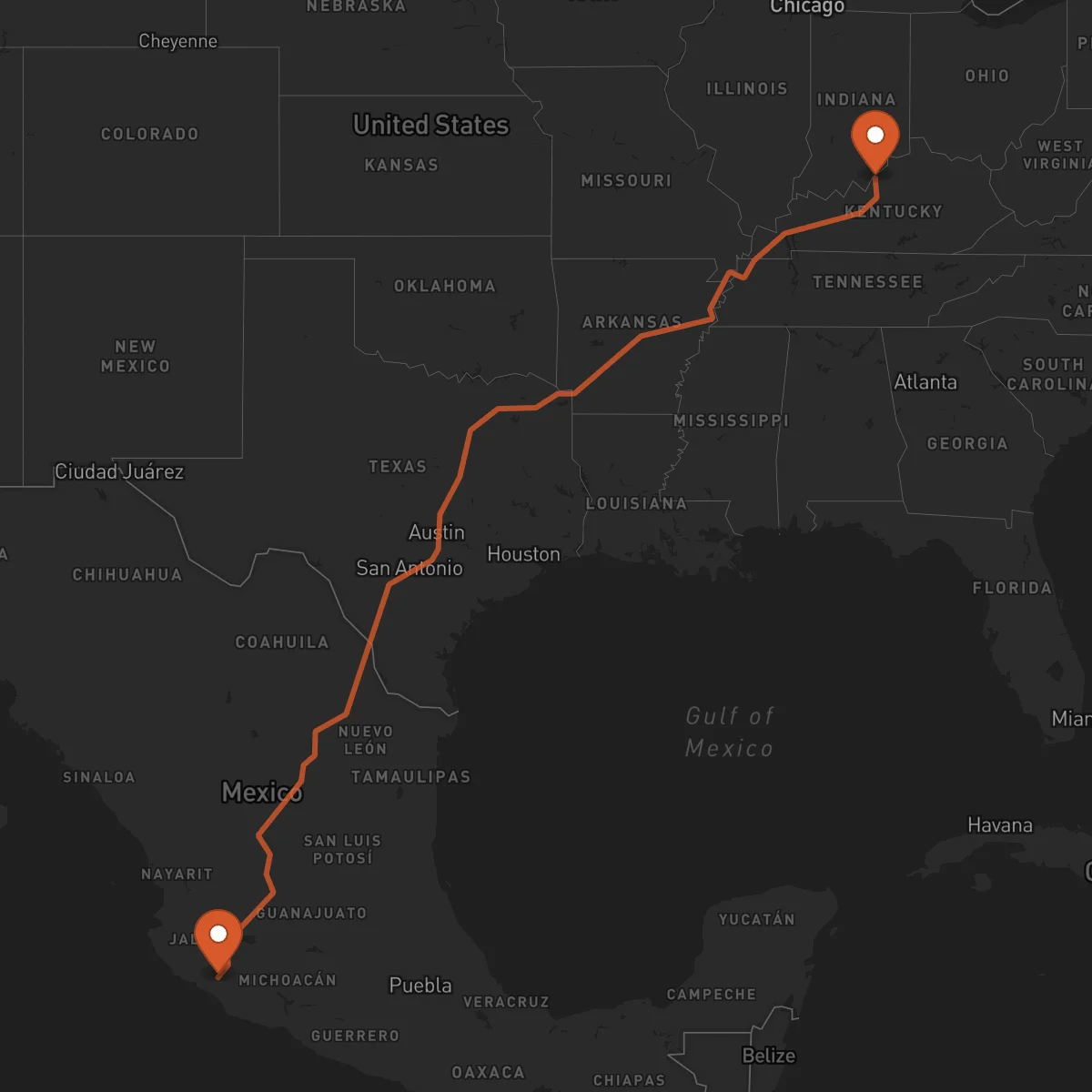
Louisville to Colima
Colima → LouisvilleFTL freight transportation service between Louisville and Colima. Reliable logistics solutions for your business.
Route Description
Everything you need to know about the corridor Louisville - Colima
The Louisville-Colima corridor represents a vital trade connection between the United States and Mexico, spanning approximately 2733 km through the heart of North America's industrial regions. This cross-border route links Kentucky's logistics hub with Colima's growing industrial sector, facilitating the movement of diverse cargo types between both nations. The corridor traverses key states including Kentucky, Tennessee, Arkansas, Texas, and crosses through strategic border points into Mexico, connecting with major highways that lead to Colima on the Pacific coast.
The economic significance of this corridor is substantial, connecting Louisville's robust manufacturing and distribution ecosystem with Colima's expanding industrial base. Louisville serves as a major logistics center with its international airport, extensive rail connections, and proximity to Midwestern manufacturing hubs. Colima, while smaller, has developed specialized industrial parks focusing on food processing, agriculture, and light manufacturing. The corridor particularly serves industries requiring temperature-controlled transportation, given Colima's agricultural exports and Louisville's pharmaceutical and food distribution sectors.
Key infrastructure along this route includes major interstate highways such as I-65, I-40, and I-30, connecting to Mexican Federal Highways 45 and 80. The primary border crossing utilized is typically Laredo/Nuevo Laredo or El Paso/Ciudad Juárez, depending on specific cargo requirements and current crossing conditions. Control Terrestre facilitates seamless operations across this corridor through our C-TPAT-certified carriers, ensuring compliance with both US and Mexican customs regulations. Our dedicated team manages all necessary documentation, including customs clearance, permits for specialized cargo, and coordination with trusted Mexican carriers to ensure reliable door-to-door service from origin to destination.
Services for this Route
Available services for the corridor Louisville - Colima
 Origin
Louisville
Louisville, Kentucky stands as a strategic logistics powerhouse in the eastern United States, leveraging its central geographic location and exceptional transportation infrastructure. The city serves as a critical distribution point for the Midwest and Eastern seaboard, anchored by the UPS Worldport at Louisville International Airport - one of the largest air freight hubs globally. Louisville's extensive network includes major interstate highways (I-64, I-65, I-71), direct rail connections via CSX and Norfolk Southern, and the Port of Indiana's river facilities just across the Ohio River. The region's economy thrives on manufacturing (automotive, aerospace), healthcare, and e-commerce distribution, creating consistent demand for full truckload freight services. Louisville's concentration of warehouses, distribution centers, and manufacturing facilities makes it an ideal origin point for cross-border shipments to Mexico, with companies in the area relying on efficient transportation to maintain their supply chains.
 Destination
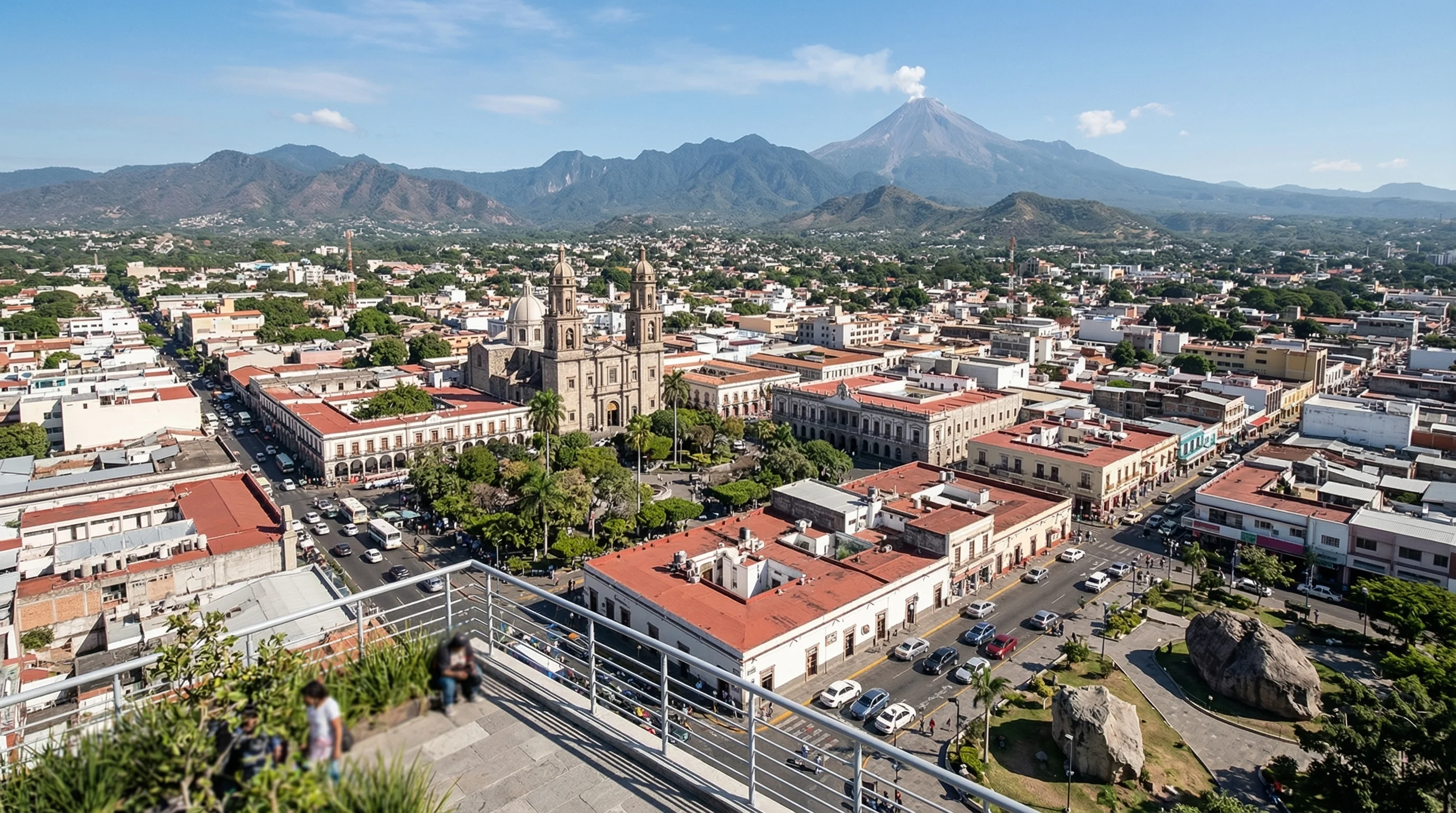
Colima, located on Mexico's Pacific coast, offers strategic advantages as a logistics destination despite its smaller size compared to other Mexican industrial centers. The state benefits from its proximity to major ports (Manzanillo being one of Mexico's busiest cargo ports) and its position connecting central Mexico with Pacific trade routes. Colima's economy features growing industrial parks specializing in food processing, agriculture-related manufacturing, and light industrial production. The region's infrastructure includes Federal Highway 80 connecting to Guadalajara and Mexico City, as well as reliable rail connections for intermodal transport. Colima's agricultural sector, particularly in products requiring temperature-controlled transport, creates demand for specialized freight services. The state's industrial development has been focused on creating clusters for specific industries, making it an important destination for companies seeking to establish production or distribution operations in a region with strong agricultural traditions and developing manufacturing capabilities.










