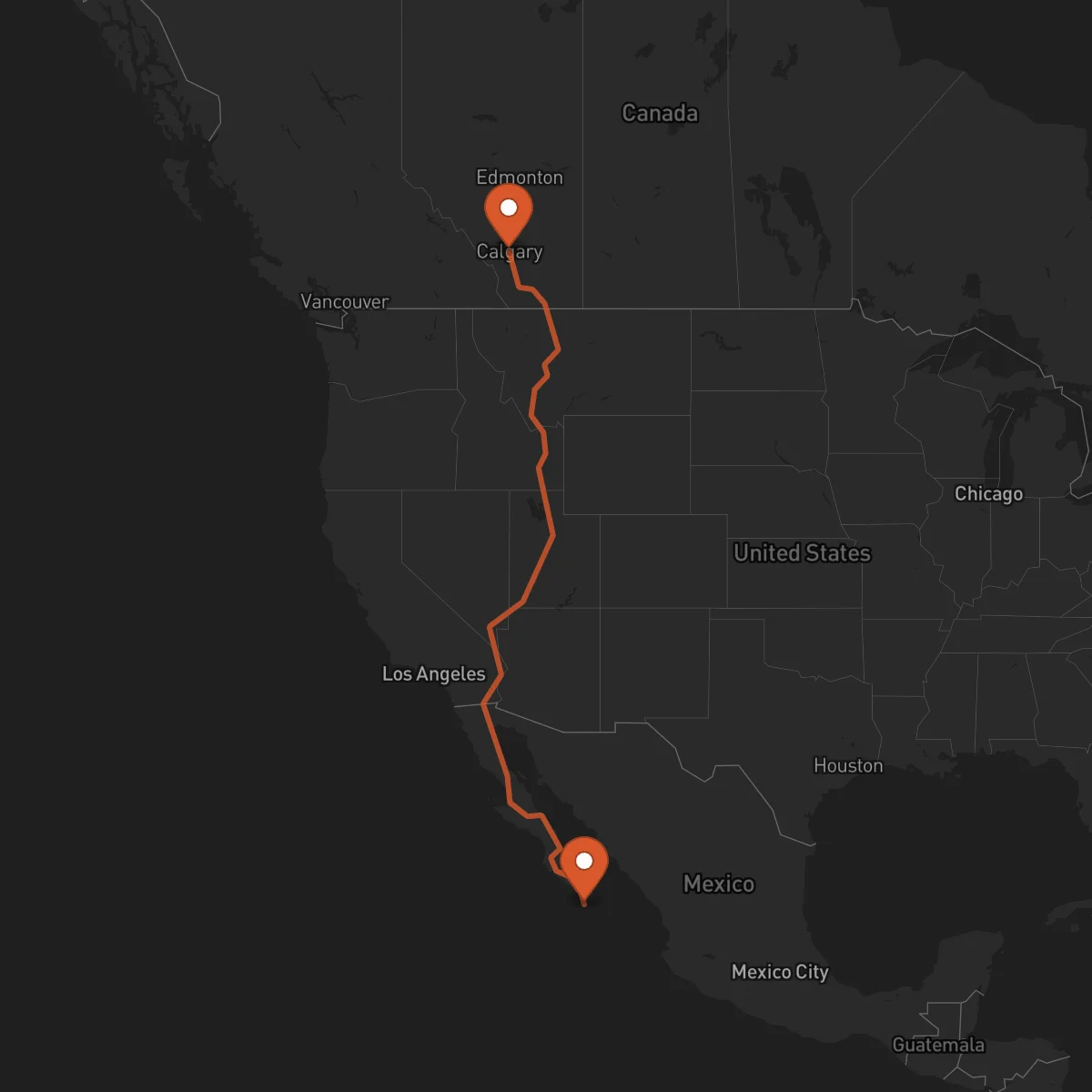
Los Cabos to Calgary
Calgary → Los CabosFTL freight transportation service between Los Cabos and Calgary. Reliable logistics solutions for your business.
Route Description
Everything you need to know about the corridor Los Cabos - Calgary
The logistics corridor connecting Los Cabos, Baja California Sur, Mexico to Calgary, Alberta, Canada represents a vital transcontinental route spanning approximately 3,151 kilometers. This corridor traverses diverse landscapes and crosses multiple jurisdictions, making it a strategic link between Mexico's Pacific coast and Canada's energy-rich Alberta province. The route serves as a critical artery for North American trade, facilitating the movement of goods between Mexico's growing manufacturing sector and Canada's robust industrial base.
The economic significance of this corridor is underscored by the complementary industries it connects. Los Cabos serves as a key entry point for goods destined for Mexico's interior and beyond, while Calgary stands as a major hub for energy, technology, and logistics operations in Western Canada. The corridor supports industries including automotive, electronics, agricultural products, and energy equipment, with businesses leveraging this route to optimize their supply chains across North America.
Transportation infrastructure along this corridor includes major highways such as Mexico's Federal Highway 1, the United States' interstate system, and Canada's Trans-Canada Highway network. Key border crossings at locations like Tijuana and various U.S.-Canada ports of entry facilitate smooth cross-border operations. Control Terrestre provides comprehensive FTL services along this entire route, ensuring reliable door-to-door transportation with experienced carriers who understand the complexities of cross-border logistics and customs requirements.
Services for this Route
Available services for the corridor Los Cabos - Calgary
 Origin
Los Cabos
Los Cabos, located at the southern tip of Mexico's Baja California Peninsula, serves as a strategic logistics gateway to Mexico's Pacific coast. This region combines tourism-driven economic activity with growing industrial capabilities, particularly in manufacturing and agricultural exports. The area's transportation infrastructure includes the Los Cabos International Airport and seaport facilities that complement ground transportation networks. Federal Highway 1 connects Los Cabos to the broader Mexican highway system, providing access to major industrial centers in the north and facilitating international trade through efficient ground freight operations.
 Destination
Calgary, situated in Alberta's energy heartland, stands as a major logistics and industrial hub in Western Canada. The city's strategic location provides access to the Canadian Rockies, the Prairies, and key U.S. border crossings. Calgary's robust transportation infrastructure includes the Calgary International Airport, extensive rail networks, and major highways such as the Trans-Canada Highway. The region's economy is anchored by the energy sector, technology, and logistics services, with numerous distribution centers and warehousing facilities supporting efficient freight operations throughout Western Canada and beyond.










