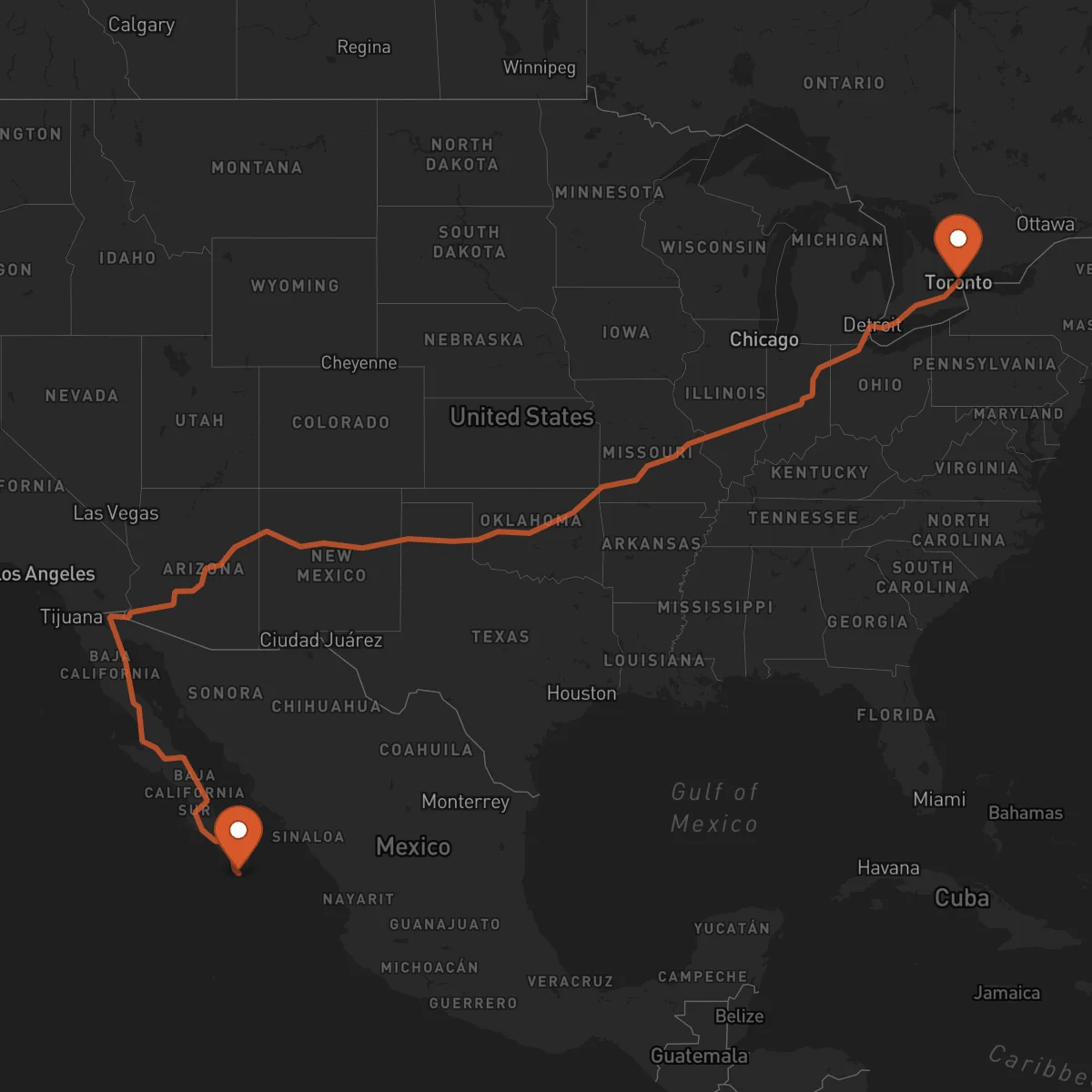
Los Cabos to Toronto
Toronto → Los CabosFTL freight transportation service between Los Cabos and Toronto. Reliable logistics solutions for your business.
Route Description
Everything you need to know about the corridor Los Cabos - Toronto
The logistics corridor connecting Los Cabos, Baja California Sur, Mexico to Toronto, Ontario, Canada represents a vital cross-border transportation route spanning approximately 3,622 kilometers. This corridor links Mexico's premier tourist destination with Canada's economic powerhouse, facilitating the movement of diverse cargo types across North America. The route traverses multiple states and provinces, crossing key international borders that require specialized knowledge of customs procedures and documentation.
The economic significance of this corridor cannot be overstated. Los Cabos serves as a major tourist hub and agricultural export center, while Toronto stands as Canada's financial capital and a manufacturing powerhouse. This creates a complementary trade relationship where agricultural products, electronics, and manufactured goods flow in both directions. The corridor supports industries including automotive, aerospace, food and beverage, pharmaceuticals, and consumer goods.
Transportation infrastructure along this route includes Mexico's Federal Highway 1 connecting Los Cabos to the U.S. border, followed by major interstate highways through the United States, and finally Canada's 400-series highways leading to Toronto. Key border crossings include Tijuana-San Diego and Detroit-Windsor, each with specific requirements and processing times. Control Terrestre's expertise in cross-border operations ensures seamless transit through these critical points, managing all necessary documentation and compliance requirements.
Services for this Route
Available services for the corridor Los Cabos - Toronto
 Origin
Los Cabos
Los Cabos, located at the southern tip of Baja California Sur, Mexico, serves as a strategic logistics hub for the region. Its position on the Pacific coast provides access to both maritime shipping routes and land transportation networks. The area's primary industries include tourism, agriculture, and fishing, with significant exports of fresh produce, seafood, and manufactured goods. Los Cabos International Airport and the region's port facilities complement the road transportation infrastructure, creating multiple options for cargo consolidation and distribution. The area's growing industrial parks and free trade zones make it an increasingly important origin point for cross-border freight movements.
 Destination
Toronto, Ontario, Canada stands as one of North America's most important logistics and economic centers. Located on the shores of Lake Ontario, Toronto benefits from its position within the Great Lakes industrial region and proximity to major U.S. markets. The city hosts Canada's largest container port, extensive rail networks, and serves as a major air cargo hub. Toronto's diverse economy encompasses financial services, technology, manufacturing, automotive, and aerospace industries. The region's well-developed transportation infrastructure includes the 400-series highways, rail connections to both coasts, and proximity to the U.S. border, making it an ideal destination for freight distribution throughout Eastern Canada and the Northeastern United States.










