Little Rock to Tucson
Tucson → Little RockFTL freight transportation service between Little Rock and Tucson. Reliable logistics solutions for your business.
Route Description
Everything you need to know about the corridor Little Rock - Tucson
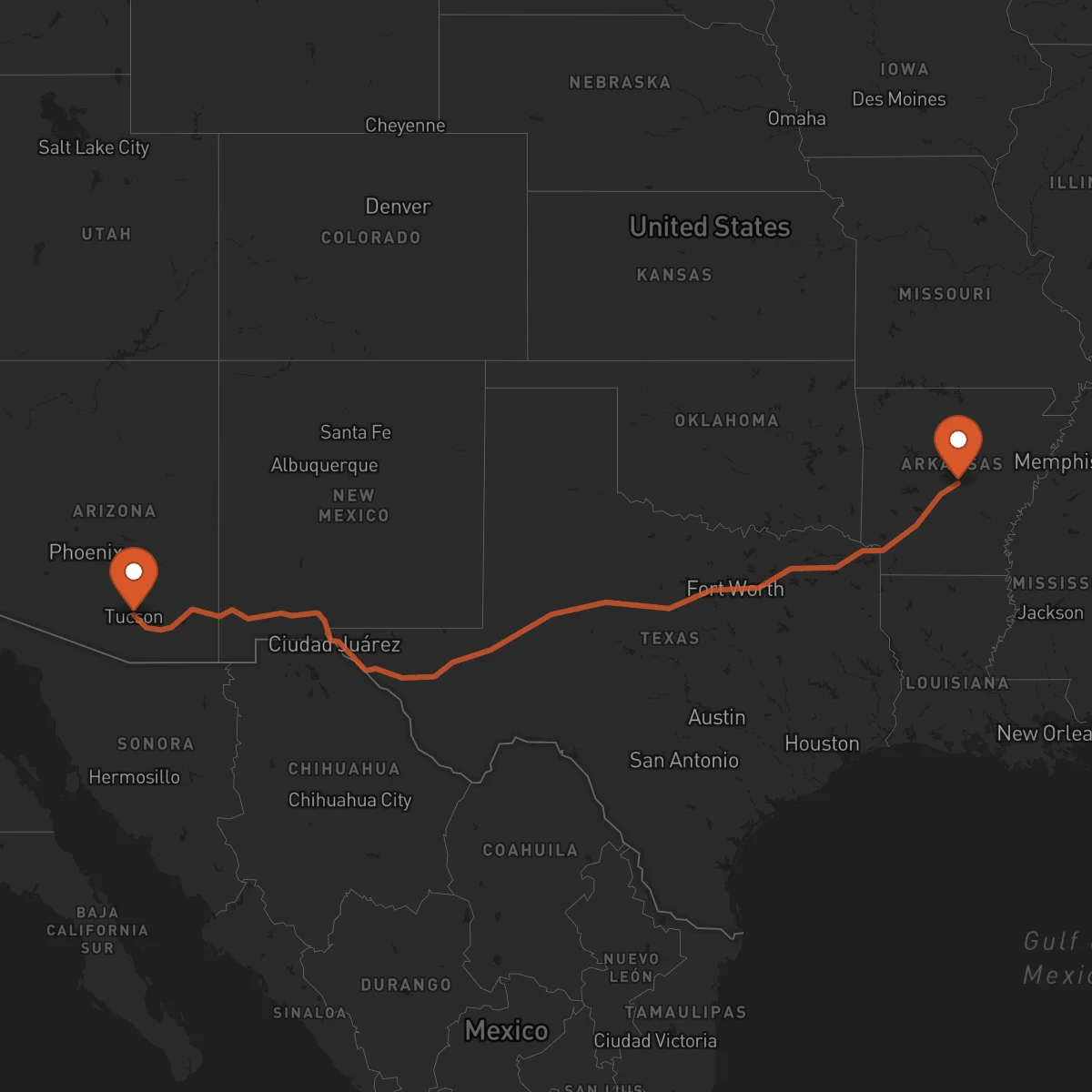
The logistics corridor connecting Little Rock, Arkansas, to Tucson, Arizona, represents a vital domestic transportation route spanning approximately 1,753 kilometers across the heart of the United States. This corridor traverses diverse geographical regions, from the Mississippi River valley through the southern plains and into the Sonoran Desert, creating a strategic link between the southeastern and southwestern regions of the country. The route serves as a critical artery for freight movement, connecting major industrial centers and facilitating commerce between distinct economic regions.
The economic significance of this corridor is substantial, serving key industries including automotive manufacturing, aerospace components, agricultural products, and consumer goods distribution. Little Rock's position as a regional distribution hub in the Southeast complements Tucson's role as a logistics gateway to the Southwest and Mexico, creating a complementary economic relationship. The corridor benefits from proximity to major manufacturing centers, agricultural production areas, and growing e-commerce fulfillment networks, making it essential for time-sensitive and high-value freight movements.
Transportation infrastructure along this route includes major interstate highways such as I-30, I-40, and I-10, providing reliable and efficient freight movement. These highways offer multiple lanes, modern rest areas, and well-maintained road conditions throughout most of the year. The route passes through several key logistics hubs and transportation centers, offering numerous options for fuel stops, maintenance facilities, and driver amenities. This infrastructure supports consistent transit times and reliable delivery schedules for full truckload shipments.
Control Terrestre leverages this strategic corridor through our network of certified transportation providers, offering dedicated full truckload services tailored to your specific shipping needs. Our expertise in managing cross-regional freight movements ensures that your cargo moves efficiently and securely from origin to destination. We understand the unique challenges of this route, including varying climate conditions and regional regulations, allowing us to provide proactive solutions that keep your supply chain running smoothly.
Services for this Route
Available services for the corridor Little Rock - Tucson
 Origin
Little Rock
Little Rock, Arkansas, serves as a strategic logistics hub in the southeastern United States, positioned along the banks of the Arkansas River. The city's location provides excellent access to major transportation networks, including Interstate 30 and Interstate 40, which connect to national freight corridors. Little Rock's central location within the Southeast makes it an ideal origin point for freight distribution across multiple regions, offering efficient access to both eastern and western markets. The city's logistics infrastructure includes the Bill and Hillary Clinton National Airport, the Port of Little Rock on the Arkansas River, and extensive warehousing and distribution facilities that support regional and national freight movements.
The economic landscape of Little Rock encompasses diverse industries including healthcare, aerospace, logistics, and manufacturing. The city hosts major employers in the technology and financial services sectors, while also serving as a regional center for agricultural equipment manufacturing and food processing. Little Rock's industrial base creates consistent demand for freight transportation services, particularly for specialized cargo and time-sensitive shipments. The presence of major distribution centers and manufacturing facilities in the surrounding metropolitan area further enhances the city's role as a critical origin point for freight movements across the country.
 Destination
Tucson
Tucson, Arizona, occupies a strategic position in the southwestern United States, serving as a vital logistics gateway to the broader Southwest region and Mexico. Located in the Sonoran Desert, Tucson benefits from its proximity to major transportation corridors including Interstate 10, which provides direct access to both coastal and inland markets. The city's elevation and geographic position make it an important distribution point for freight moving between the West Coast, Southwest, and Mexico. Tucson's logistics infrastructure includes the Tucson International Airport, extensive highway networks, and growing intermodal facilities that support efficient freight movement and distribution operations.
The economic profile of Tucson reflects its importance as a logistics and distribution center, with strong presence in aerospace and defense, optics and photonics, healthcare, and tourism industries. The city's proximity to the U.S.-Mexico border creates unique opportunities for cross-border trade and logistics services. Tucson hosts several major distribution centers and warehouses that serve the southwestern United States, while also functioning as a key point for freight consolidation and deconsolidation. The presence of the University of Arizona and associated research facilities has also fostered growth in technology and advanced manufacturing sectors, creating diverse freight transportation needs that support the local and regional economy.










