Lincoln to Calgary
Calgary → LincolnFTL freight transportation service between Lincoln and Calgary. Reliable logistics solutions for your business.
Route Description
Everything you need to know about the corridor Lincoln - Calgary
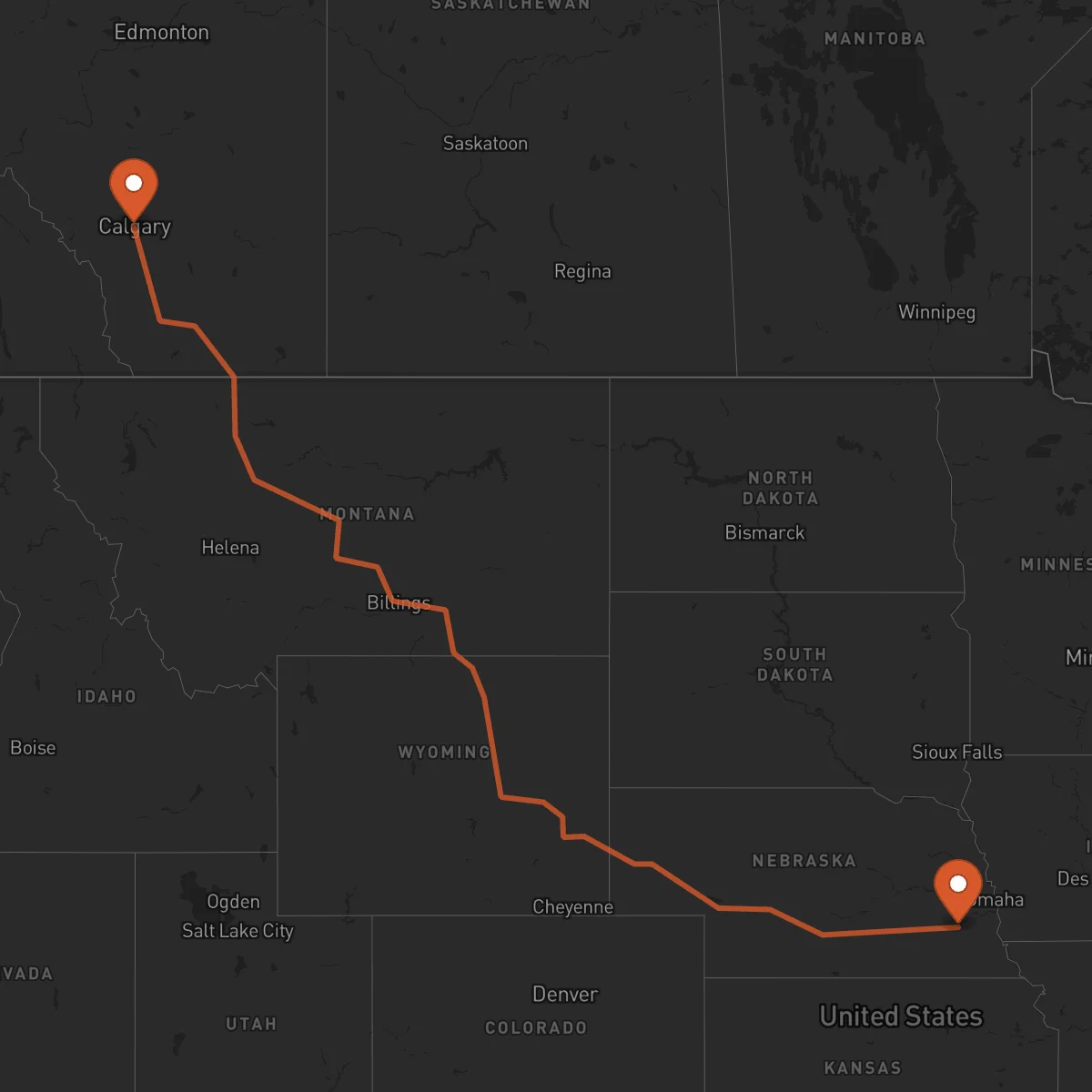
The logistics corridor connecting Lincoln, Nebraska, to Calgary, Alberta, represents a vital cross-border freight route that spans approximately 1,753 kilometers through the heart of North America. This corridor serves as a crucial link between the agricultural and industrial powerhouse of the American Midwest and the energy and technology hub of Western Canada. The route traverses diverse terrain and crosses international borders, making it a complex yet essential pathway for freight transportation between the United States and Canada.
This corridor is particularly significant due to the complementary economic activities in both regions. Lincoln serves as a major distribution center for agricultural products, manufacturing goods, and industrial equipment, while Calgary is renowned as the center of Canada's energy sector, particularly oil and gas, as well as being a growing technology and financial services hub. The corridor facilitates the movement of specialized equipment, energy sector components, agricultural machinery, and various industrial supplies that are critical to both economies.
The primary transportation infrastructure along this route includes Interstate 80 West from Lincoln through Nebraska and Wyoming, connecting to Interstate 25 North into Montana, and then transitioning to Alberta Highway 2 into Calgary. Key border crossings include the Sweetgrass-Coutts crossing, which is one of the busiest commercial ports between Montana and Alberta. Control Terrestre's expertise in cross-border operations ensures seamless customs clearance and compliance with both US and Canadian regulations, facilitating efficient movement of full truckload shipments along this important corridor.
Services for this Route
Available services for the corridor Lincoln - Calgary
 Origin
Lincoln
Lincoln, Nebraska, serves as a strategic logistics hub in the American Midwest, offering excellent connectivity and infrastructure for freight transportation. Located in the heart of the Great Plains, Lincoln benefits from its central position within the United States, providing efficient access to major markets across the country. The city is well-connected through a comprehensive network of highways, including Interstate 80, which runs east-west across the nation, and Interstate 29, providing north-south connectivity.
The region's economy is anchored by agriculture, manufacturing, and technology sectors. Lincoln is home to the University of Nebraska, which drives innovation and research, particularly in agricultural technology and engineering. The city hosts numerous food processing facilities, agricultural equipment manufacturers, and distribution centers that require reliable freight transportation services. The Lincoln Airport and multiple rail connections further enhance the city's logistics capabilities, making it an ideal origin point for cross-border freight movements.
 Destination
Calgary, Alberta, stands as a major economic and logistics center in Western Canada, strategically positioned to serve both national and international markets. Located at the confluence of the Bow and Elbow rivers, Calgary serves as the gateway to the Canadian Rockies and has developed into a sophisticated urban center with world-class infrastructure. The city's location provides direct access to major transportation routes, including the Trans-Canada Highway and extensive rail networks operated by Canadian Pacific Railway and Canadian National Railway.
The Calgary economy is diverse, with strong foundations in the energy sector, particularly oil and gas, as well as growing technology, financial services, and manufacturing industries. The city is home to the Calgary International Airport, one of Canada's busiest cargo airports, and features modern warehousing and distribution facilities. Calgary's strategic location makes it an ideal destination for freight from the United States, particularly for energy sector equipment, agricultural products, and industrial machinery that support the region's economic activities.










