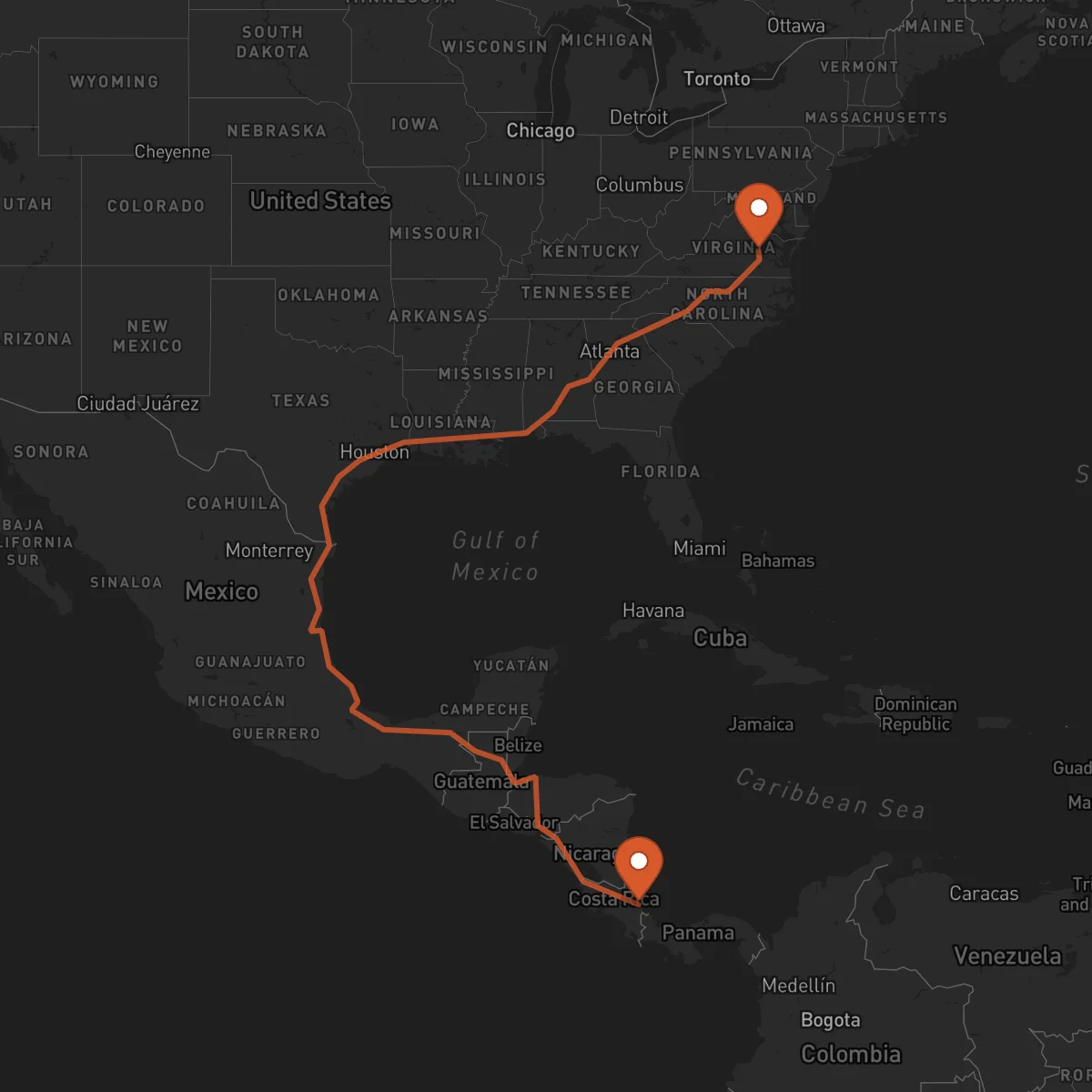
Limón to Richmond
Richmond → LimónFTL freight transportation service between Limón and Richmond. Reliable logistics solutions for your business.
Route Description
Everything you need to know about the corridor Limón - Richmond
The Limón to Richmond corridor is a vital north-south artery connecting the economic heart of Costa Rica and Central America with the manufacturing and distribution hubs of the U.S. East Coast. Strategically, it bridges the Pacific-facing port of Limón with the extensive interstate network serving the Mid-Atlantic and Northeastern United States, facilitating the seamless flow of goods across multiple borders. This corridor is essential for time-sensitive supply chains, moving full truckloads of export commodities from the region and importing manufactured goods, raw materials, and specialized cargo northward. The primary industries leveraging this route include agriculture (fresh produce, coffee), manufacturing, chemicals, and retail distribution, all requiring reliable, direct transportation.
The transportation infrastructure relies on a combination of major highways. The journey begins on Costa Rica's Route 32, the critical highway linking the Port of Limón to the Central Valley and the Pan-American Highway (Route 1). This connects through Nicaragua, Honduras, El Salvador, and Guatemala, utilizing their respective segments of the Pan-American before reaching Mexico. Within Mexico, the corridor primarily follows the toll highway network (e.g., Mexico 190, 150D, 57D) to the border. After crossing into the United States, the route integrates onto the Interstate 35 corridor before transitioning to the crucial Interstate 95 for the final leg to Richmond, Virginia.
Key border crossings are managed through the Mexico-U.S. border, with Laredo, Texas (World Trade Bridge/Columbia Solidarity Bridge) being the most common and efficient gateway for this corridor. Navigating customs and compliance is a critical success factor. Our transportation providers hold essential certifications like C-TPAT (Customs-Trade Partnership Against Terrorism) and FAST (Free and Secure Trade), which streamline clearance processes and enhance security. Control Terrestre facilitates operations on this complex corridor by leveraging our alliance of vetted carriers with proven expertise in cross-border logistics. We manage the entire journey as a single, cohesive operation, handling documentation, customs coordination, and ensuring continuous visibility, allowing our clients to benefit from a streamlined, door-to-door FTL service without navigating the multinational complexities themselves.
Services for this Route
Available services for the corridor Limón - Richmond
 Origin
Limón
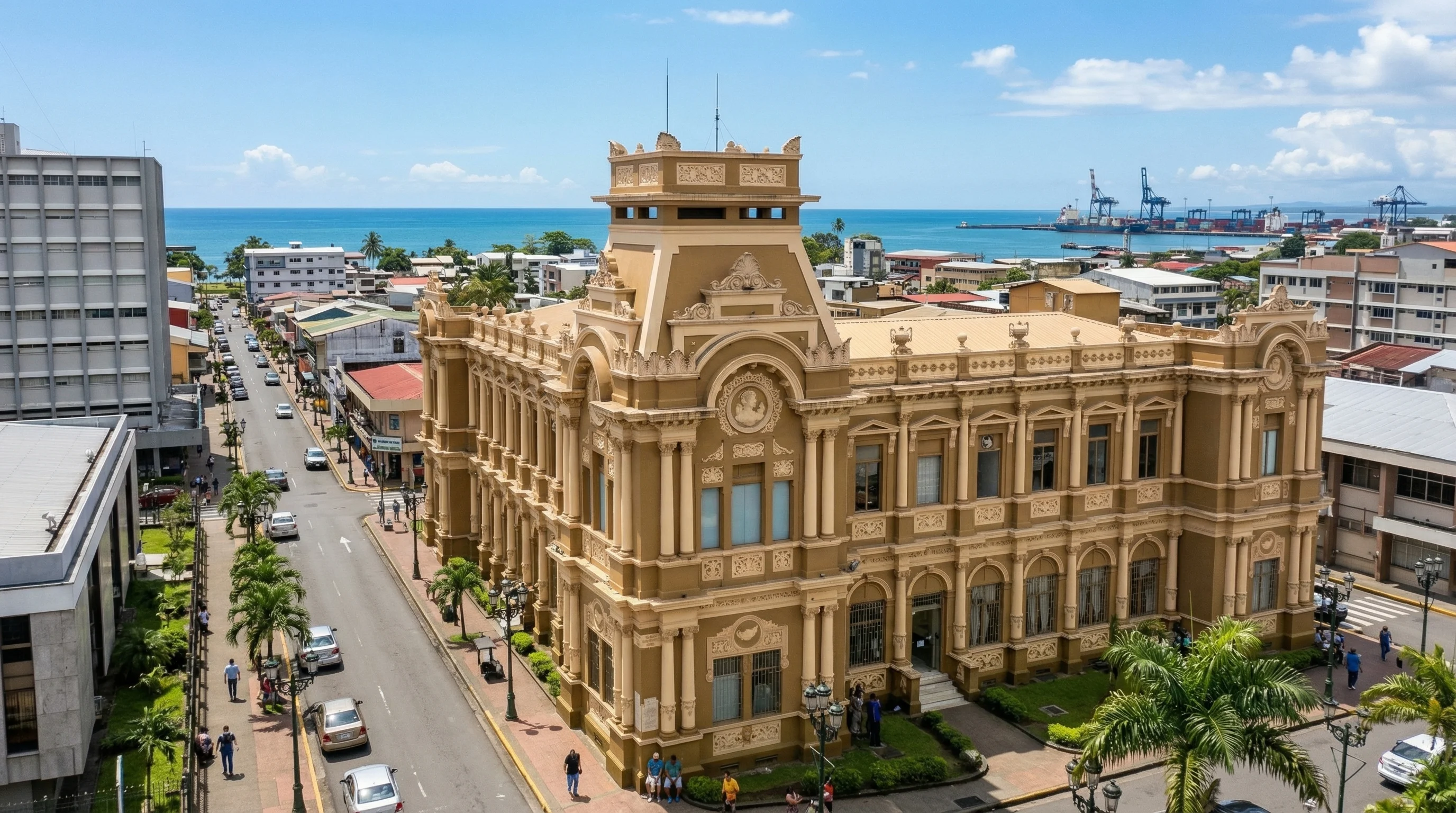
Limón, located on Costa Rica's Caribbean coast, is a strategic Pacific-logistics gateway due to the Port of Limón (Moín), one of the most modern and significant container ports in Central America. This port is the primary exit point for the country's major exports, including bananas, pineapples, coffee, and other agricultural products, as well as a gateway for imports. The city's economy is intrinsically linked to port operations, logistics, and tourism. The main transportation infrastructure includes the Port of Limón itself and Route 32, a well-maintained four-lane highway that provides the direct, efficient link from the port to the Central Valley (San José) and connects to the Pan-American Highway (Route 1). This highway is the indispensable first leg for any overland freight moving north from Costa Rica.
 Destination
Richmond
Richmond, Virginia, is a strategic East Coast logistics hub with exceptional connectivity. Its location at the intersection of Interstate 95 (the major north-south corridor on the Eastern Seaboard) and Interstate 64 (east-west to the port of Hampton Roads) provides unmatched access to markets from Florida to Maine. The city is a major center for manufacturing, particularly in chemicals, plastics, and tobacco products historically, alongside a growing tech and financial services sector. Key transportation infrastructure includes the Port of Richmond (a major inland port on the James River), extensive rail intermodal facilities, and its position within the I-95 corridor. This makes Richmond an ideal distribution point for the Mid-Atlantic region, serving as both a final destination and a consolidation point for goods moving further north or inland.










