Laredo to Richmond
Richmond → LaredoFTL freight transportation service between Laredo and Richmond. Reliable logistics solutions for your business.
Route Description
Everything you need to know about the corridor Laredo - Richmond
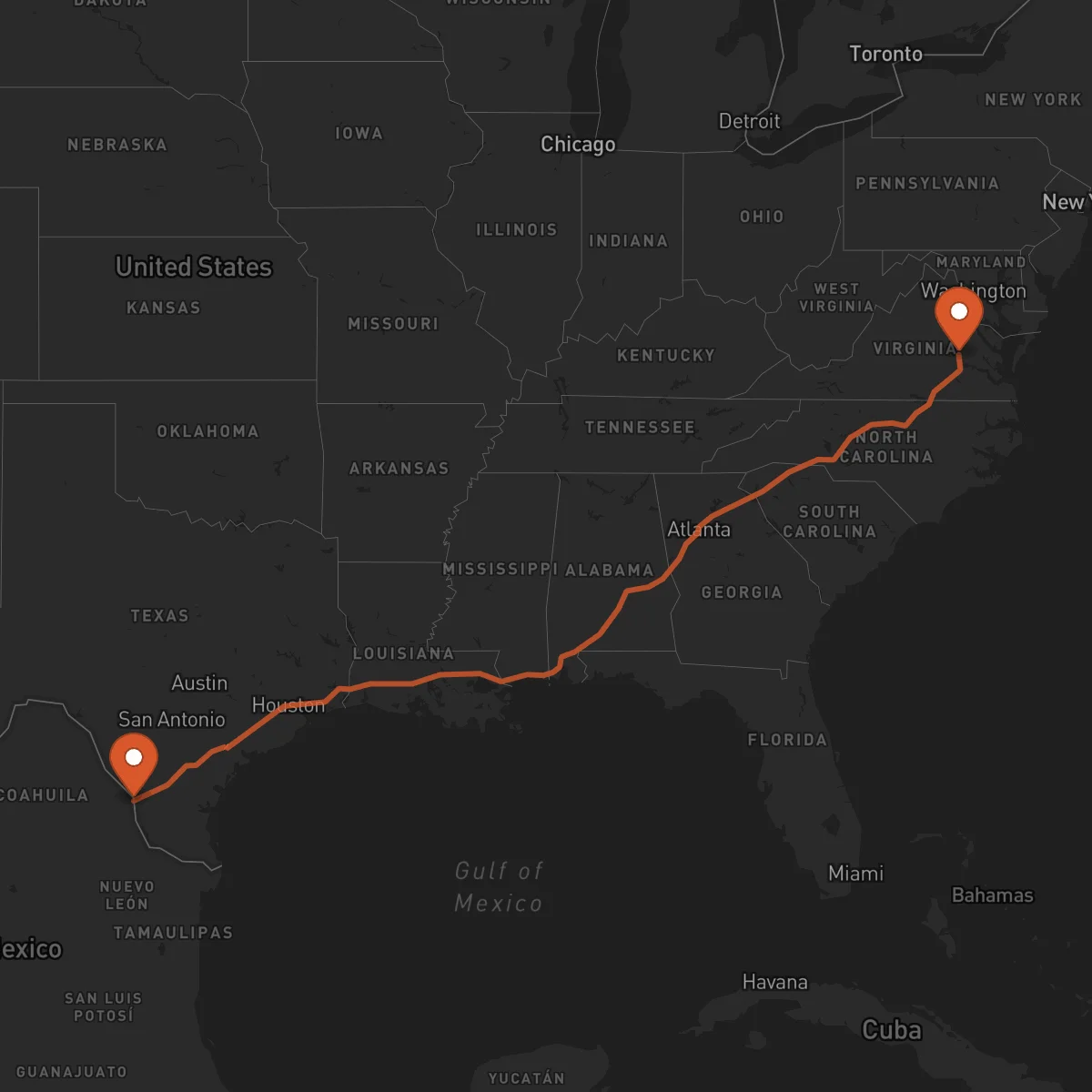
The logistics corridor connecting Laredo, Texas, to Richmond, Virginia, spans approximately 2,343 kilometers and represents one of the most critical transportation routes in the United States. This east-west corridor traverses diverse terrain and crosses multiple states, serving as a vital link between the southern border region and the Mid-Atlantic industrial corridor. The route facilitates the movement of goods from Mexico's manufacturing hubs through Texas's distribution centers to Virginia's ports and industrial zones.
This corridor passes through key economic regions including San Antonio, Houston, Baton Rouge, Jackson, Atlanta, and Raleigh-Durham, connecting major manufacturing centers, agricultural regions, and consumer markets. The route benefits from extensive highway infrastructure, primarily utilizing I-35, I-10, I-20, and I-85, which provide reliable transportation for full truckload freight. Major industries served include automotive manufacturing, electronics, agricultural products, retail distribution, and industrial equipment.
Control Terrestre optimizes operations on this corridor through our network of certified carriers and strategic partnerships. Our dedicated FTL services ensure that shipments move efficiently across the entire route, with real-time tracking and professional handling at every stage. We understand the unique challenges of this corridor, including varying state regulations, weather conditions, and delivery requirements, allowing us to provide reliable, end-to-end transportation solutions for businesses moving freight between Laredo and Richmond.
Services for this Route
Available services for the corridor Laredo - Richmond
 Origin
Laredo
Laredo, Texas, stands as one of the most important border crossings in North America, handling billions of dollars in trade annually between the United States and Mexico. Located on the banks of the Rio Grande, Laredo serves as the primary gateway for NAFTA trade, with multiple international bridges connecting to Nuevo Laredo, Mexico. The city's strategic location makes it a crucial logistics hub, featuring extensive warehousing facilities, cross-docking operations, and distribution centers that process freight destined for all regions of the United States.
The region's economy is heavily focused on international trade, manufacturing, and logistics services. Major industries include automotive assembly, electronics manufacturing, agricultural products, and retail distribution. Laredo benefits from excellent transportation infrastructure, including the World Trade International Bridge, Colombia Solidarity Bridge, and Laredo International Airport, providing multiple options for freight movement. The city's proximity to major Mexican manufacturing centers makes it an ideal origin point for cross-border shipments requiring efficient and reliable transportation to eastern U.S. markets.
 Destination
Richmond
Richmond, Virginia, serves as a strategic logistics hub in the Mid-Atlantic region, positioned to provide access to major East Coast markets within a day's drive. The city's location along the James River and its proximity to the Port of Virginia in Norfolk create a multimodal transportation network that efficiently connects inland markets with international trade routes. Richmond's central East Coast location makes it an ideal distribution point for companies serving the Northeast, Southeast, and Mid-Atlantic regions of the United States.
The Richmond metropolitan area hosts diverse industries including advanced manufacturing, biotechnology, food processing, and government services. The region benefits from excellent transportation infrastructure, including I-95, I-64, and I-85 highways, providing direct connections to major markets like Washington D.C., New York, Atlanta, and Charlotte. Richmond International Airport and the nearby Port of Virginia enhance the region's logistics capabilities, while the city's central location in Virginia's industrial corridor makes it a natural destination for freight moving from the southern and southwestern United States.










