Laredo to Montreal
Montreal → LaredoFTL freight transportation service between Laredo and Montreal. Reliable logistics solutions for your business.
Route Description
Everything you need to know about the corridor Laredo - Montreal
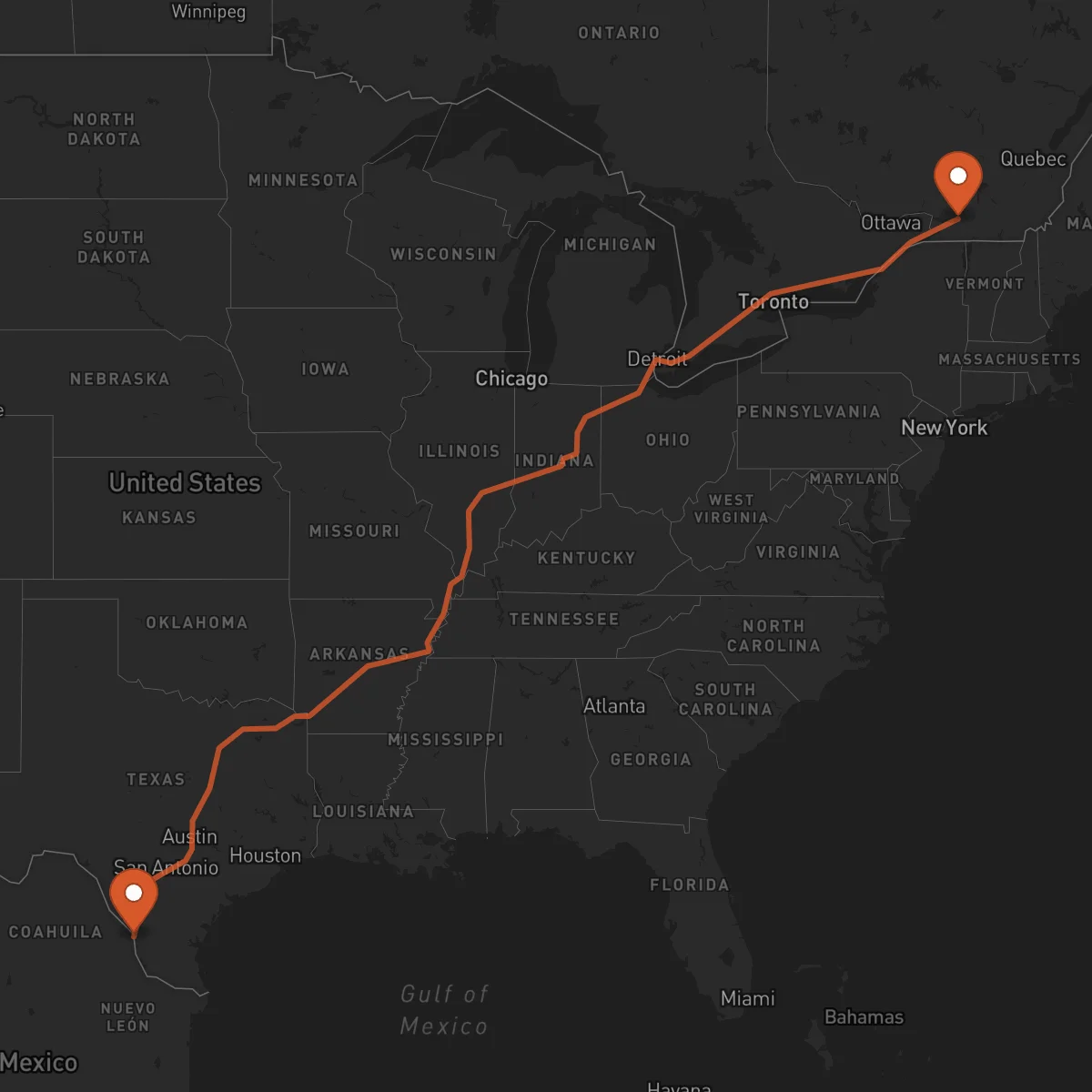
The Laredo-Montreal corridor represents one of the most critical logistics routes in North America, connecting the busiest inland port in the United States with Canada's second-largest metropolitan area. This 3,038-kilometer route traverses three major economic regions, facilitating billions of dollars in trade annually between the United States, Mexico, and Canada. The corridor serves as a vital artery for North American supply chains, particularly for industries requiring just-in-time delivery and temperature-controlled transportation.
The route primarily follows the NAFTA Superhighway (I-35) from Laredo north through the central United States, connecting with I-90 and other major highways toward Montreal. This infrastructure supports the seamless movement of goods across international borders, with key crossing points at Laredo/Nuevo Laredo and various points along the US-Canada border. The corridor's strategic importance is amplified by its connection to major industrial centers, including the automotive manufacturing hubs in Michigan and Ontario, and the agricultural and manufacturing regions throughout the Midwest.
Control Terrestre specializes in managing the complexities of this cross-border corridor, ensuring compliance with customs regulations and providing dedicated FTL services that maintain cargo integrity throughout the journey. Our expertise in handling cross-border documentation, combined with our network of certified carriers, enables us to offer reliable transportation solutions for industries ranging from automotive and manufacturing to food and beverage, and retail distribution.
Services for this Route
Available services for the corridor Laredo - Montreal
 Origin
Laredo
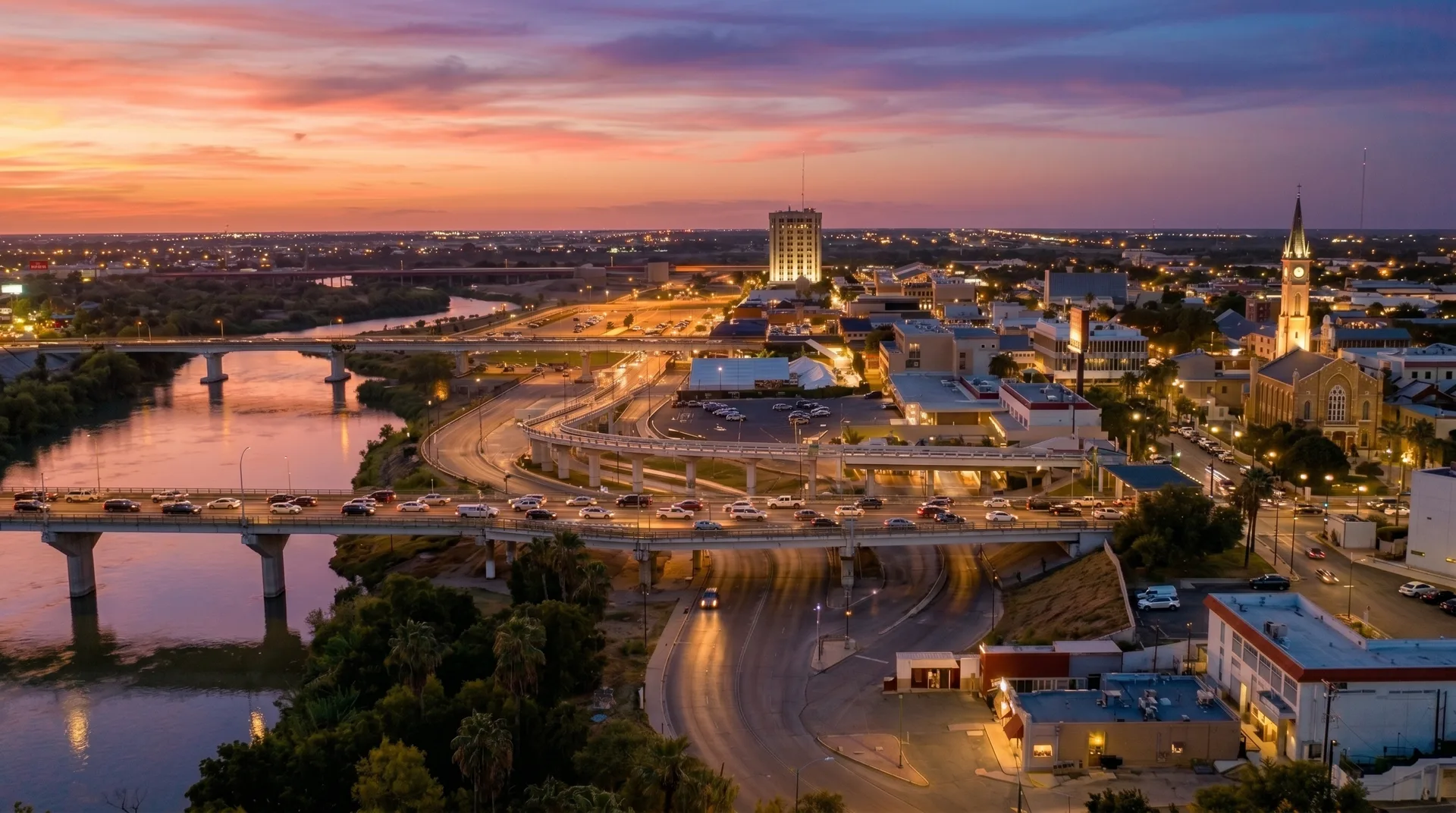
Laredo, Texas, serves as the primary gateway for US-Mexico trade, handling over 40% of all land-based trade between the two countries. Located on the US-Mexico border, Laredo's strategic position makes it the busiest inland port in the United States, with extensive warehousing and distribution facilities supporting cross-border logistics operations. The city's economy is heavily focused on international trade, with major industries including transportation and logistics, manufacturing, and retail distribution. Laredo's transportation infrastructure includes multiple highway connections, including I-35, which provides direct access to major US markets, as well as the World Trade Bridge, one of the most advanced commercial border crossings in North America.
 Destination
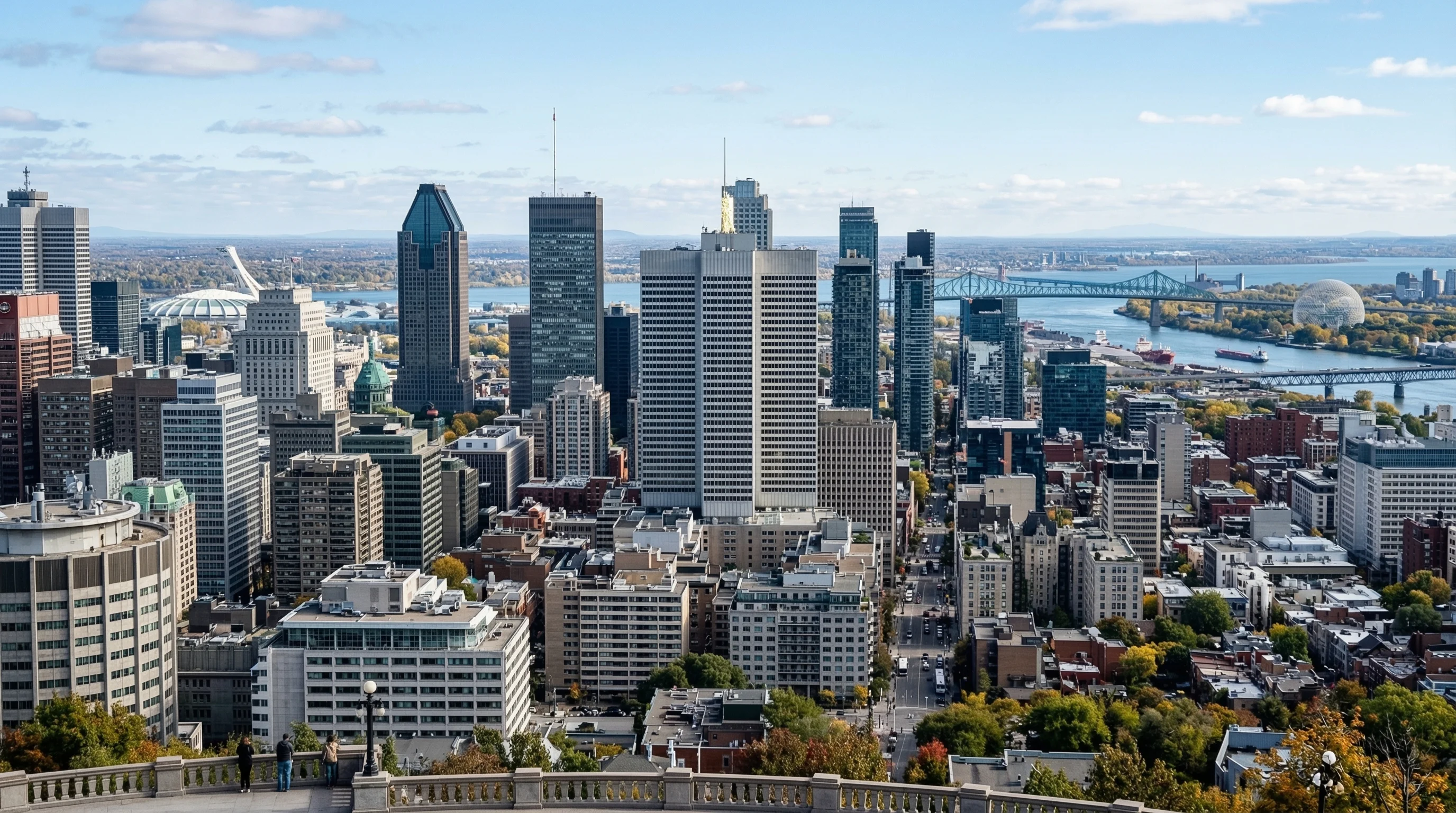
Montreal, Quebec, stands as Canada's leading logistics hub and a major gateway to European and international markets. As the second-largest metropolitan area in Canada, Montreal's strategic location at the confluence of the Saint Lawrence River and major highway networks makes it a critical distribution center for Eastern Canada and the northeastern United States. The city's economy is diverse, with key industries including aerospace, information technology, pharmaceuticals, and advanced manufacturing. Montreal's transportation infrastructure is world-class, featuring the Port of Montreal (one of North America's busiest ports), extensive rail connections through Canadian National Railway and Canadian Pacific Railway, and major highway access including Autoroute 20 and Autoroute 40, providing seamless connections to both US and Canadian markets.










