Laredo to Little Rock
Little Rock → LaredoFTL freight transportation service between Laredo and Little Rock. Reliable logistics solutions for your business.
Route Description
Everything you need to know about the corridor Laredo - Little Rock
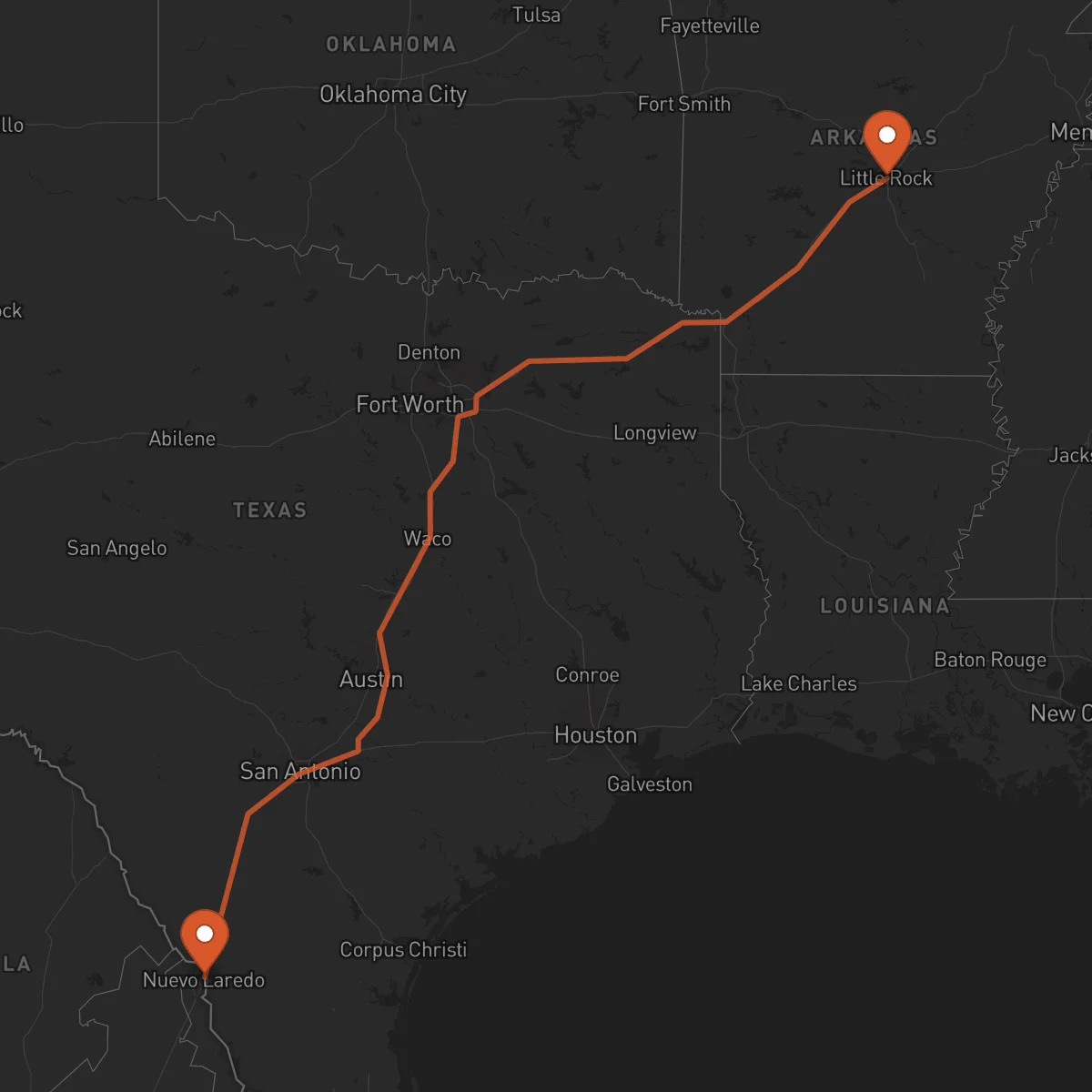
The logistics corridor connecting Laredo, Texas, to Little Rock, Arkansas, represents a vital artery for freight transportation across the southern United States. This 1058 km route traverses diverse landscapes and connects two strategically positioned cities that serve as gateways to regional commerce. The corridor facilitates the movement of goods between Mexico and the central United States, making it essential for companies engaged in cross-border trade and domestic distribution.
The economic significance of this corridor extends beyond its geographic span. Laredo serves as one of the busiest inland ports in North America, while Little Rock functions as a distribution hub for Arkansas and surrounding states. This route enables businesses to optimize their supply chains by providing reliable transportation between major industrial centers and consumer markets. The corridor supports various sectors including manufacturing, retail, automotive, and agricultural industries that rely on efficient freight movement to maintain competitive operations.
Control Terrestre enhances this corridor's efficiency through our specialized full truckload services. Our experienced team understands the unique challenges of this route, including border crossing procedures, regional regulations, and weather considerations. We provide dedicated transportation solutions that ensure cargo moves seamlessly from origin to destination, whether it's standard freight, refrigerated goods, or specialized equipment. Our strategic partnerships with certified carriers along this corridor guarantee consistent service quality and reliable delivery times for our clients' critical shipments.
Services for this Route
Available services for the corridor Laredo - Little Rock
 Origin
Laredo
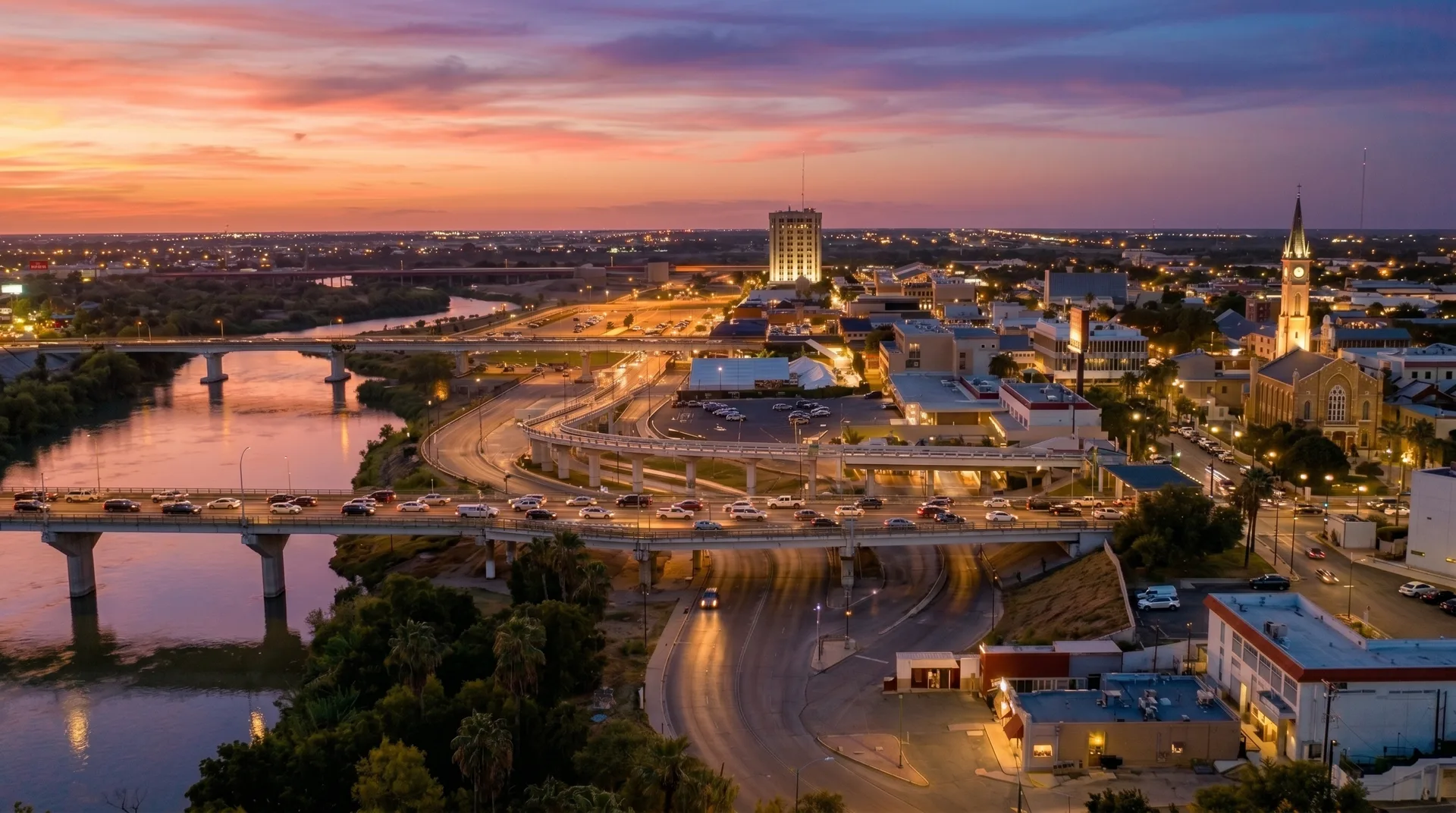
Laredo, Texas, stands as a premier logistics hub due to its unique position on the U.S.-Mexico border. This strategic location makes it the nation's largest inland port for trade with Mexico, handling billions of dollars in commerce annually. The city's infrastructure includes multiple international bridges, extensive warehousing facilities, and direct connections to major interstate highways. Laredo's proximity to manufacturing centers in northern Mexico creates a dynamic environment for freight forwarding and cross-border logistics operations.
The economic landscape of Laredo is dominated by international trade, with major industries including manufacturing, retail distribution, and logistics services. The city hosts numerous maquiladoras and serves as a critical point for automotive parts, electronics, and consumer goods entering the United States. Transportation infrastructure in Laredo is exceptionally well-developed, featuring direct access to I-35, which extends northward through the heart of the country, making it an ideal origin point for freight destined for markets throughout the central and eastern United States.
 Destination
Little Rock
Little Rock, Arkansas, serves as a strategic logistics center in the American South, positioned to distribute goods throughout the southeastern United States. The city's location at the intersection of major transportation routes makes it an ideal destination for freight moving from the Southwest. Little Rock's infrastructure includes the Bill and Hillary Clinton National Airport, extensive rail connections, and direct access to interstate highways including I-30 and I-40, facilitating efficient distribution to surrounding states.
The economic profile of Little Rock encompasses diverse industries including healthcare, government services, retail, and manufacturing. The city has developed significant warehousing and distribution capabilities to support its role as a regional logistics hub. Key industries utilizing freight services to Little Rock include retail distribution centers, manufacturing facilities, and agricultural businesses that require reliable transportation for both raw materials and finished goods. The city's central location within Arkansas makes it a natural convergence point for freight moving throughout the state and into neighboring regions.










