Laredo to Edmonton
Edmonton → LaredoFTL freight transportation service between Laredo and Edmonton. Reliable logistics solutions for your business.
Route Description
Everything you need to know about the corridor Laredo - Edmonton
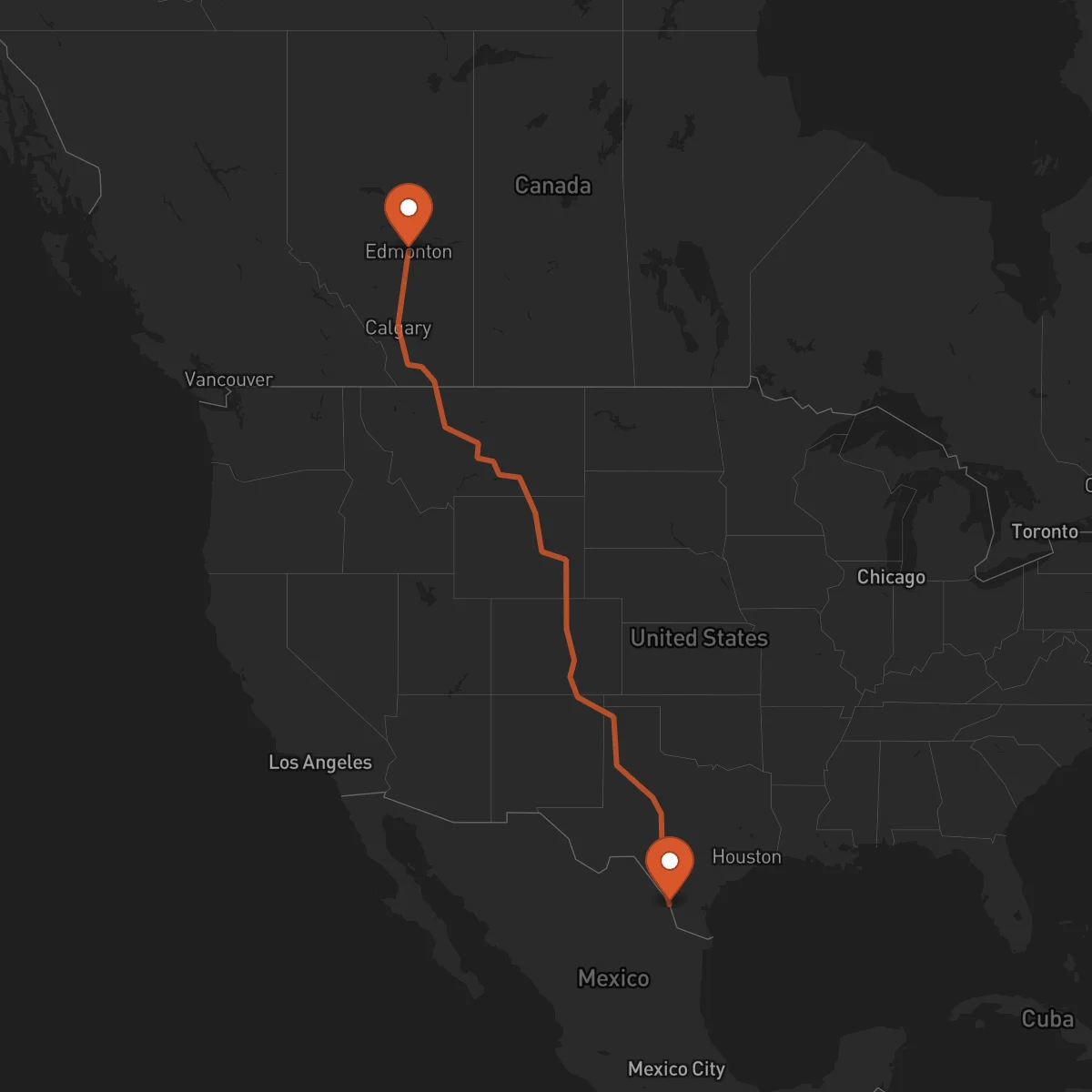
The Laredo-Edmonton corridor represents a vital logistics connection between Mexico and Canada, spanning approximately 3,115 kilometers across the North American continent. This cross-border route connects the southern United States with Canada's northern energy hub, facilitating the movement of goods between three major economic zones. The corridor traverses diverse landscapes and crosses multiple state and provincial lines, making it a complex but essential trade route for businesses operating across North America.
This corridor serves as a critical artery for industries including energy, manufacturing, automotive, and agricultural products. The route connects major industrial centers in Texas with Alberta's booming oil and gas sector, as well as Canada's broader manufacturing and distribution networks. Companies rely on this corridor for time-sensitive shipments of equipment, raw materials, and finished products that support integrated supply chains across the continent.
Key transportation infrastructure along this route includes major highways such as I-35 North from Laredo through the United States, connecting to Canadian highways like the Queen Elizabeth II Highway (Highway 2) leading into Edmonton. The corridor involves strategic border crossings, with Laredo being one of the busiest inland ports on the US-Mexico border, while additional border procedures occur when entering Canada. Control Terrestre's expertise in cross-border operations ensures seamless coordination of documentation, customs clearance, and regulatory compliance throughout this multi-country journey, providing reliable full truckload (FTL) transportation solutions that keep goods moving efficiently across all jurisdictions.
Services for this Route
Available services for the corridor Laredo - Edmonton
 Origin
Laredo
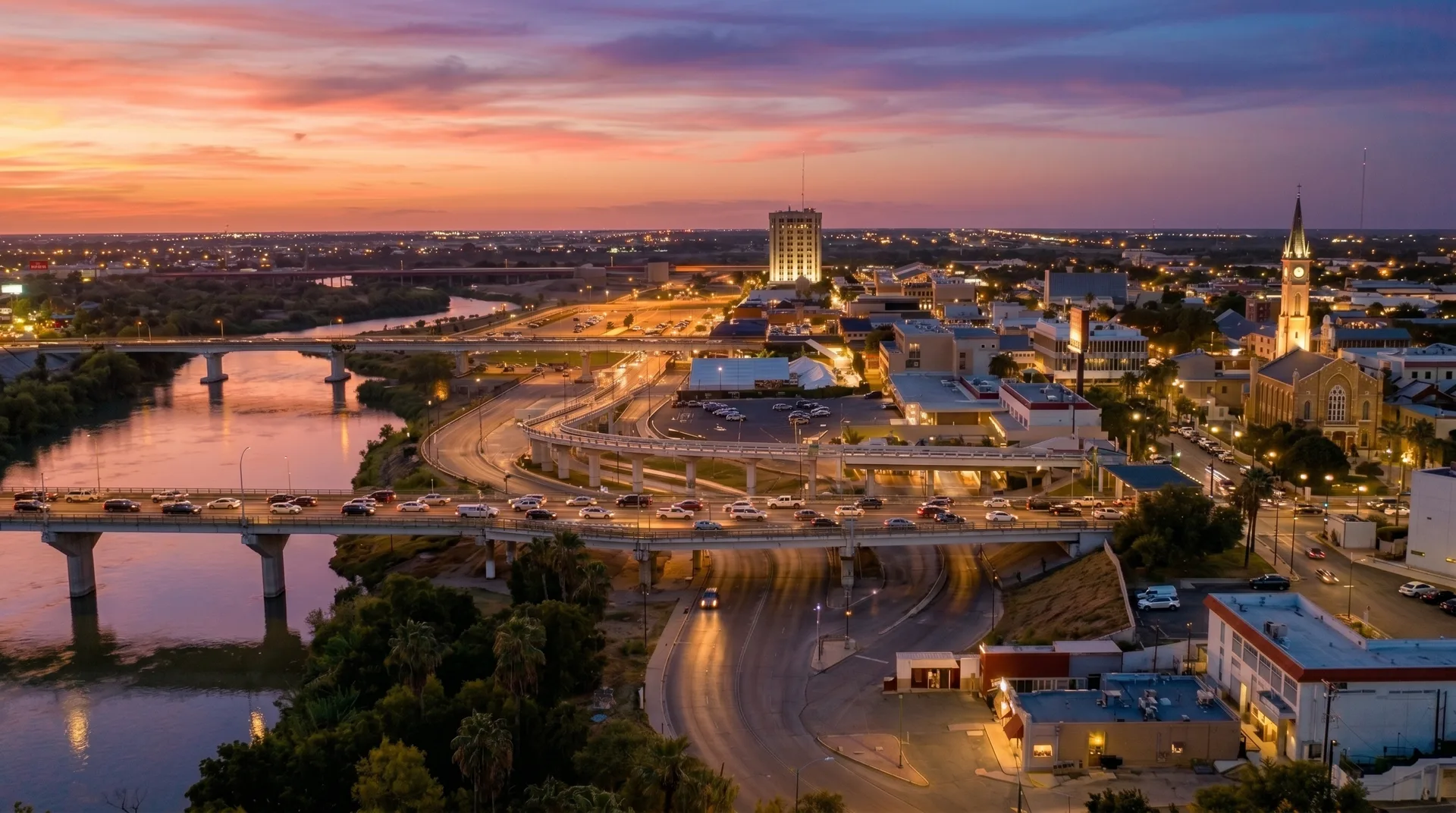
Laredo, Texas serves as a strategic logistics gateway on the US-Mexico border, positioned as one of North America's busiest inland ports of entry. The city's location on the Rio Grande provides direct access to major Mexican industrial centers and serves as a critical junction for North-South trade flows. Laredo's economy is deeply integrated with cross-border commerce, supported by extensive warehousing, distribution centers, and transportation infrastructure designed to handle high-volume freight movements.
The region's economic base includes manufacturing, logistics services, and international trade, with strong connections to maquiladora operations in northern Mexico. Laredo benefits from multiple highway connections including I-35, which provides direct north-south access through the central United States. The city's transportation infrastructure includes the World Trade Bridge, one of the largest commercial bridges on the border, along with extensive rail connections and a well-developed network of freight facilities that can accommodate various equipment types for cross-border shipments.
 Destination
Edmonton, Alberta stands as a strategic logistics hub in Western Canada, serving as the capital city of Alberta and a major center for the province's energy and industrial sectors. Located in the heart of Canada's oil sands region, Edmonton provides critical access to northern Alberta's resource-rich areas while also serving as a distribution center for goods moving throughout Western Canada. The city's position along the North Saskatchewan River and its proximity to major transportation corridors make it an ideal endpoint for cross-continental freight movements.
The Edmonton region's economy is dominated by the energy sector, including oil and gas extraction, refining, and petrochemical industries, along with manufacturing, technology, and distribution services. The city benefits from excellent transportation infrastructure, including major highways such as the Yellowhead Highway (Highway 16) and the Queen Elizabeth II Highway (Highway 2), which connect to Calgary and the US border. Edmonton's industrial areas feature modern warehousing facilities, intermodal yards, and specialized terminals capable of handling diverse freight types, from standard dry goods to oversized equipment and hazardous materials requiring specialized handling.










