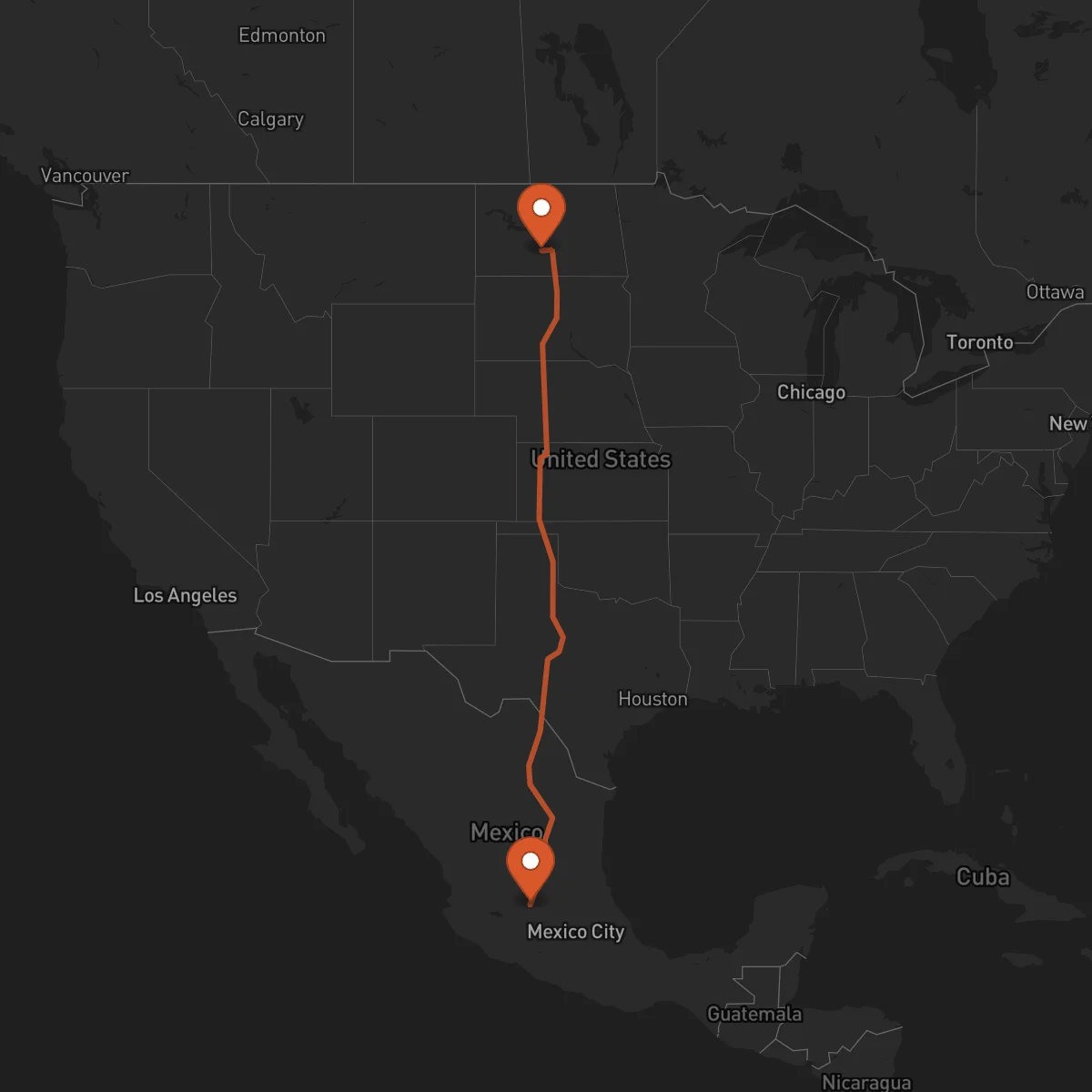
Irapuato to Bismarck
Bismarck → IrapuatoFTL freight transportation service between Irapuato and Bismarck. Reliable logistics solutions for your business.
Route Description
Everything you need to know about the corridor Irapuato - Bismarck
The logistics corridor connecting Irapuato, Guanajuato, Mexico to Bismarck, North Dakota, United States represents a vital trade route spanning approximately 2,906 kilometers across the North American continent. This cross-border corridor links Mexico's industrial heartland with the Upper Midwest United States, facilitating the movement of goods between two dynamic economic regions. The route traverses diverse landscapes and crosses multiple state and international boundaries, requiring specialized expertise in cross-border logistics operations.
The corridor serves as a critical link between Mexico's automotive and manufacturing powerhouse in Guanajuato and North Dakota's agricultural, energy, and manufacturing sectors. Irapuato, known as the "Strawberry Capital of the World," has evolved into a major industrial hub, while Bismarck serves as the economic center of North Dakota, with strong presence in energy production, agriculture, and government services. This complementary economic relationship drives significant freight traffic along this route.
Key transportation infrastructure includes Mexico's Federal Highway 45, which connects Irapuato to the U.S. border, and major U.S. interstate highways including I-29 and I-94 that provide direct access to Bismarck. The corridor typically crosses at Laredo or El Paso border crossings, both equipped with modern customs facilities and efficient processing systems. Control Terrestre's expertise in managing cross-border documentation, customs compliance, and regulatory requirements ensures seamless freight movement across this international boundary, minimizing delays and optimizing transit times for our clients' shipments.
Services for this Route
Available services for the corridor Irapuato - Bismarck
 Origin
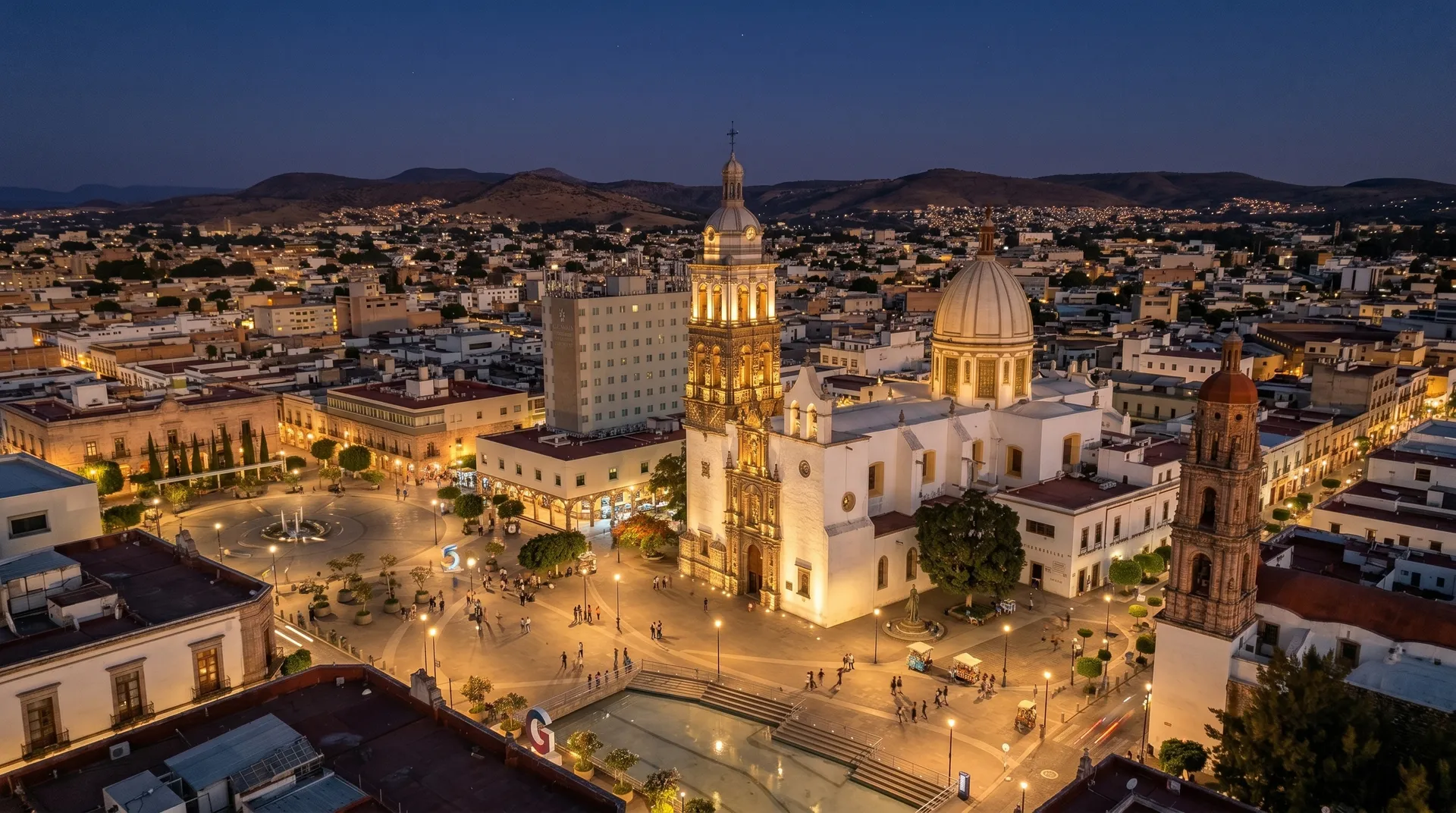
Irapuato
Irapuato, located in the state of Guanajuato, Mexico, stands as one of the most important industrial and commercial centers in the Bajío region. Strategically positioned in the heart of Mexico's automotive corridor, Irapuato benefits from its proximity to major manufacturing hubs like Silao, León, and Salamanca. The city serves as a crucial logistics node with excellent connectivity to major ports, border crossings, and industrial parks throughout central Mexico. Its location provides optimal access to both Mexican and international markets, making it an ideal origin point for cross-border freight operations.
The region's economy is characterized by a diverse industrial base, with automotive manufacturing leading the way, followed by food processing, electronics, and agricultural products. Major international companies have established operations in Irapuato, taking advantage of the skilled workforce and strategic location. The city's transportation infrastructure includes access to major highways, rail connections, and proximity to Del Bajío International Airport, providing multiple options for freight consolidation and distribution.
 Destination
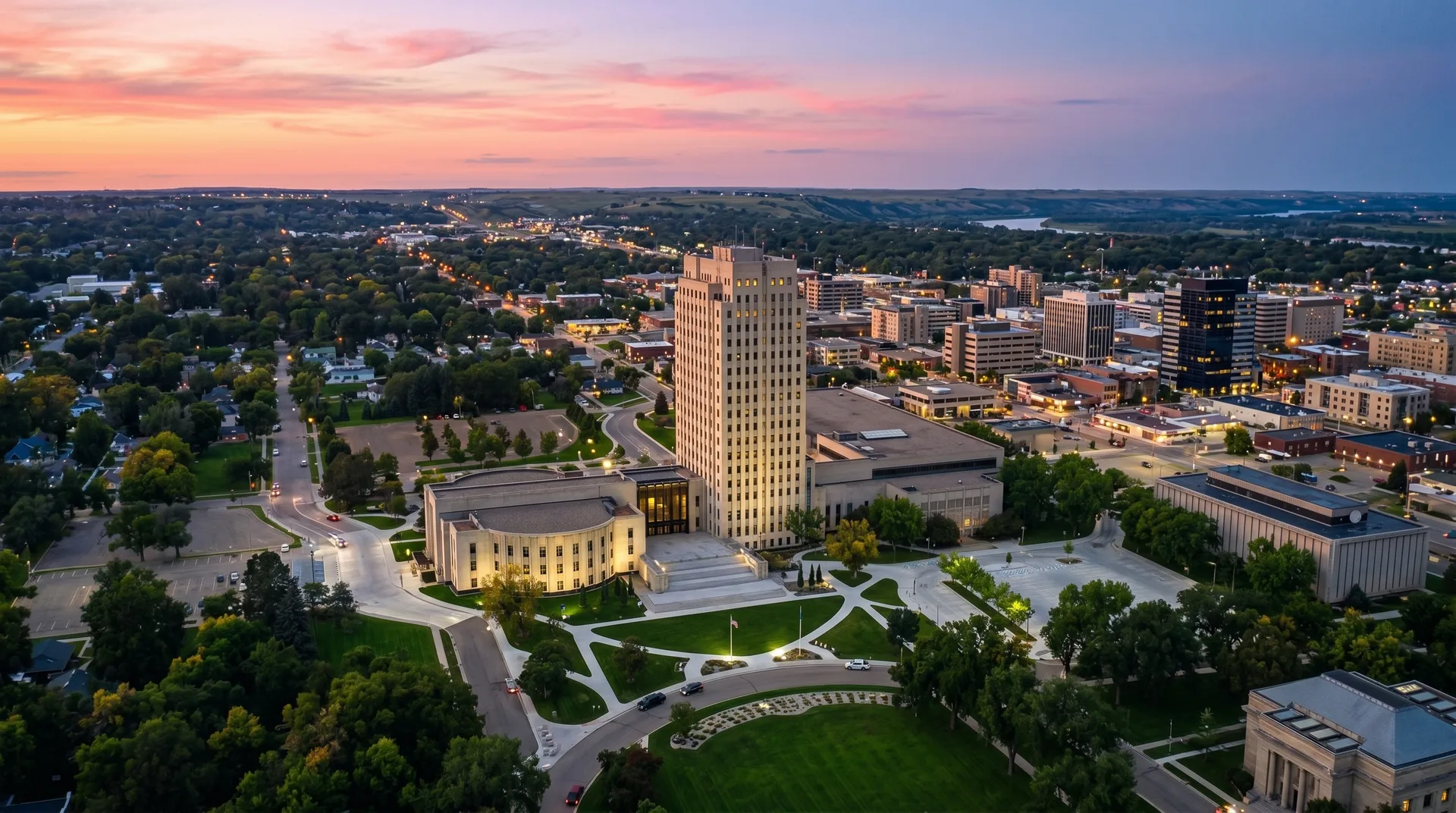
Bismarck
Bismarck, the capital city of North Dakota, serves as a strategic logistics hub in the Upper Midwest United States. Located along the Missouri River, Bismarck's position provides excellent access to both east-west and north-south transportation corridors. The city functions as the economic center of North Dakota, with strong connections to the state's agricultural heartland, energy production facilities, and manufacturing sectors. Its central location in North America makes it an ideal distribution point for reaching major markets across the Midwest and beyond.
The local economy is driven by government services, healthcare, energy production (particularly oil and natural gas from the Bakken formation), agriculture, and manufacturing. Bismarck's transportation infrastructure includes Interstate 94, which connects the city to major markets like Minneapolis and beyond, as well as rail connections through BNSF Railway. The city's Capital International Airport provides air cargo services, while the Missouri River historically served as a vital transportation artery. This comprehensive infrastructure network makes Bismarck an efficient destination for cross-border freight, capable of handling diverse cargo types from agricultural products to industrial equipment.










