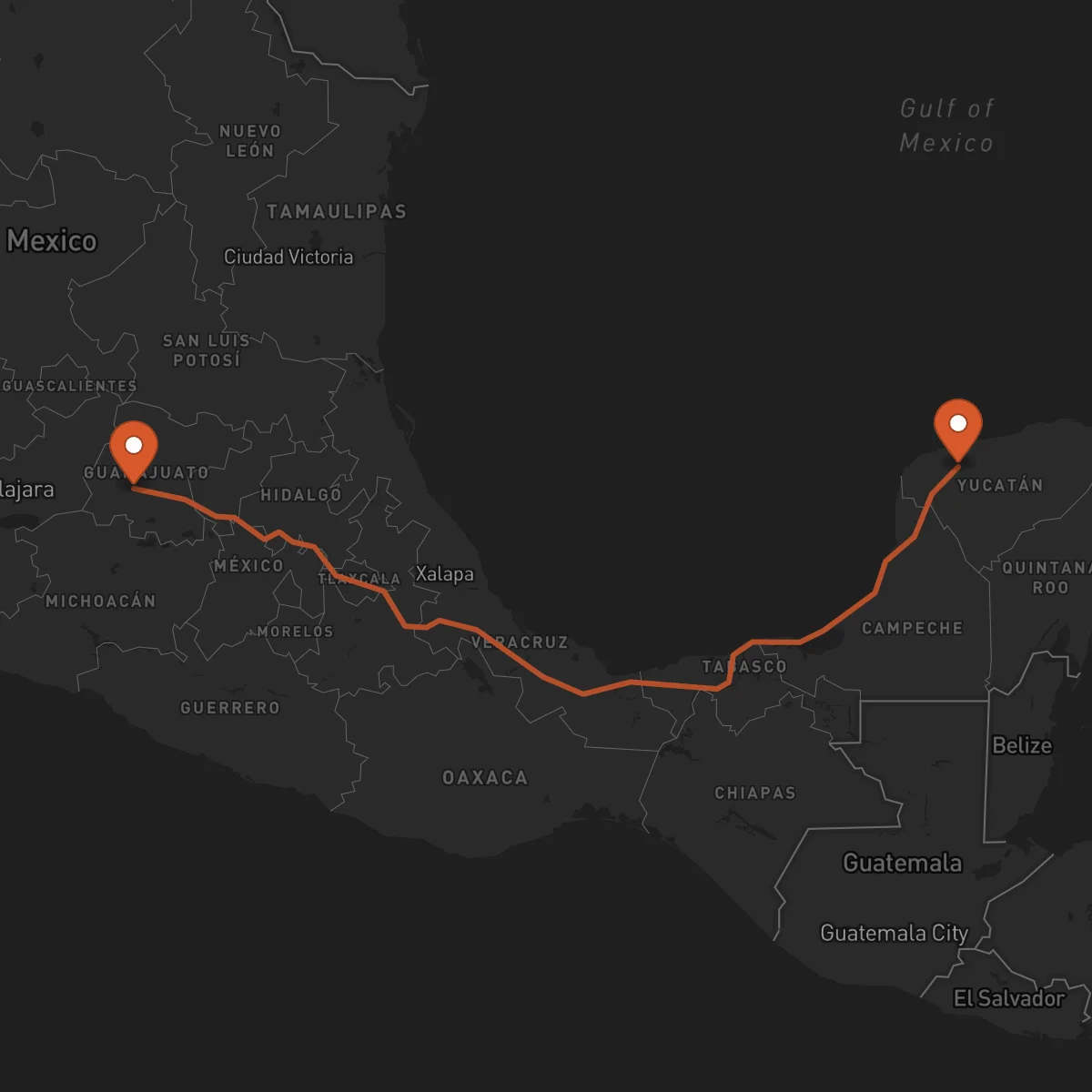
Irapuato to Mérida
Mérida → IrapuatoFTL freight transportation service between Irapuato and Mérida. Reliable logistics solutions for your business.
Route Description
Everything you need to know about the corridor Irapuato - Mérida
The Irapuato-Mérida corridor represents a vital logistics connection between the industrial heart of central Mexico and the economic hub of the Yucatan Peninsula. This 1,223 km route traverses diverse landscapes and connects two regions with complementary economic strengths, facilitating the flow of goods essential for industrial production and commercial distribution. The corridor serves as a strategic link between Mexico's manufacturing powerhouse and one of its most important tourist and agricultural regions.
The economic significance of this corridor is substantial, supporting industries ranging from automotive and electronics in the Bajío region to tourism, agriculture, and food processing in the Yucatan. Companies operating along this route benefit from the efficient movement of raw materials, finished products, and specialized cargo. The transportation infrastructure includes major highways such as the Arco Norte, which provides a modern, high-capacity route designed specifically for freight transportation, reducing transit times and improving safety.
Control Terrestre specializes in optimizing freight operations along this corridor through our network of certified transportation providers. Our dedicated services ensure that cargo moves efficiently and securely from origin to destination, with real-time tracking and specialized handling when required. We understand the unique challenges of this route, including climate variations and regional regulations, and have developed solutions that guarantee reliable service for our clients' full truckload shipments.
Services for this Route
Available services for the corridor Irapuato - Mérida
 Origin
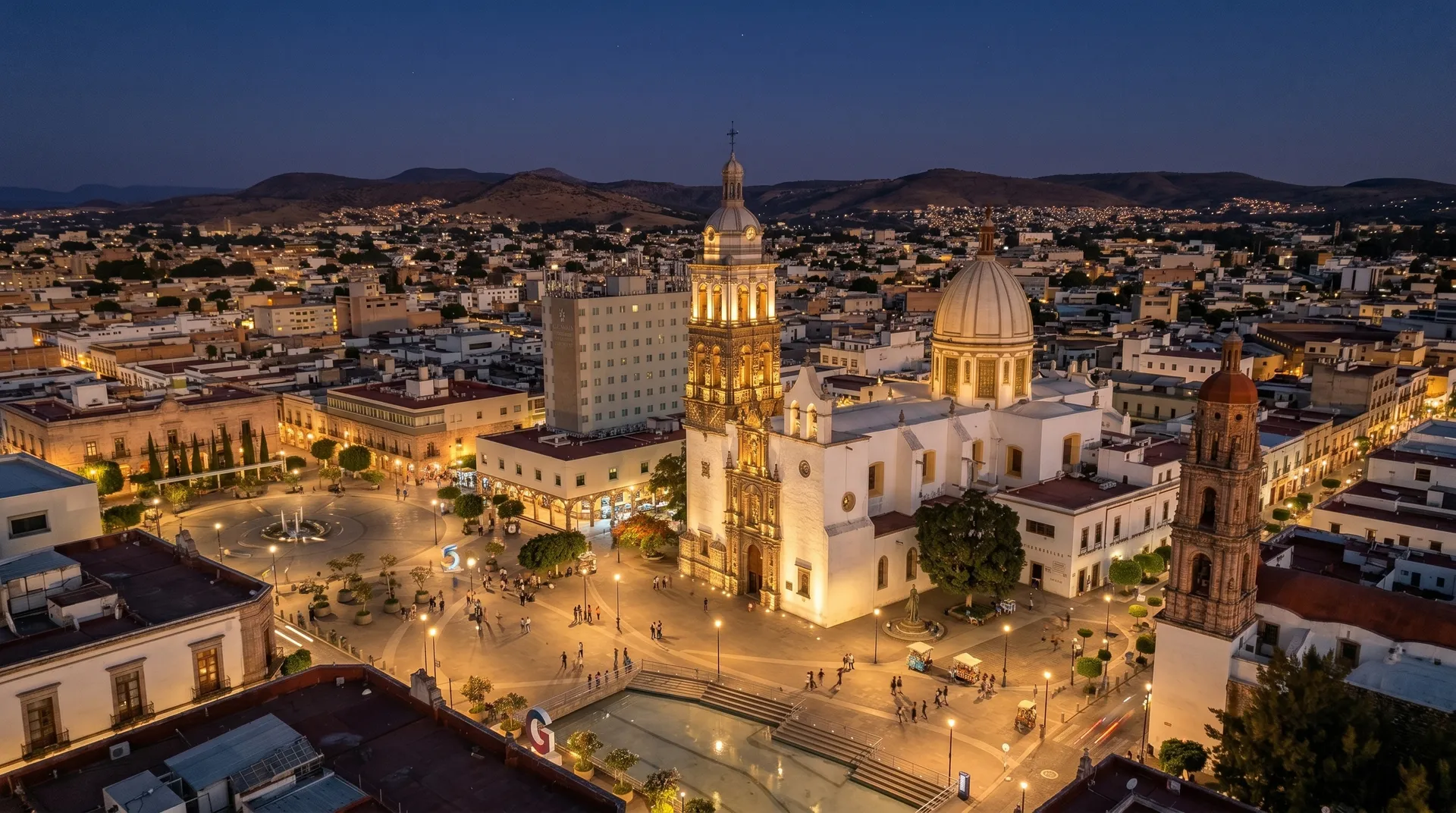
Irapuato
Irapuato, located in the state of Guanajuato, stands as one of Mexico's most important industrial and logistics centers. Known as the 'World's Strawberry Capital,' this city combines agricultural excellence with advanced manufacturing capabilities. Its strategic location in the Bajío region places it at the heart of Mexico's industrial corridor, with excellent connectivity to major ports, border crossings, and consumer markets. The city benefits from a robust transportation infrastructure including direct access to highways such as the Arco Norte and the Carretera Panamericana, as well as proximity to Silao-Guanajuato International Airport.
The economic landscape of Irapuato is diverse and dynamic, with strong presence in the automotive, electronics, and agricultural sectors. The city hosts numerous maquiladoras and manufacturing plants, making it a critical node in global supply chains. This industrial concentration creates substantial freight transportation demand, particularly for full truckload shipments moving both domestically and internationally. The availability of specialized logistics services and a skilled workforce further enhances Irapuato's position as a strategic origin point for freight operations.
 Destination
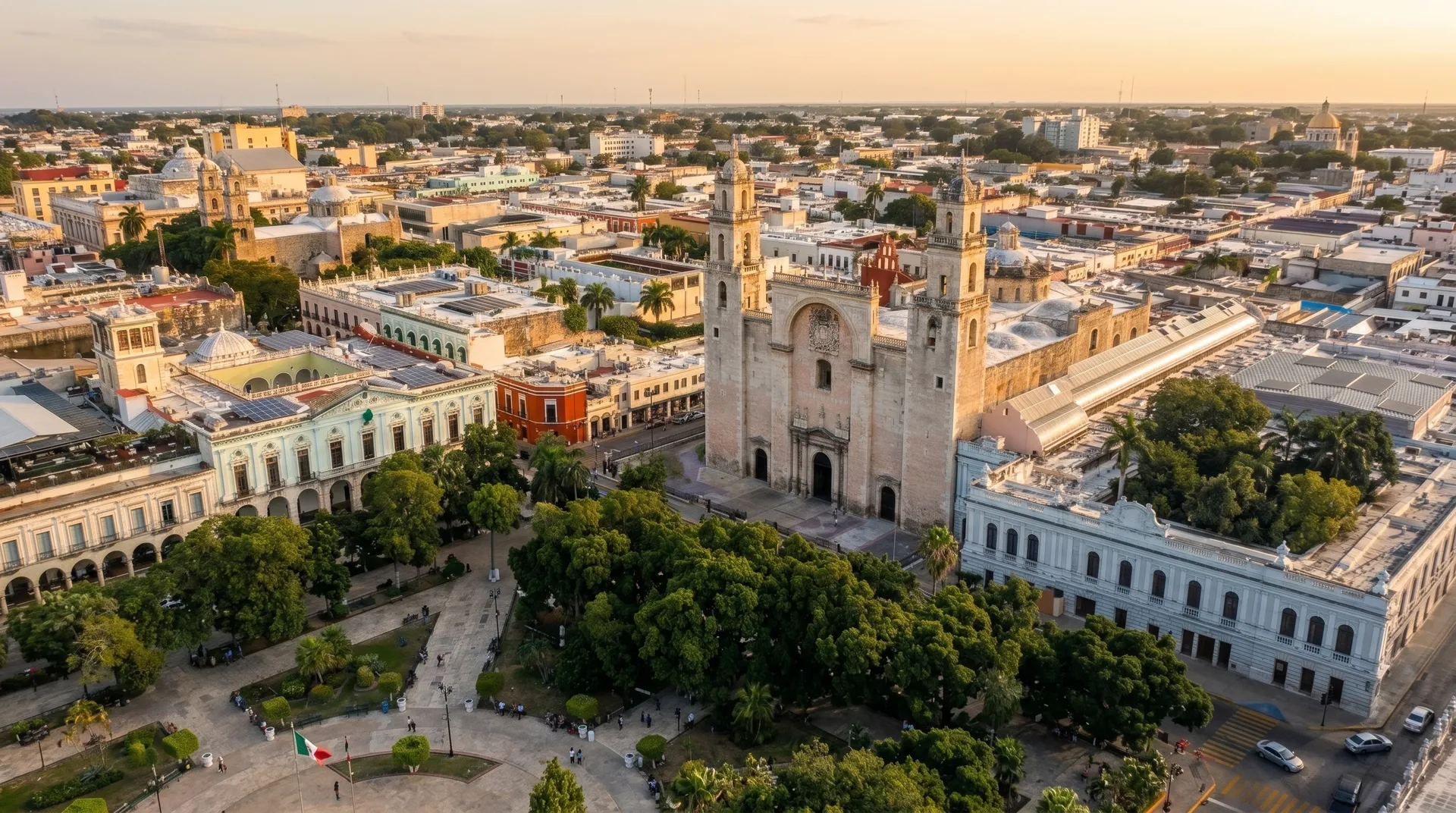
Mérida, the capital of Yucatán, represents a strategic logistics hub for the entire southeast region of Mexico. Located on the Yucatan Peninsula, the city serves as the economic and cultural center of the region, with excellent connectivity to the Caribbean coast and Central America. Mérida's transportation infrastructure includes modern highways connecting to the rest of the country, as well as the Manuel Crescencio Rejón International Airport and the nearby port of Progreso, facilitating both air and maritime freight options.
The economic profile of Mérida is characterized by a strong tourism industry, agriculture, food processing, and growing manufacturing sectors. The city's strategic location makes it an ideal distribution center for products destined for the Yucatan Peninsula and neighboring states. Additionally, Mérida's role in the Mayan Train project and other infrastructure developments is enhancing its importance as a logistics node. The combination of industrial activity, agricultural production, and tourism creates diverse freight transportation needs, particularly for specialized cargo and time-sensitive shipments that require reliable full truckload services.










