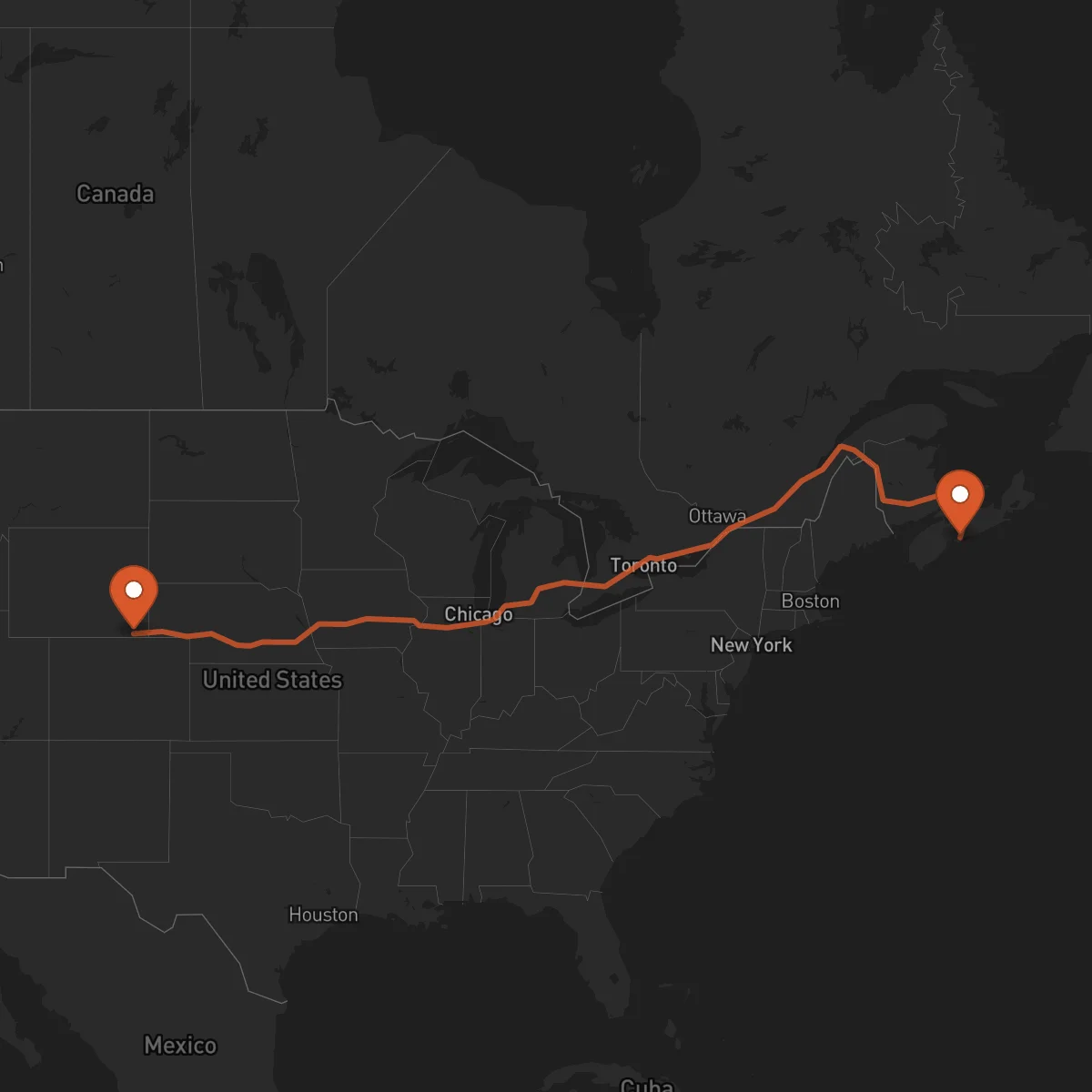
Halifax to Cheyenne
Cheyenne → HalifaxFTL freight transportation service between Halifax and Cheyenne. Reliable logistics solutions for your business.
Route Description
Everything you need to know about the corridor Halifax - Cheyenne
The logistics corridor between Halifax, Nova Scotia, and Cheyenne, Wyoming, represents a vital cross-border connection spanning approximately 3,345 kilometers. This route links Canada's Atlantic port city to the heart of the American Midwest, facilitating the movement of goods between two major economic regions. The corridor traverses diverse landscapes and crosses multiple state and provincial boundaries, requiring expertise in cross-border logistics and regulatory compliance.
Halifax serves as a major Atlantic gateway, with its deep-water port handling significant international cargo volumes. The city's strategic location makes it a crucial entry point for goods destined for central and western United States. Cheyenne, positioned at the intersection of major interstate highways, functions as a key distribution hub for Wyoming and surrounding states, with strong connections to Denver's metropolitan area.
This corridor primarily serves industries including automotive parts, agricultural equipment, industrial machinery, and consumer goods. The route follows major transportation arteries including Interstate 80 and connects through key border crossings. Companies utilizing this corridor benefit from access to both maritime shipping capabilities in Halifax and extensive inland distribution networks in Wyoming.
Control Terrestre facilitates seamless operations on this corridor through our network of certified transportation providers. Our expertise in cross-border documentation, customs clearance, and regulatory compliance ensures efficient transit times. We coordinate the movement of full truckload shipments, managing the complexities of international freight while maintaining the highest standards of service and reliability.
Services for this Route
Available services for the corridor Halifax - Cheyenne
 Origin
Halifax
Halifax, Nova Scotia, stands as a strategic logistics hub on Canada's Atlantic coast. The city's deep-water port is one of the largest natural harbors in the world and serves as a primary gateway for international trade entering eastern Canada. Halifax's economic landscape includes strong maritime industries, aerospace and defense manufacturing, information technology, and healthcare sectors. The Port of Halifax handles millions of tons of cargo annually and offers direct connections to global shipping routes.
The city boasts excellent transportation infrastructure, including the Halifax Stanfield International Airport for air cargo, extensive rail connections via CN Rail, and modern highway systems providing access to the rest of Canada and the United States. The port's 24/7 operations and advanced cargo handling facilities make it an efficient point of origin for cross-border shipments. Halifax's strategic Atlantic location positions it as a vital link in North American supply chains, particularly for goods moving between Europe, Asia, and the central United States.
 Destination
Cheyenne
Cheyenne, Wyoming, serves as a crucial logistics hub in the American Midwest, strategically positioned at the intersection of major transportation routes. Located at the junction of Interstates 80 and 25, Cheyenne provides direct access to Denver, Salt Lake City, and other major western markets. The city's economic base includes energy production, agriculture, military installations, and growing technology sectors, creating consistent demand for freight transportation services.
The region benefits from extensive transportation infrastructure, including the Union Pacific Railroad's extensive network and the Cheyenne Regional Airport for air cargo. The city's proximity to Denver International Airport, just 100 miles to the south, provides additional logistics options. Cheyenne's location makes it an ideal distribution point for goods destined for Wyoming, Colorado, Nebraska, and beyond. The area's strong agricultural sector, including cattle ranching and crop production, generates significant freight volume, while the energy industry creates demand for specialized equipment and materials transportation.










