Halifax to Atlanta
Atlanta → HalifaxFTL freight transportation service between Halifax and Atlanta. Reliable logistics solutions for your business.
Route Description
Everything you need to know about the corridor Halifax - Atlanta
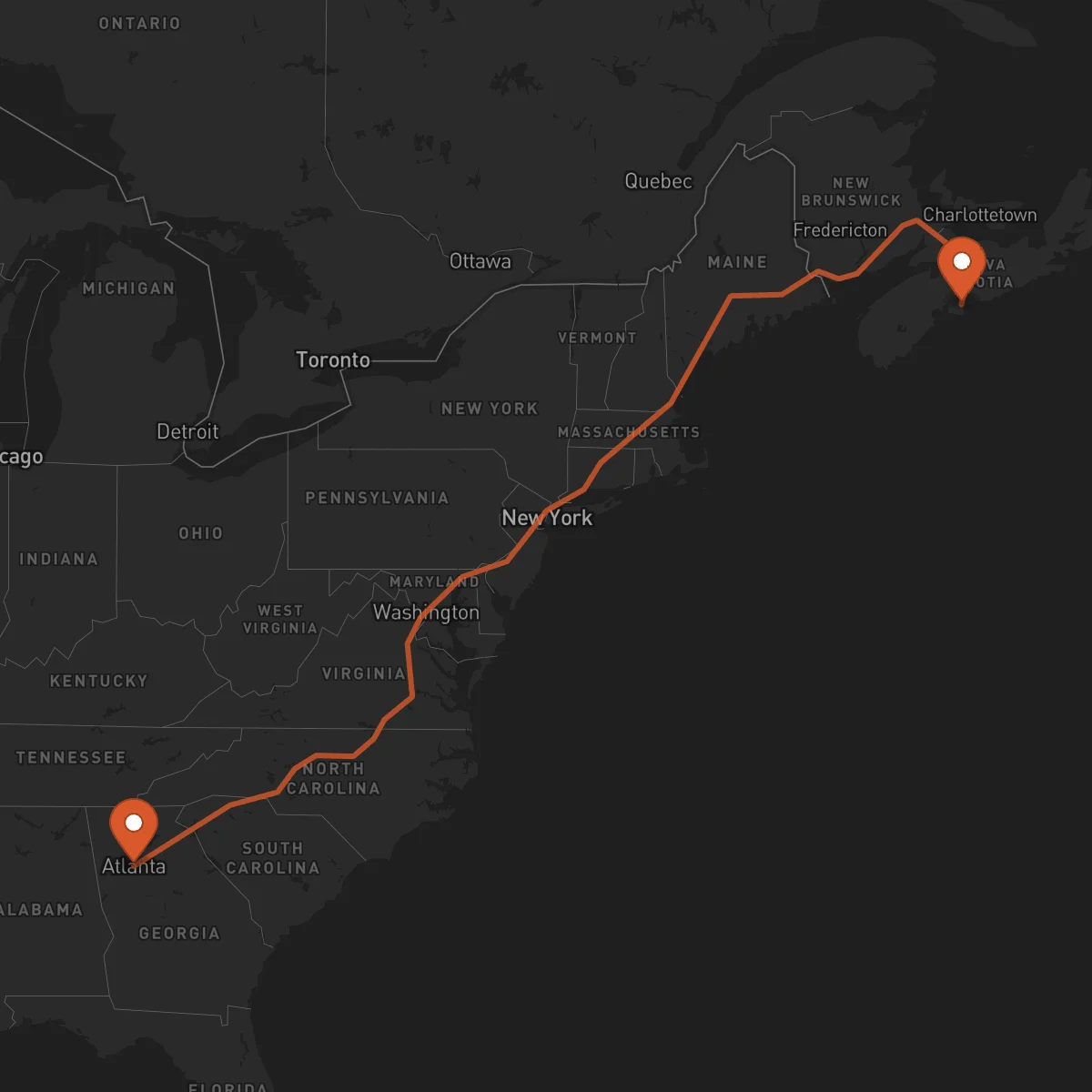
The Halifax-Atlanta corridor represents a vital cross-border freight transportation route connecting the Atlantic port of Halifax, Nova Scotia, with Atlanta, Georgia's major logistics hub. This 2,153 km corridor serves as a crucial link between Canada's Atlantic gateway and the southeastern United States, facilitating the movement of goods between two major economic regions. The route traverses diverse terrain and crosses multiple state and provincial lines, requiring expert navigation of regulatory requirements and transportation networks.
The economic significance of this corridor is substantial, supporting trade in automotive parts, industrial equipment, consumer goods, and agricultural products. Halifax's status as a major Atlantic port means the corridor handles significant import-export traffic, while Atlanta's position as a southeastern distribution center creates demand for reliable inbound and outbound freight services. The corridor's importance has grown with increasing trade volumes between Canada and the southeastern US.
Transportation infrastructure along this route includes major highways such as I-95, I-85, and various provincial routes in Canada. The corridor requires careful planning for border crossings, with key points including the Calais-St. Stephen crossing and other northern border entries. Control Terrestre's expertise in cross-border operations ensures seamless movement of full truckload shipments, handling all necessary documentation, customs procedures, and compliance requirements. Our network of certified carriers provides the reliability and capacity needed for this demanding cross-border route.
Services for this Route
Available services for the corridor Halifax - Atlanta
 Origin
Halifax
Halifax serves as a strategic Atlantic gateway for North American logistics, anchored by the Port of Halifax - one of Canada's busiest ports. The port's deep-water facilities and ice-free status year-round make it ideal for handling large cargo volumes and various freight types. Halifax's location provides direct access to European and transatlantic trade routes, making it a crucial entry point for goods destined for North American markets. The city's transportation infrastructure includes extensive rail connections, modern highways, and proximity to major air cargo facilities.
The region's economy is diverse, with strong presence in ocean transportation, defense, aerospace, and advanced manufacturing. Halifax's port facilities specialize in handling breakbulk cargo, project cargo, and refrigerated goods, supported by extensive warehousing and distribution capabilities. The area's strong ties to international trade, particularly with Europe and the eastern United States, create consistent demand for reliable freight transportation services. Local industries including seafood processing, forestry products, and industrial equipment manufacturing generate substantial outbound freight volumes.
 Destination
Atlanta
Atlanta stands as one of the most significant logistics hubs in the southeastern United States, with its Hartsfield-Jackson International Airport serving as a major cargo gateway. The city's strategic location at the intersection of major interstate highways (I-20, I-75, I-85) provides excellent connectivity to regional and national markets. Atlanta's extensive transportation infrastructure includes multiple rail terminals, a major seaport connection via inland ports, and a well-developed highway network that facilitates efficient freight movement throughout the region.
The Atlanta metropolitan area hosts a diverse industrial base, with strong presence in automotive manufacturing, aerospace, technology, and consumer goods distribution. The region is home to numerous corporate headquarters and distribution centers, creating substantial demand for freight transportation services. Atlanta's role as a logistics hub is enhanced by its proximity to major southeastern markets and its status as a gateway to Latin American trade. The city's concentration of warehouses, fulfillment centers, and manufacturing facilities generates consistent demand for full truckload transportation services, particularly along key trade corridors like the Halifax route.










