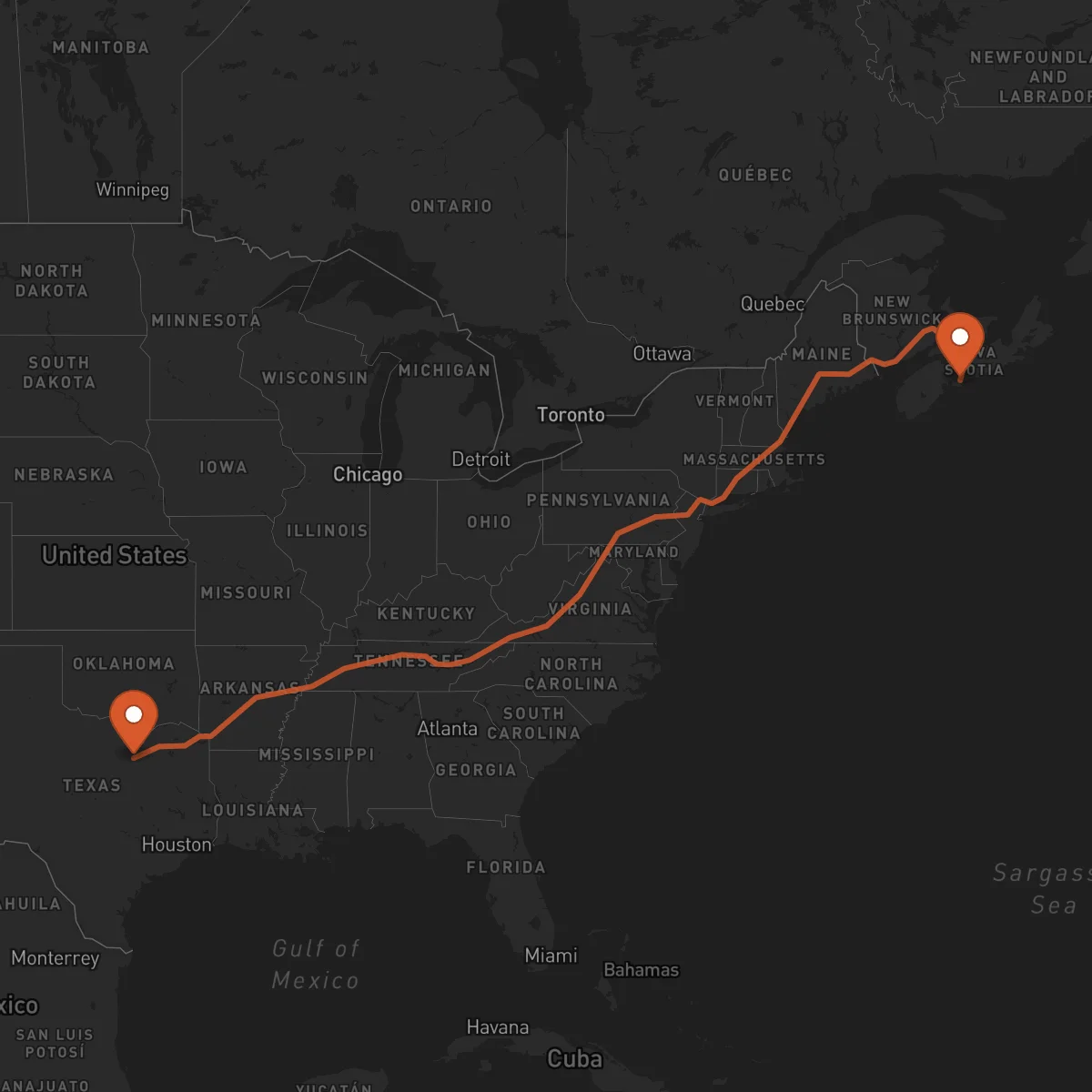
Halifax to Arlington
Arlington → HalifaxFTL freight transportation service between Halifax and Arlington. Reliable logistics solutions for your business.
Route Description
Everything you need to know about the corridor Halifax - Arlington
The Halifax to Arlington logistics corridor connects the Atlantic port of Nova Scotia with the dynamic industrial hub of Texas, covering approximately 3,167 kilometers across Canada and the United States. This cross-border route is vital for companies requiring efficient transportation between Eastern Canada and the central-southern United States, offering a strategic link between the Atlantic and the Gulf of Mexico. The corridor primarily utilizes major highways such as Autoroute 2 and Interstate 81, providing reliable and direct access for full truckload (FTL) freight. Control Terrestre facilitates seamless operations along this route, ensuring timely and secure deliveries with our certified transportation partners.
Services for this Route
Available services for the corridor Halifax - Arlington
 Origin
Halifax
Halifax, located on the Atlantic coast of Nova Scotia, is a key maritime gateway for Canada and a strategic logistics hub. Its deep-water port is one of the busiest in the country, supporting import/export activities and connecting to major rail and road networks. The region's economy is driven by industries such as seafood processing, forestry, aerospace, and advanced manufacturing. Halifax's transportation infrastructure includes a well-developed highway system, rail connections, and the Port of Halifax, making it an ideal origin point for cross-border freight to the United States.
 Destination
Arlington
Arlington, Texas, is strategically located in the Dallas-Fort Worth metropolitan area, a major industrial and commercial center in the southern United States. The region is known for its strong presence in automotive manufacturing, aerospace, technology, and logistics. Arlington benefits from excellent transportation infrastructure, including proximity to major highways such as I-20 and I-35, and access to Dallas/Fort Worth International Airport. This makes it a key destination for freight moving from Canada, supporting the supply chain needs of diverse industries in the area.










